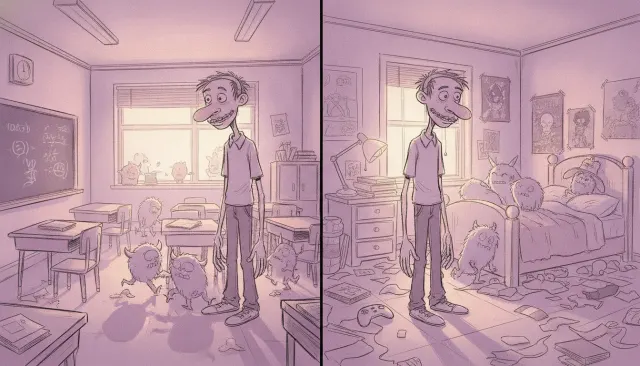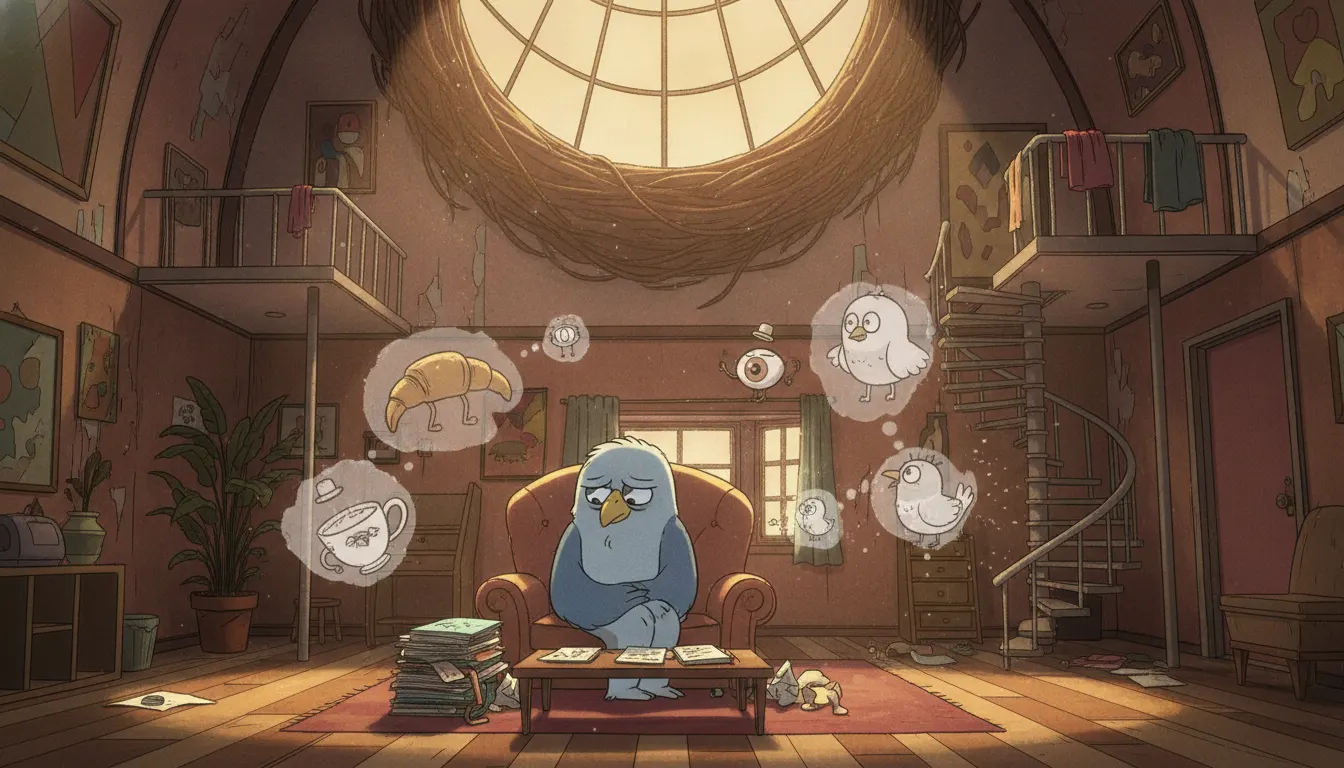
Tuca and Bertie Season 1
Lisa Hanawalt / Netflix · 2019
Debut season establishing the maximalist color world and feminist friendship narrative
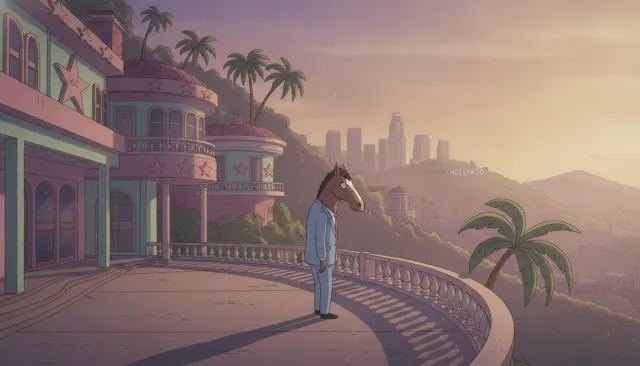
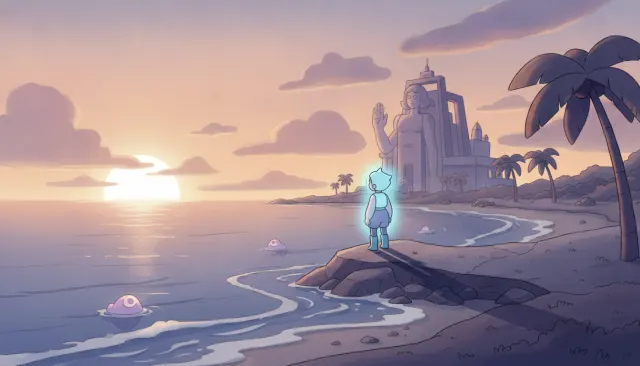
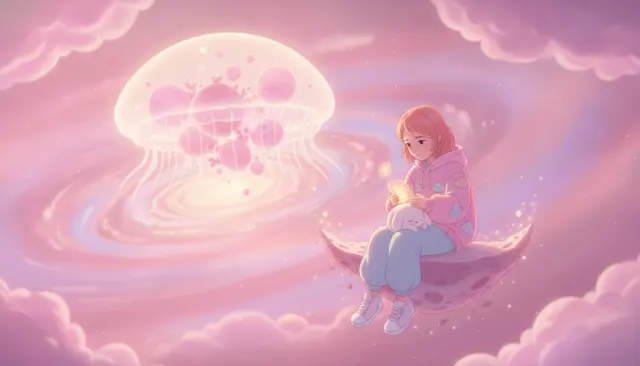
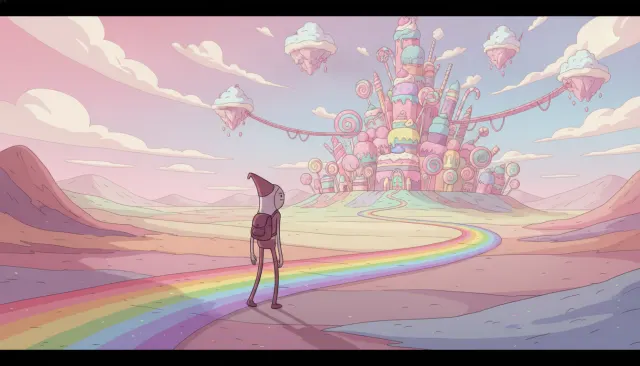
Lisa Hanawalt anthropomorphic-bird friendship comedy. Bird Town apartment interiors, dreamy doodle riffs, bright millennial palette.
The moves a human crew would use to get here. Cue applies them for you, and knowing their names is how you ask for a change.
Bird characters with anatomically correct beaks, plumage, and avian facial features combined with human body proportions and clothing
Environments packed with pattern-on-pattern textile, tile, botanical, and food detail - surfaces never left plain when they can be decorated
Animation cells retain the quality of individual illustration strokes - pencil texture, brush variation, and drawing-mark visible in finished frames
Anxiety and trauma depicted through environmental surrealism - spaces distorting, objects animating independently, visual logic departing from naturalism
Color applied in multiple layers with pattern overlap, creating visual depth through accumulation rather than tonal variation
Tuca and Bertie premiered on Netflix on May 3, 2019, with a second season on Adult Swim on June 13, 2021, and a third and final season on Adult Swim in 2023. The show was created by Lisa Hanawalt, best known as the production designer and character designer for BoJack Horseman (Netflix, 2014-2020). Hanawalt's previous work includes the comic book series My Dirty Dumb Eyes and the illustrated book Hot Dog Taste Test.
Hanawalt's illustration work is immediately recognizable for its peculiar mix: anthropomorphic bird characters with human bodies, rendered in dense, vibrant color with visible illustration texture. The birds are not stylized into smooth cartoon shapes but retain specific avian facial characteristics while occupying human roles - Tuca (a toucan) and Bertie (a songbird) have species-accurate beaks and plumage alongside human hands, human-shaped bodies, and contemporary clothing.
The color work is genuinely exceptional: Hanawalt uses dense, layered color with pattern-on-pattern visual density. Backgrounds accumulate decorative detail - tiles, textiles, botanical elements, food items - creating environments that feel like illustrated editorial spreads come to life. The reference points are maximalist illustration traditions: Miriam Katin, Roz Chast, R. Crumb's more exuberant moments, and mid-century editorial illustration.
The show explicitly addresses trauma, sexual assault, career anxiety, and female friendship as its primary subjects - Tuca and Bertie was one of the first animated series to depict an adult female protagonist dealing with sexual assault trauma in a serious, sustained narrative arc. The visual density serves this: the maximalist environment is simultaneously joyful and overwhelming, matching the show's tonal balance between warm comedy and genuine emotional difficulty.
Episodes frequently deploy visual surrealism to externalize internal emotional states: Bertie's anxiety manifests as visual distortion, panic attacks render the environment surreal. The show's willingness to depart from naturalistic visual logic for psychological expressionism is a defining quality.
Netflix cancelled the show after Season 1 despite strong critical reception - a decision that generated significant industry discussion about streaming's treatment of adult animation aimed at women. Adult Swim's pickup for Seasons 2 and 3 is itself an unusual production history for an animated series.
Hanawalt's work on BoJack Horseman (as production designer and artist throughout all six seasons) established the anthropomorphic animal-in-human-world visual vocabulary that Tuca and Bertie develops further. Where BoJack uses the animal world as satirical backdrop, Tuca and Bertie places it at the center of intimate female friendship and psychological interiority.
Lisa Hanawalt / Netflix · 2019
Debut season establishing the maximalist color world and feminist friendship narrative
Lisa Hanawalt / Adult Swim · 2021
Later seasons with more direct trauma narrative and evolved visual expressionism
Raphael Bob-Waksberg + Lisa Hanawalt (designer) / Netflix · 2014
Predecessor show where Hanawalt developed the anthropomorphic-animal-world visual vocabulary
Lisa Hanawalt (Drawn + Quarterly) · 2013
Hanawalt's comic collection establishing her illustration aesthetic that the show directly translates
Shion Takeuchi / Netflix · 2021
Contemporary adult animated series on Netflix sharing the female-creator, adult-themes-in-animation space
A Look is not a filter. It is a set of stored decisions the pipeline reads before it makes a single frame, so two videos in the same Look actually match.