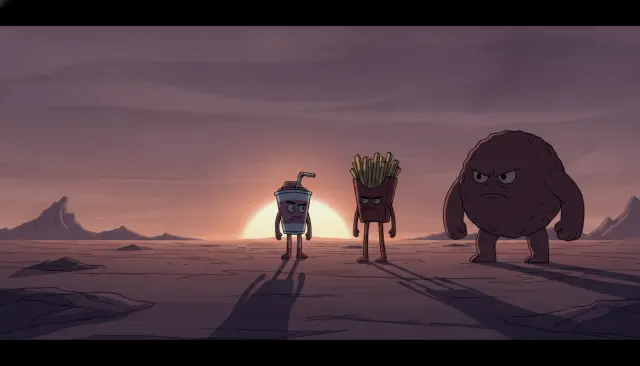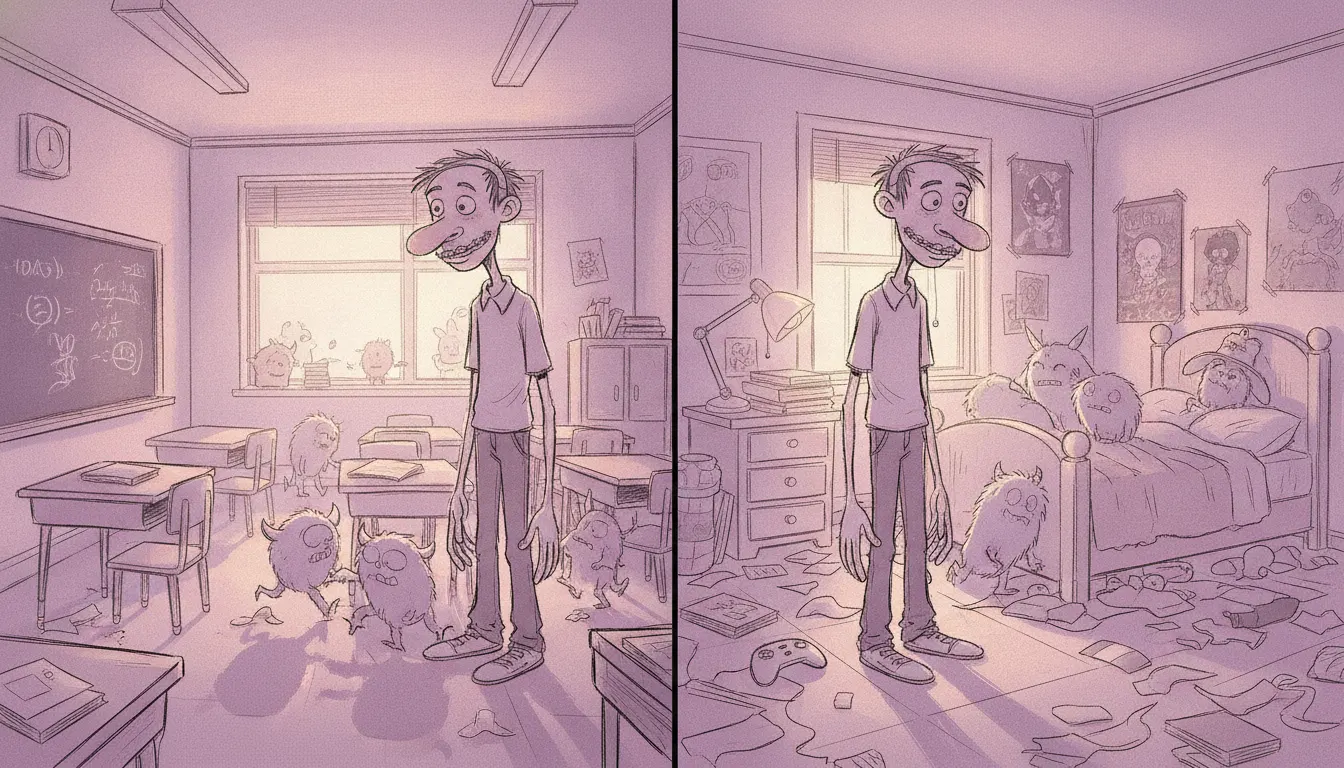
Big Mouth
Nick Kroll, Andrew Goldberg et al. / Netflix · 2017
The founding work; defined the doodle-realism adult animation aesthetic
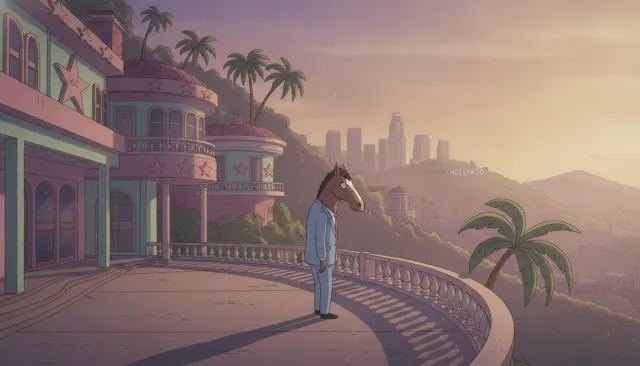
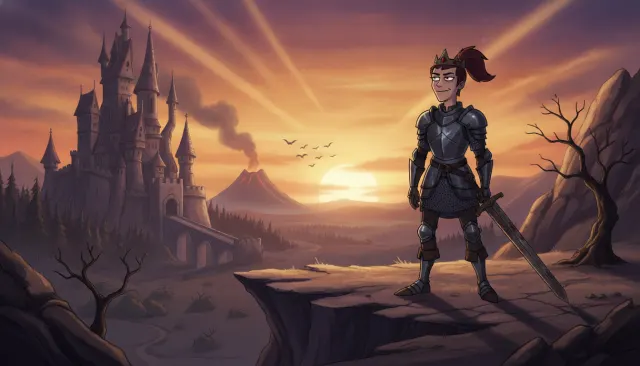
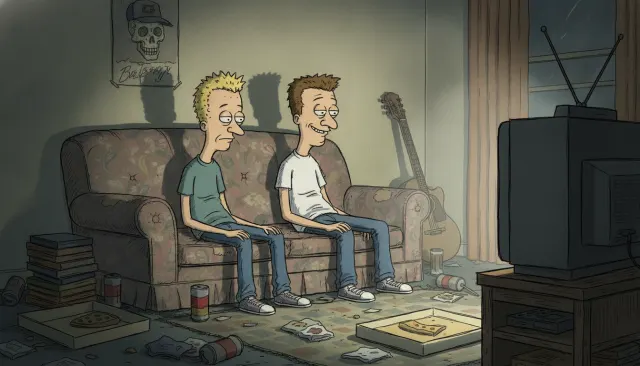
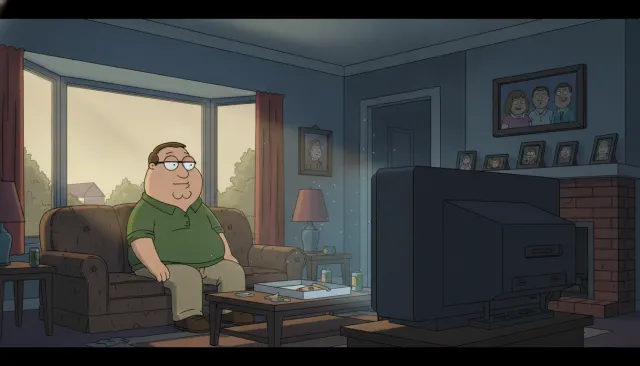
Nick Kroll and Andrew Goldberg loose-doodle suburban puberty comedy. Hormone monsters, middle school hallway palette, expressive Bridgeton tween cast.
The moves a human crew would use to get here. Cue applies them for you, and knowing their names is how you ask for a change.
Characters combine childlike sketchbook-doodle looseness with anatomically candid rendering of pubescent bodies.
Fantasy embodiments of psychological states use grotesque, shaggy, exaggerated creature designs that contrast with the human characters.
Character bodies and faces use deliberate imprecision -- lumps, asymmetry, inconsistent proportions -- that reads as authentic adolescent awkwardness.
Environmental design grounds the fantasy in accurate late-1990s/early-2000s American suburbia -- strip malls, colonial houses, middle school hallways.
Color palette shifts for puberty-related sequences toward warm oranges and pinks, using environment color to convey emotional state.
Much of the comedy is staged in dialogue-forward scenes where the doodle aesthetic allows performers' voices to lead without demanding complex animation.
Big Mouth premiered on Netflix on September 29, 2017, created by Nick Kroll, Andrew Goldberg, Mark Levin, and Jennifer Flackett. The series was animated by Titmouse, Inc. (the same studio behind Metalocalypse and Big Hero 6 TV), with art direction from Sung Jin Ahn. The show ran through Season 8 (2024) and spawned the spinoff Human Resources (2022).
Big Mouth's design aesthetic is one of the most distinctive in modern adult animation: a deliberate fusion of childlike doodle aesthetics with hyper-specific anatomical and bodily realism. Characters look like a slightly gifted middle schooler's notebook doodles brought to life -- lumpy, endearingly asymmetrical, with faces that have the casual imprecision of cartoon-doodle tradition.
This visual register is strategically chosen. The show's subject -- puberty, sexual development, and emotional maturation in 7th graders -- is genuinely difficult territory. The doodle aesthetic softens the explicitness enough to make it watchable while the candid dialogue and storylines maintain honest engagement with the material. The character design allows the show to be explicit without being pornographic.
Character designer Sung Jin Ahn and the Titmouse team developed designs that split the difference between the Simpsons-era flat-vector tradition and a looser, more gestural approach. Characters have rounded, lumpy forms with inconsistent shading that feels casual rather than studied. Hormone Monsters and other fantastical characters are given more elaborate design to distinguish them from the human cast.
The Hormone Monster (voiced by Nick Kroll) and Hormone Monstress (voiced by Maya Rudolph) are the show's signature design achievements -- enormous, shaggy, physically grotesque embodiments of adolescent urges that are simultaneously terrifying and endearing. Their character designs push the doodle-creature aesthetic to its logical extreme.
Middleburg, New Jersey is rendered with accurate suburban specificity -- colonial houses, strip malls, middle school corridors -- in a palette that balances the warm nostalgia of 1990s-2000s suburbia with the show's frankly unglamorous subject matter. Art director Sung Jin Ahn used color to signal emotional states with deliberate expressionism: puberty-related sequences often shift to warm, uncomfortable oranges and pinks.
Big Mouth arrived as Netflix was establishing its adult animation slate alongside BoJack Horseman (Raphael Bob-Waksberg, 2014). The show broke ground by treating adolescent sexual development as legitimate comedy and drama territory rather than a topic to be avoided or euphemized in animation.
The spinoff Human Resources (2022) expanded the universe to adult emotional life, applying the doodle-creature design aesthetic to adult anxieties (menopause, addiction, depression) with equal frankness.
Nick Kroll, Andrew Goldberg et al. / Netflix · 2017
The founding work; defined the doodle-realism adult animation aesthetic
Kelly Galuska / Netflix · 2022
Spinoff applying the doodle-creature aesthetic to adult emotional life
Raphael Bob-Waksberg / Netflix · 2014
Netflix adult animation contemporary; shared the frank-emotional-content mission in a different aesthetic register
Matt Groening / Netflix · 2018
Netflix adult animation from the Simpsons creator; different aesthetic but same streaming-adult-comedy context
Lisa Hanawalt / Netflix · 2019
Netflix adult animation from BoJack production designer; closer visual cousin to Big Mouth's doodle-creature approach
Wendy Molyneux / Fox · 2021
Fox adult animation using a similar rounded-doodle character design philosophy
A Look is not a filter. It is a set of stored decisions the pipeline reads before it makes a single frame, so two videos in the same Look actually match.