Aqua Teen Hunger Force
Dave Willis, Matt Maiellaro / Adult Swim · 2000
The canonical work; defined the cheap-Flash anti-aesthetic for adult animation
Dave Willis and Matt Maiellaro Adult Swim Williams Street short. Anthropomorphic fast food trio, cheap Flash limited animation, suburban New Jersey backyard.
The moves a human crew would use to get here. Cue applies them for you, and knowing their names is how you ask for a change.
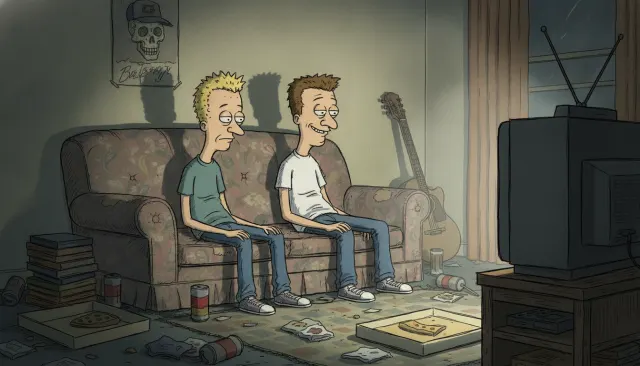
Characters repeat minimal two-or-three-frame animation cycles, making the limited budget visible and comedic.
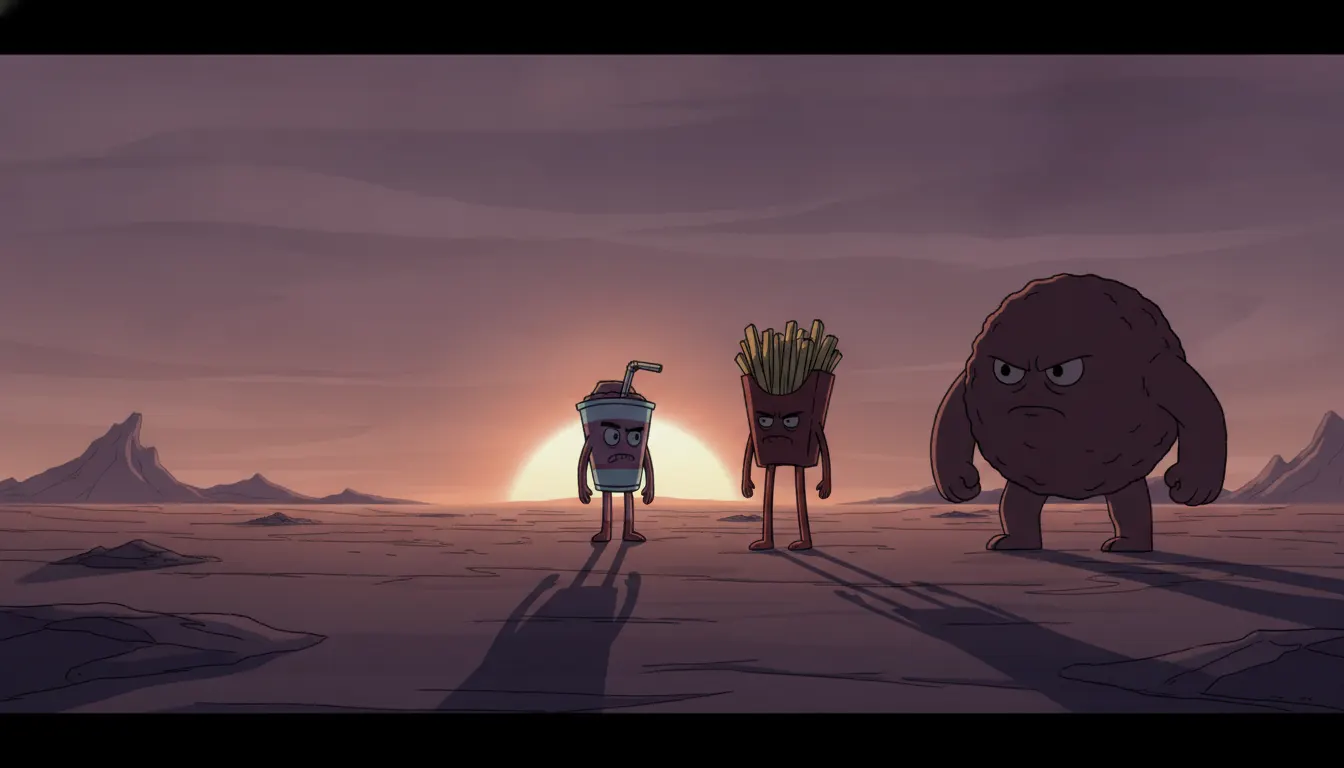
Protagonists are literal food items -- a milkshake cup, a box of fries, a ball of meat -- with vestigial limbs and facial features.
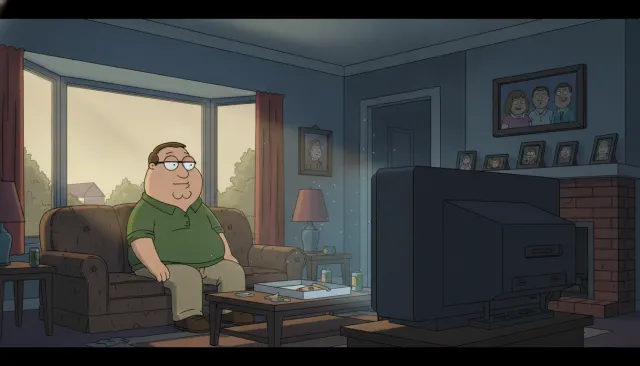
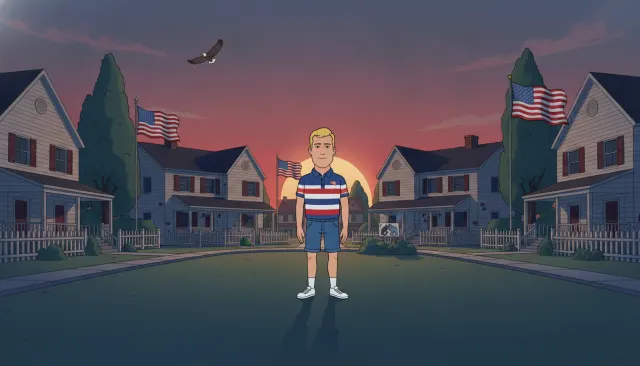
The Mooninite-invasion neighborhood is rendered with approximate perspective and flat color, deliberately unglamorous.
Characters visibly slide and stretch between poses in ways that reveal the digital tweening process rather than concealing it.
Character sizes shift between shots without explanation, a gag that lampshades the absence of professional continuity.
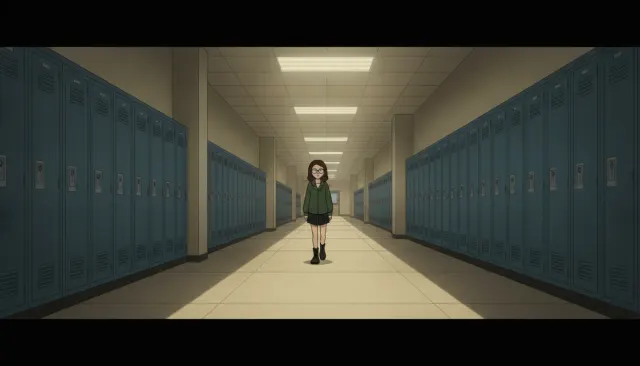
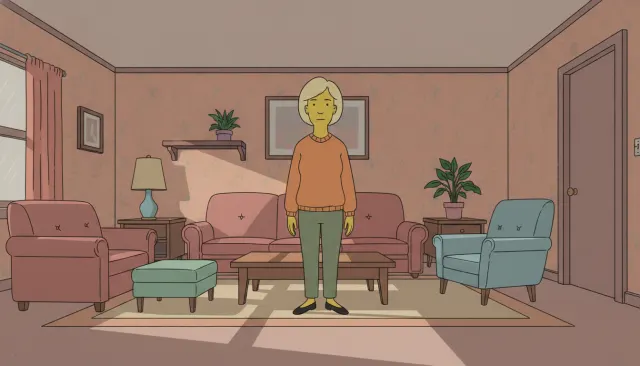
Backgrounds are often single-color fills or minimally detailed environments that read as production shortcuts celebrated as style.
Aqua Teen Hunger Force premiered on Cartoon Network's Adult Swim block on December 30, 2000, created by Dave Willis and Matt Maiellaro. Originally conceived as a spinoff of the Space Ghost Coast to Coast universe, ATHF became the defining work of Adult Swim's anti-aesthetic -- a deliberate rejection of production polish in favor of absurdist humor delivered through maximally cheap animation.
Aqua Teen's visual language is the purest expression of what animation historians call 'limited animation as comedy.' Characters are drawn with minimal construction, colored with flat fills that barely pretend to be three-dimensional, and animated with motion-tween loops that barely qualify as animation. The entire aesthetic communicates 'we have no budget and we don't care.'
Frylock is a box of french fries with a goatee and laser eyes. Master Shake is a large milkshake cup with a straw. Meatwad is a ball of meat. These character designs represent the logical endpoint of simplified cartoon design -- abstract geometric shapes assigned human personalities.
The show was genuinely produced on minimal budget using Macromedia Flash (later Adobe Flash) and simple After Effects compositing. Background artist Erik Richter's New Jersey suburban environments -- the trash-strewn yard, Carl's pool, the interior of the apartment -- are drawn with the minimal linework and flat color of a professional illustrator working as fast as possible. Perspective is approximate. Anatomy is optional.
This production reality became the show's comedic engine. The disconnect between the absurd cosmic horror of the plots (alien invasions, mad scientist neighbors, sentient food) and the visually inert presentation creates a specific deadpan quality that became Adult Swim's house aesthetic.
Adult Swim launched in 2001 as a late-night programming block using Cartoon Network's infrastructure but targeting 18-34 adults. Willis and Maiellaro's work, alongside Space Ghost Coast to Coast (Mike Lazzo, 1994), established a programming philosophy: cheap production, subversive content, willing confusion of the audience as a comedic strategy.
Aqua Teen influenced an enormous wave of web animation and YouTube content. The 'on purpose bad' or 'ugly on purpose' animation aesthetic -- now visible in everything from Superjail! (2007) to Adult Swim's smalls shorts -- traces directly to ATHF. The show also pioneered the 11-minute adult cartoon format that allowed rapid concept cycling without the narrative demands of 22-minute shows.
The show went through multiple title changes (Aqua Unit Patrol Squad 1, Aqua Something You Know Whatever, Aqua TV Show Show) in Seasons 8-10, a meta-commentary on the show's own identity crisis. A theatrical film, Aqua Teen Hunger Force Colon Movie Film for Theaters, was released in 2007. The series was revived as Aqua Teen Forever: Plantasm in 2022 as an animated film for HBO Max.
Dave Willis, Matt Maiellaro / Adult Swim · 2000
The canonical work; defined the cheap-Flash anti-aesthetic for adult animation
Mike Lazzo / Cartoon Network · 1994
Precursor that pioneered repurposed cheap animation as adult comedy
Dave Willis, Matt Maiellaro · 2007
Theatrical feature that maintained the TV aesthetic while expanding scope
Matt Maiellaro / Adult Swim · 2005
Pushed the lo-fi aesthetic even further toward intentional crudeness
Adam Reed, Matt Thompson / Adult Swim · 2000
Contemporaneous Adult Swim show using recycled Hanna-Barbera footage as foundation
Christy Karacas / Adult Swim · 2007
Later Adult Swim work that evolved the cheap aesthetic toward psychedelic extremes
Dave Willis, Matt Maiellaro / HBO Max · 2022
Revival feature that preserved the lo-fi visual identity after two decades
A Look is not a filter. It is a set of stored decisions the pipeline reads before it makes a single frame, so two videos in the same Look actually match.