The Simpsons Season 1-9 (Golden Age)
Matt Groening + James L. Brooks + Al Jean / Gracie Films · 1989
The foundational seasons establishing Springfield and defining American animated sitcom visual language
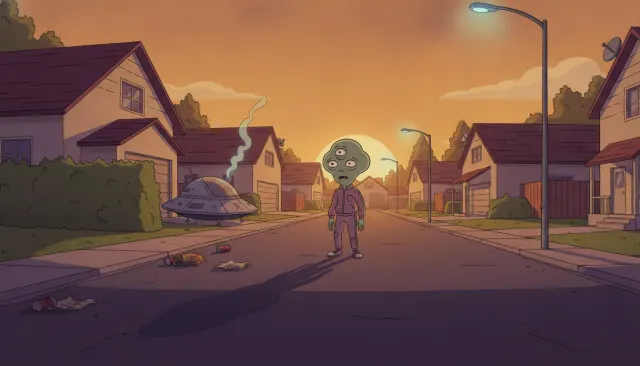
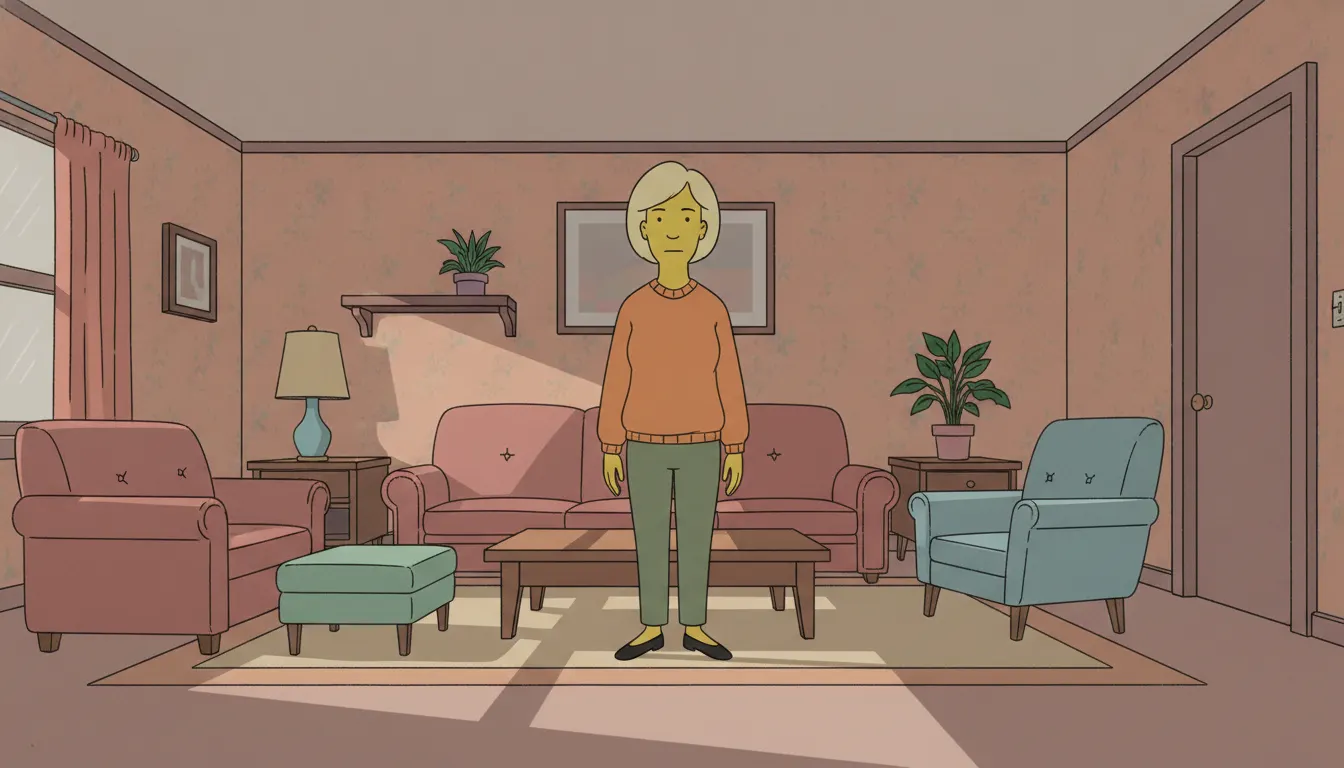
Matt Groening yellow-skin suburban sitcom look. Thick black ink outlines, four-fingered hands, flat saturated color fills, Springfield pastel skies.
The moves a human crew would use to get here. Cue applies them for you, and knowing their names is how you ask for a change.
The Simpsons family's distinctive yellow skin tone, unique in visual media, enabling immediate channel and merchandise recognition without context
Eyes rendered as white areas with black circular pupils and no iris color - simpler and more expressive than realistic eye rendering
Cost-saving animation shorthand that became aesthetic identity - all characters have four fingers, maintaining consistency across thousands of episodes
Characters exist in neutral, shadowless lighting regardless of environment - allowing scene changes without lighting continuity adjustments
Marge's two-foot-tall blue hair as pure character silhouette signature - physically impossible but visually iconic
Town environments designed for maximum recognizability with minimal detail - cartoon-readable architecture that conveys location without photographic complexity
Consistent thick black outlines on every character and background element, unifying the visual space and maintaining flat-graphic clarity
The Simpsons premiered on Fox on December 17, 1989 - originally as 30-second interstitial shorts on The Tracey Ullman Show starting April 19, 1987 - and is currently in its 35th season as of 2024, making it the longest-running American animated series and primetime scripted television series. Created by Matt Groening, the show is produced by Gracie Films and 20th Television Animation.
Groening designed the family in yellow - reportedly to make them immediately distinguishable when channel-flipping, as yellow skin appears nowhere else in live-action television. The distinctive yellow skin, white eyes (with black pupils), overbite, and four-fingered hands (a cost-saving animation shorthand) create one of the most recognizable character design systems in media history. Homer's D'OH, Bart's spiky hair, Marge's two-foot blue beehive, Lisa's star-shaped hair, and Maggie's pacifier are silhouette-readable at thumbnail size.
The show's original production in the early seasons involved traditional cel animation produced primarily by Klasky-Csupo (Seasons 1-2, 1989-1991), then Film Roman (Seasons 3 onwards, 1991-2011), and finally Rough Draft Studios Korea for most digital-era episodes. The aesthetic shifted from slightly warmer, more textured cel art in early seasons to cleaner, more saturated digital linework from around Season 13 (2001-2002) onward.
The town of Springfield was designed as deliberately vague - no state specified, architecture combining Northeastern and Midwestern American suburb vernacular. The nuclear power plant, Moe's Tavern, the school (Springfield Elementary), and the Simpsons' house at 742 Evergreen Terrace are among the most reproduced background environments in animation history. Background designer Arden Archibald established the clean, legible Springfield visual vocabulary.
The flat-fill approach uses distinct zones of color for character regions with minimal shading - characters are illuminated without direction, existing in a perpetually neutral lighting environment. This allows the show to move characters through wildly varying environments without requiring lighting continuity.
The Simpsons established the visual template for American adult animated sitcoms that every subsequent show in the genre - King of the Hill, Futurama, Family Guy, American Dad, Bob's Burgers, Disenchantment - is either following or deliberately departing from. The yellow-skin, flat-fill, domestic American setting became the reference point genre template. Couch gag sequences (opening title variants) have showcased hundreds of alternative animation styles since Season 1.
Merchandise and cultural proliferation have made the yellow Simpson family globally recognizable without requiring Simpsons knowledge - a pure graphic icon.
Matt Groening + James L. Brooks + Al Jean / Gracie Films · 1989
The foundational seasons establishing Springfield and defining American animated sitcom visual language
David Silverman (director) / Gracie Films · 2007
Theatrical feature expanding the flat-color aesthetic to widescreen with environmental scope
Wes Archer + Rich Moore + David Silverman · 1990
Annual Halloween anthology tradition showcasing stylistic range within the flat-color framework
Matt Groening (rougher original designs) · 1987
Origin shorts with cruder, less refined character designs showing the aesthetic's starting point
Matt Groening + David X. Cohen · 1999
Groening's direct follow-up applying similar flat-color sitcom aesthetic to sci-fi
Matt Groening / Netflix · 2018
Latest Groening series in medieval fantasy - flat-color sitcom aesthetic in fantasy genre
Mike Judge + Greg Daniels / Fox · 1997
Near-contemporary flat-color suburban sitcom with hyper-realistic Texas character design as contrast
A Look is not a filter. It is a set of stored decisions the pipeline reads before it makes a single frame, so two videos in the same Look actually match.