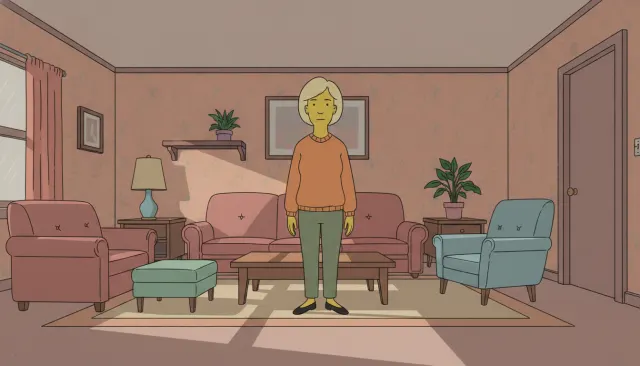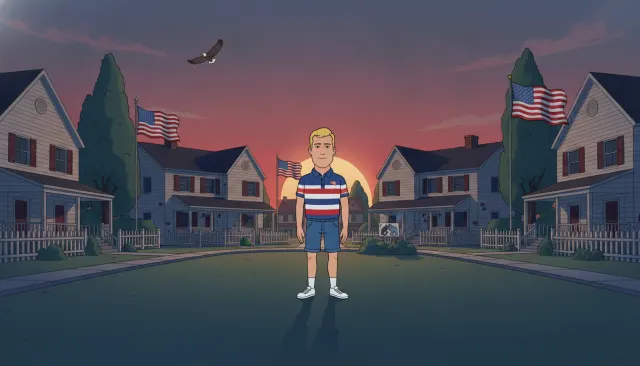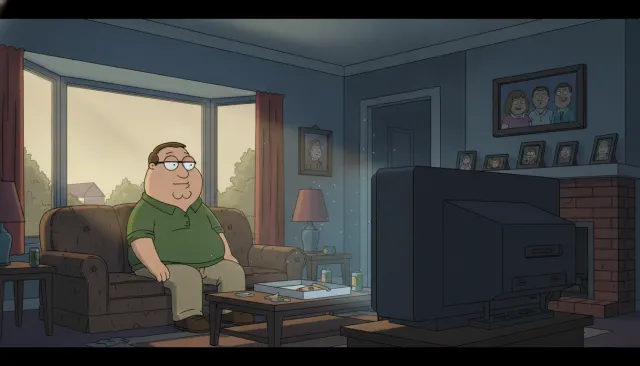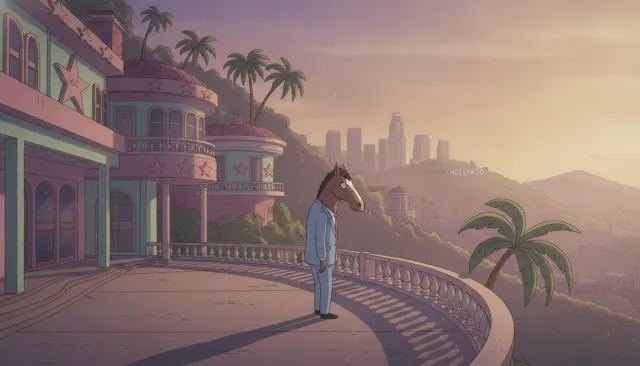
Bob's Burgers
Loren Bouchard / Fox / Bento Box · 2011
The canonical series; defined the warm-family adult animation visual identity
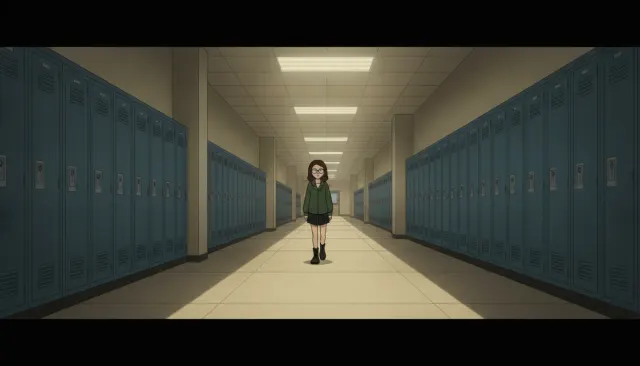
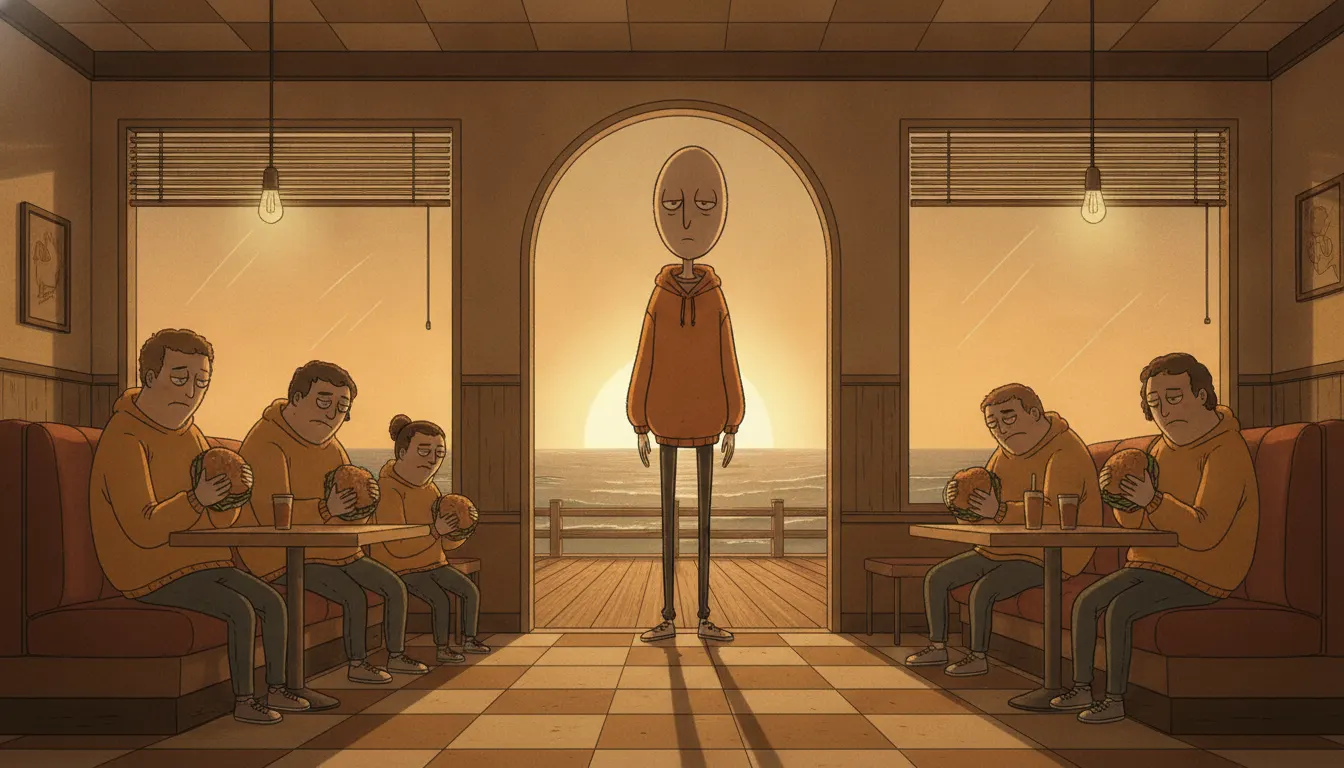
Loren Bouchard thin warm hand-drawn line. Restaurant interior browns, slouchy family of five, gentle indie sitcom warmth.
The moves a human crew would use to get here. Cue applies them for you, and knowing their names is how you ask for a change.
Each Belcher family member has a distinct body silhouette that communicates personality before any dialogue begins.
Characters avoid the extreme head-to-body ratios of Simpsons-era animation, using proportions that suggest actual physical weight.
Restaurant Row is rendered with Victorian commercial architecture and harbor-town specificity, giving the show a genuine sense of place.
Characters are staged in close physical proximity that communicates family warmth -- a deliberate counter-choice to dysfunction-comedy staging norms.
Line weight is uniform and confident without the thick outlines of Simpsons-era animation, giving the show a slightly more contemporary feel.
Interior restaurant colors -- browns, warm yellows, tile greens -- evoke actual New England diner environments rather than primary-cartoon brights.
Bob's Burgers premiered on Fox on January 9, 2011, created by Loren Bouchard, whose previous credits included Home Movies (2001, with Brendon Small) and Lucy: The Daughter of the Devil (2005). The show was animated by Bento Box Entertainment, with character design by Bouchard and production designer Robin Brigstocke. The show reached Season 14 by 2024, making it Fox's longest-running animated series alongside The Simpsons.
Bob's Burgers occupies a specific visual position in the adult animation landscape: warmer, rounder, and more domestically grounded than contemporaries like Family Guy (1999) and American Dad (2005). The Belcher family designs are drawn with semi-realistic proportions -- heads that are somewhat large but not grotesquely so, bodies that suggest actual weight and physical reality, faces with small but detailed features.
Character designer Steve Zellner developed designs where each family member has a distinct body shape that reflects personality: Bob is compact and barrel-chested; Linda is angular and expressive; Tina is a near-rectangle of suppressed anxiety; Gene is soft and round; Louise is small and pointed. These body shapes function as immediate character shorthand.
The show uses a clean, confident line style without the thick outlines of many Simpsons-era contemporaries. Lines are consistent in weight, characters are drawn with economical detail -- enough to be expressive, not enough to slow production -- and the color palette is warm and slightly muted, referencing the actual palette of the New England/New York coastal environment.
Restaurant Row, the fictional New England coastal street where the burger restaurant operates, is rendered with specific local architectural detail -- Victorian commercial buildings, weathered storefronts, a working harbor in the distance. Background artist Molly Erdman and the Bento Box team maintained a high standard of environmental specificity that gives the show a genuine sense of place.
A key visual-philosophical choice in Bob's Burgers is the treatment of the family as genuinely loving and functional -- an unusual choice in adult animation, where dysfunction and conflict are typically the comedy engine. This emotional warmth is expressed visually through character staging: the Belchers stand close together, touch each other, and share physical space in ways that communicate affection.
Loren Bouchard's visual direction specifically avoided the 'nuclear family in conflict' staging that defines much of The Simpsons' composition. The Belcher restaurant's physical smallness -- cramped kitchen, tight dining room -- forces characters into proximity that becomes warmth rather than friction.
Bob's Burgers arrived as a counterpoint to the cynicism and aggression of MacFarlane-universe adult animation (Family Guy, American Dad, Cleveland Show). Its success demonstrated that adult animation audiences wanted warmth and affection alongside comedy. The show's character-first comedy influenced a generation of subsequent animated series: Bojack Horseman (2014), Big Mouth (2017), and The Great North (2021, Loren Bouchard's follow-up) all carry DNA from the Bob's model.
Loren Bouchard / Fox / Bento Box · 2011
The canonical series; defined the warm-family adult animation visual identity
Loren Bouchard / 20th Century Studios · 2022
Theatrical adaptation that maintained the TV aesthetic at cinema quality
Loren Bouchard, Brendon Small / Adult Swim · 2001
Bouchard's earlier work; cruder but with the same character-warmth philosophy
Loren Bouchard / Fox · 2021
Bouchard's follow-up series; directly extends the Bob's visual language to Alaska
Adam Reed / FX · 2009
Contemporaneous adult animation with a radically different visual philosophy but overlapping adult-comedy audience
Mike Judge / Fox · 1997
Preceding generation of warm-family adult animation that Bob's acknowledges as a primary influence
A Look is not a filter. It is a set of stored decisions the pipeline reads before it makes a single frame, so two videos in the same Look actually match.