Daria
Glenn Eichler, Susie Lewis Lynn / MTV Animation · 1997
The canonical work; the definitive flat-vector deadpan satirical animation
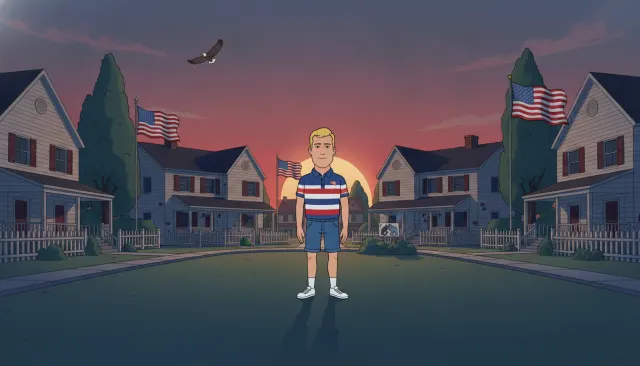
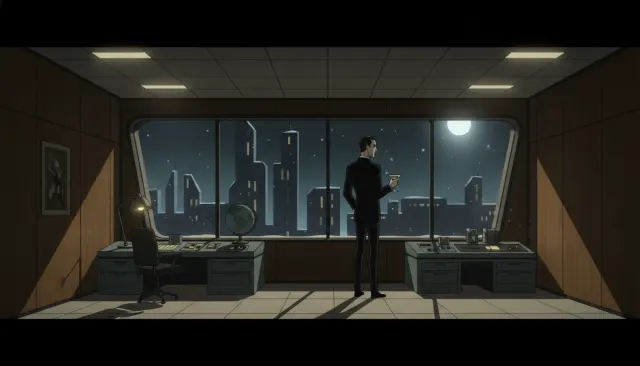
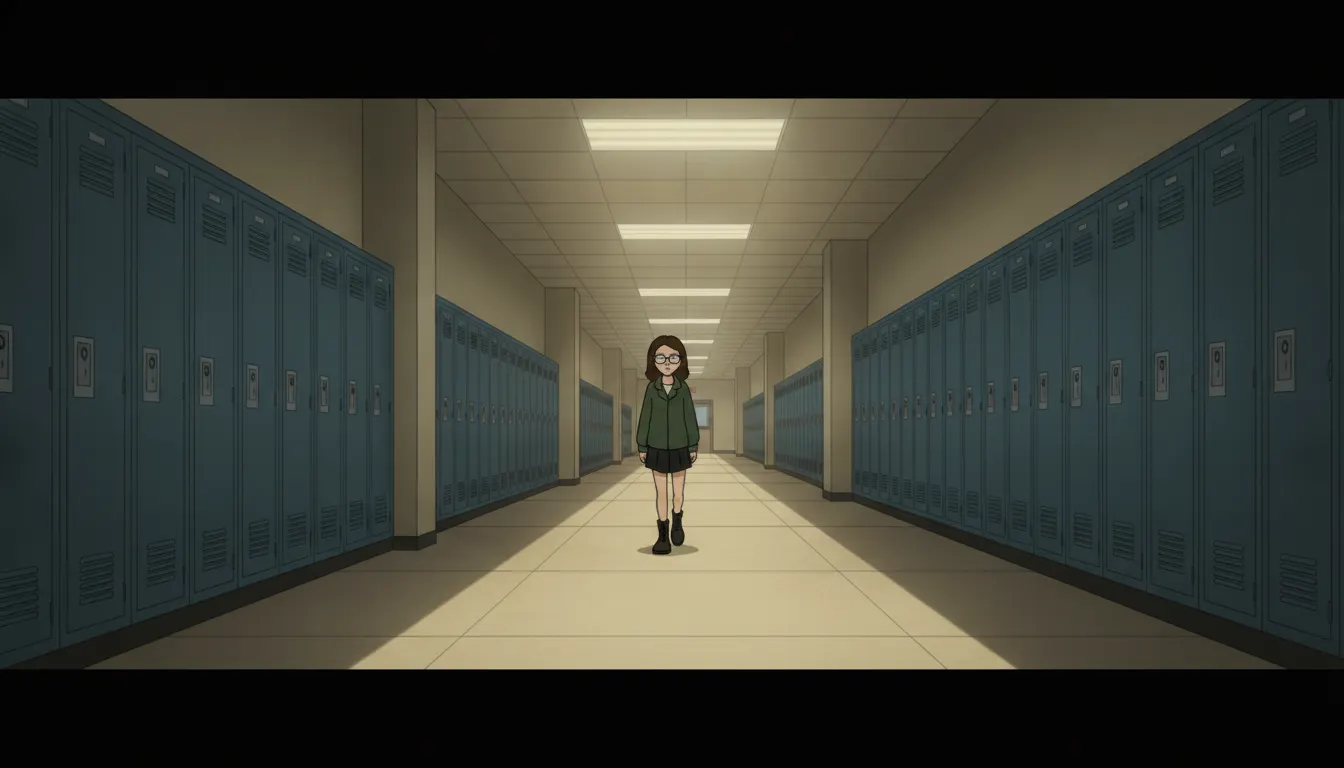
Glenn Eichler and Susie Lewis flat-vector deadpan suburban high school. Lawndale beige hallways, dry-witted teenager in combat boots, late-90s MTV palette.
The moves a human crew would use to get here. Cue applies them for you, and knowing their names is how you ask for a change.
Protagonist is rendered with minimal facial expressiveness as a visual metaphor for social non-performance -- the flat face as refusal to fake emotion.
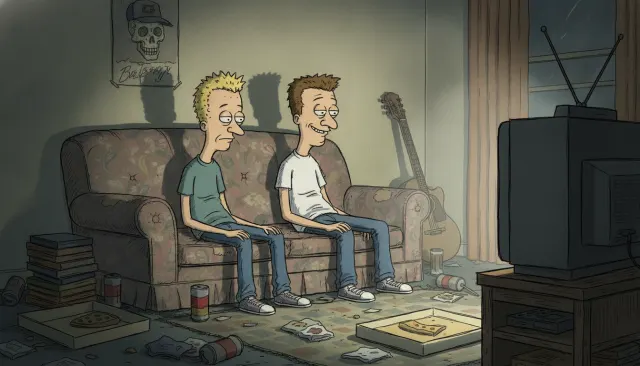
Characters use thin black outlines with clean flat color fills and minimal shading, referencing early digital vector illustration.
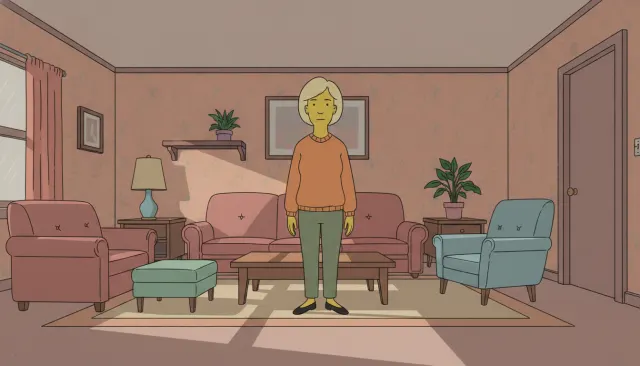
Lawndale's environments use the specific muted palette of 1990s American suburban commercial architecture -- beige, khaki, corporate orange.
Characters deliver dialogue from stationary positions with repeated stock expressions, treating animation budget limitations as comedic style.
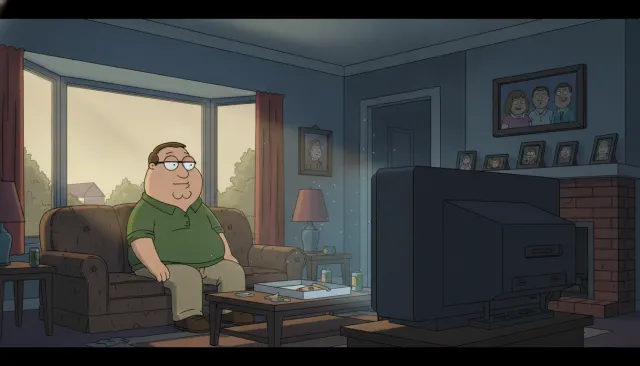
Chain restaurant interiors, mall food courts, and suburban homes are rendered with period-specific architectural and commercial detail.
Scene transitions and shot staging are functional rather than expressive -- a visual grammar that matches the show's refusal to oversell its comedy.
Daria premiered on MTV on March 3, 1997, created by Glenn Eichler and Susie Lewis Lynn as a spinoff of Beavis and Butt-Head (1993-1997), where the character Daria Morgendorffer had appeared as a recurring foil. The show was animated at MTV Animation in New York, running for five seasons through January 21, 2002, with two TV films: Is It Fall Yet? (2000) and Is It College Yet? (2002). The show was subsequently acquired by Paramount+ and released through various home media channels.
Daria's animation style is one of the most deliberately austere in American TV animation. The show uses flat, clean vector-style character designs with minimal shading, thin black outlines, and a color palette that references the specific visual landscape of 1990s suburban America: khaki, green, orange-brown, muted blue -- the palette of a Lawndale, New Jersey subdivision.
Character designer Karen Disher developed designs that prioritized deadpan legibility over expressiveness. Daria herself is rendered as a deliberately unexpressive figure: round glasses, straight brown hair, a green jacket and orange shirt that function almost as a uniform, a permanently flat expression. This visual flatness is the show's central visual metaphor: a character who refuses to perform emotion reads as flat in the literal animation sense.
Daria uses the limitations of its flat animation style as comedy. Characters repeat the same limited expressions across scenes. Physical staging is minimal -- characters sit, stand, and deliver lines without the gestural richness of higher-budget animation. This flatness serves the show's dry, deadpan comedic tone: the humor is delivered through dialogue and situation, not through visual performance.
This approach influenced a generation of web animation and YouTube content. The 'talking heads with minimal animation' format that characterized early Flash animation (Homestar Runner, 2000; Newgrounds content of the early 2000s) owes a direct debt to Daria's demonstration that vocal and written comedy doesn't need elaborate animation to land.
Lawndale's environments -- the Morgendorffer home, Lawndale High, the Pizza King, the mall -- are rendered with the specific flatness of American suburban commercial architecture. The color palette references actual 1990s American commercial environments: the pinks and greens of a Suburban TGI Friday's, the beige and blue of a generic school hallway, the primary-primary-but-muted palette of American chain restaurants.
This environmental specificity grounds Daria's social satire in a recognizable world. The visual joke is that everything looks exactly like actual 1990s suburban America -- flat, beige, corporate, slightly soul-deadening.
Daria aired as MTV's relationship with its Gen X audience was evolving. The show addressed the specific anxieties of suburban teenage intellectualism -- the alienation of being 'the smart girl' in a culture that doesn't reward intellectual engagement -- with a flat visual language that refused to glamorize its subject.
The show's feminist sensibility, delivered through flat animation and deadpan dialogue, made it a touchstone for a generation of women who recognized themselves in Daria's refusal to perform pleasantness. The show's visual austerity -- refusing to make its protagonist conventionally attractive by animation standards -- was itself a political choice.
Glenn Eichler, Susie Lewis Lynn / MTV Animation · 1997
The canonical work; the definitive flat-vector deadpan satirical animation
Mike Judge / MTV · 1993
Parent show from which Daria's character and world originated
Glenn Eichler, Susie Lewis Lynn / MTV · 2000
TV film that expanded the visual and narrative scope while maintaining the flat aesthetic
Mike Judge / Fox · 1997
Contemporaneous suburban-satire animation with a slightly more dynamic aesthetic in the same cultural moment
BOOM! Studios · 2018
Comics continuation that maintained the flat-vector visual identity in a new medium
Phil Lord, Chris Miller, Bill Lawrence / MTV · 2002
MTV Animation followup in the same deadpan-flat-vector teen-satire tradition
A Look is not a filter. It is a set of stored decisions the pipeline reads before it makes a single frame, so two videos in the same Look actually match.