American Dad!
Seth MacFarlane, Mike Barker, Matt Weitzman / Fox · 2005
The founding and canonical work of this aesthetic
Family Guy sibling with slightly tighter linework and more grounded character design. Langley Falls cul-de-sac palette, political satire energy.
The moves a human crew would use to get here. Cue applies them for you, and knowing their names is how you ask for a change.
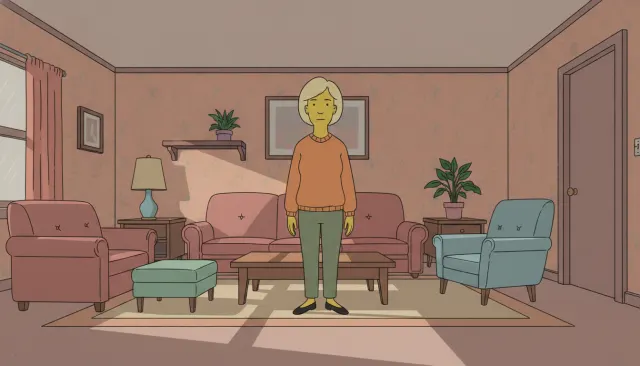
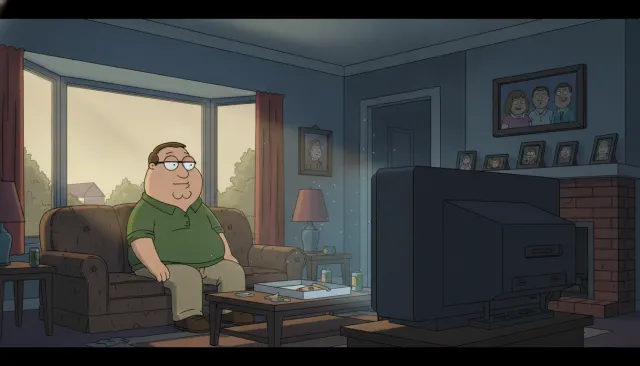
Characters use crisp black outlines and flat digital color fills, a cleaner approach than hand-drawn predecessors.
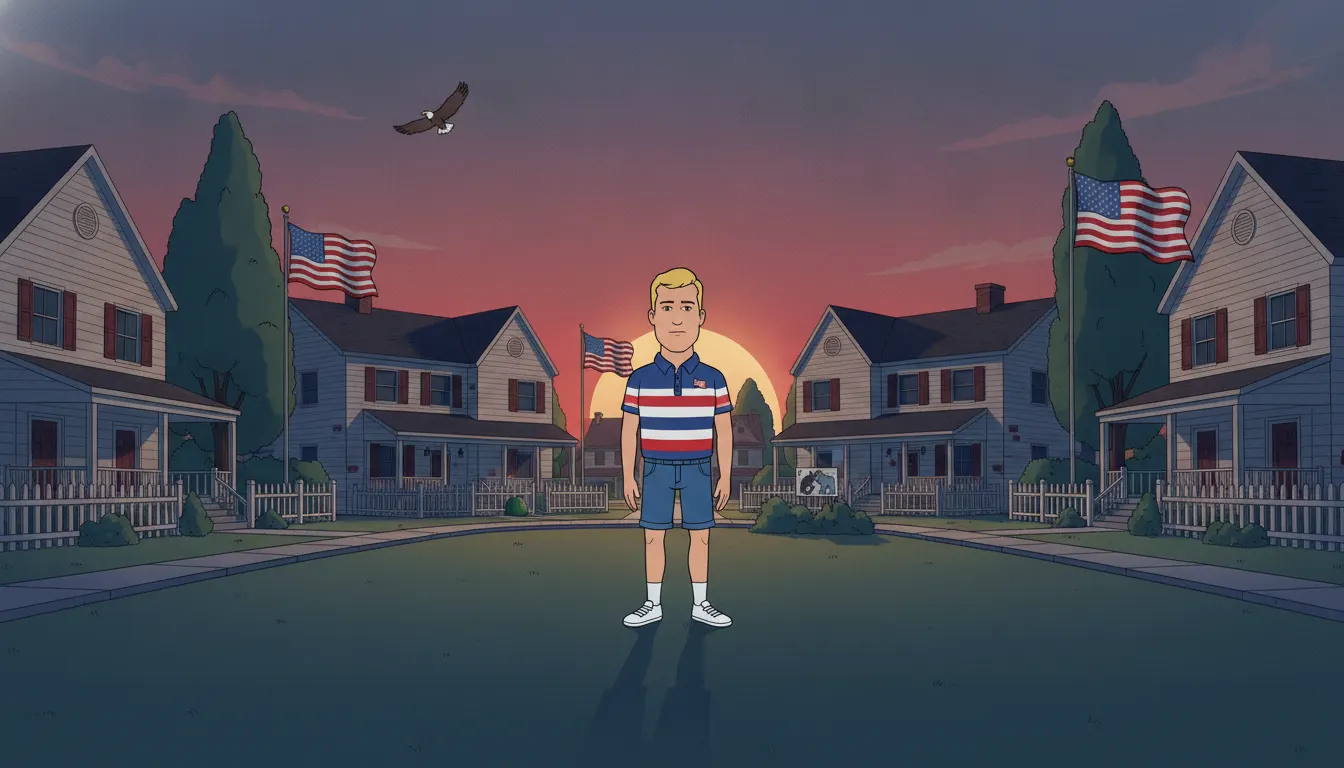
Langley Falls homes, lawns, and interiors are rendered with specific American domestic architecture accuracy.
Characters are drawn as satirical archetypes -- square-jawed patriots, hippie daughters, suburban housewives -- with proportions pushed for comedic effect.
Beige, tan, green lawn, and blue sky dominate the exterior palette, reflecting actual American suburban environments.
Roger's hundreds of disguise personas are drawn with deliberate period and cultural accuracy, functioning as visual jokes.
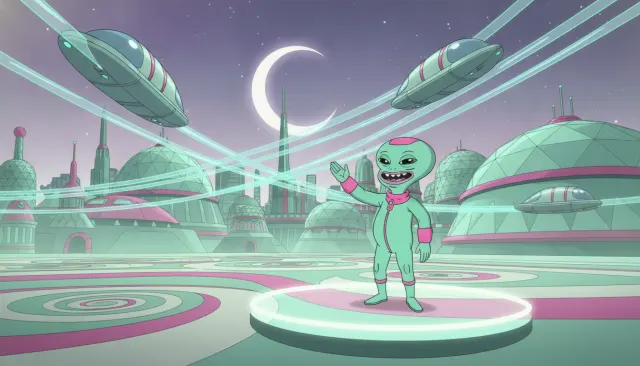
Absurdist plot elements (alien, talking fish) are placed in photorealistic domestic spaces, the contrast driving the comedy.
American Dad! premiered on Fox on February 6, 2005, created by Seth MacFarlane, Mike Barker, and Matt Weitzman as a post-9/11 political satire. The show ran on Fox through Season 10 before moving to TBS in 2014, where it has continued -- making it one of the longest-running animated series in American television history.
American Dad occupies a precise visual register between The Simpsons-era flat animation and the digital-era cleanliness of early 2000s Flash-influenced production. Character designer Derrick Wyatt (who later worked on Ben 10: Alien Force) helped establish the show's look: slightly more anatomically articulated than Family Guy, with sharper lines and crisper color fills.
The suburban Langley Falls, Virginia setting is rendered with careful attention to American domestic architecture -- split-level homes, manicured lawns, beige interiors, wood-paneled basements. The environments feel grounded and specific in a way that distinguishes the show from the more abstracted Springfield of The Simpsons.
American Dad was produced at Film Roman (the same studio behind King of the Hill and The Simpsons) using digital ink-and-paint workflows rather than traditional cel animation. This gives the show its crisp, clean-edged look compared to hand-drawn predecessors. Characters are outlined in clean black, filled with flat, slightly muted colors that evoke the midcentury suburban palette.
Stanley Smith's design is deliberately exaggerated to parody the all-American square-jawed CIA agent archetype -- a chinless, broad-shouldered caricature. Hayley's design references 2000s-era counterculture girl archetypes. Roger the alien's amorphous grey form allowed writers and animators enormous flexibility, as Roger adopts hundreds of disguise personas across the show's run.
The show's most distinctive character design innovation is the alien Roger Smith and the fish Klaus -- both 'non-human' characters integrated seamlessly into domestic American life. Roger's costumes and disguises became a visual comedy engine, each drawn with specific period-costume accuracy.
American Dad aired in the direct shadow of 9/11 and the Iraq War, using Stan's CIA affiliation to satirize Bush-era conservatism, surveillance culture, and American exceptionalism. This political grounding gives the show's visual language a specific cultural timestamp -- the mid-2000s suburban American aesthetic as seen through a satirical lens.
The show's visual humor relies heavily on the contrast between the mundane suburban setting (tract housing, SUVs, Costco trips) and the absurdist plot elements (alien roommates, Nazi goldfish, time travel). The flat, clean animation style supports this comedy by playing the absurdity completely straight.
American Dad's visual template has influenced political animation content, particularly YouTube animated political commentary. The clean, cost-effective digital workflow became a model for adult animated series produced outside the major network system.
Seth MacFarlane, Mike Barker, Matt Weitzman / Fox · 2005
The founding and canonical work of this aesthetic
Seth MacFarlane / Fox · 1999
MacFarlane's earlier series; shared production DNA but looser and more absurdist in design
Mike Judge, Greg Daniels / Fox · 1997
Precursor suburban animation at Film Roman with more naturalistic design philosophy
Matt Groening / Fox · 1989
Foundational suburban animation that defined the genre American Dad builds on
Loren Bouchard / Fox · 2011
Contemporary Fox Animation in a similar suburban register but warmer, less satirical
Seth MacFarlane, Mike Henry / Fox · 2009
Direct spinoff using the same production pipeline and visual language
A Look is not a filter. It is a set of stored decisions the pipeline reads before it makes a single frame, so two videos in the same Look actually match.