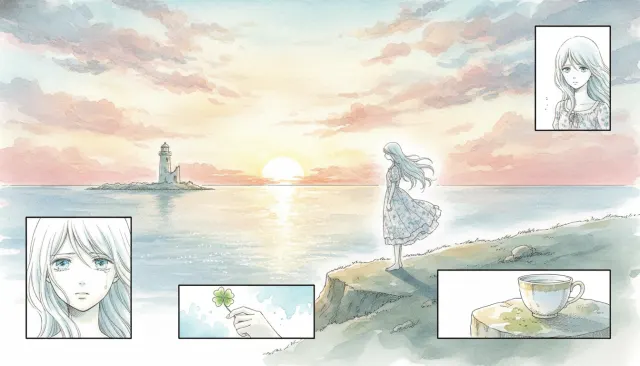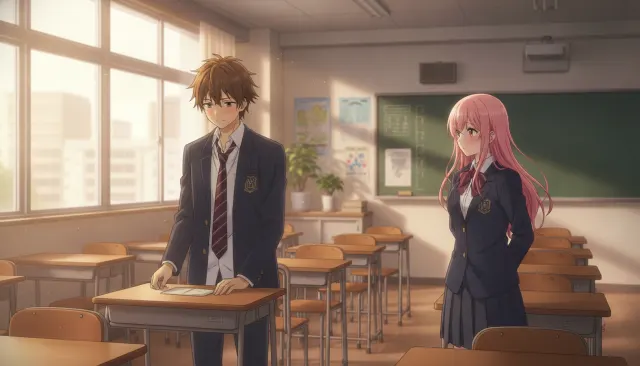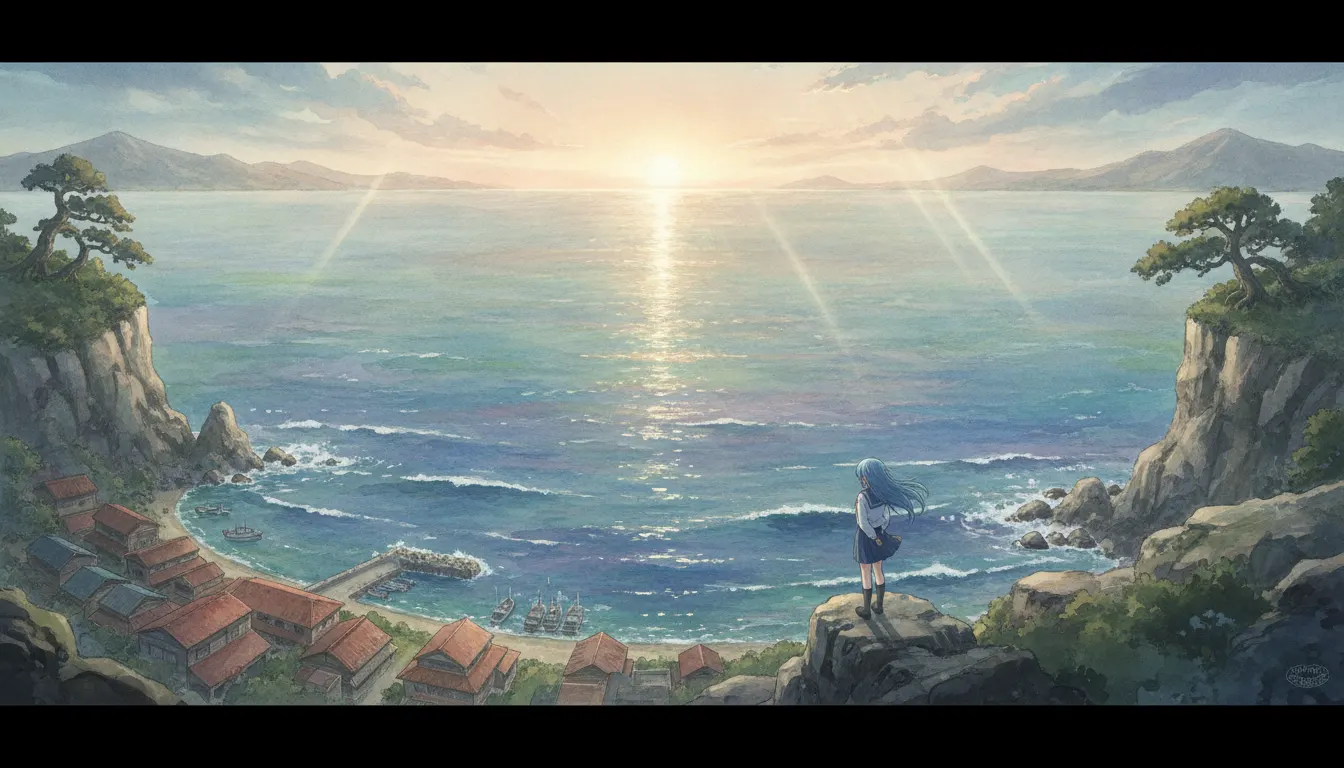
Nagi no Asukara (Nagi-Asu: A Lullaby of the Sea)
PA Works / Mari Okada · 2013
The studio's visual masterwork, developing a complete underwater civilization aesthetic with caustic light and sea-village color grammar
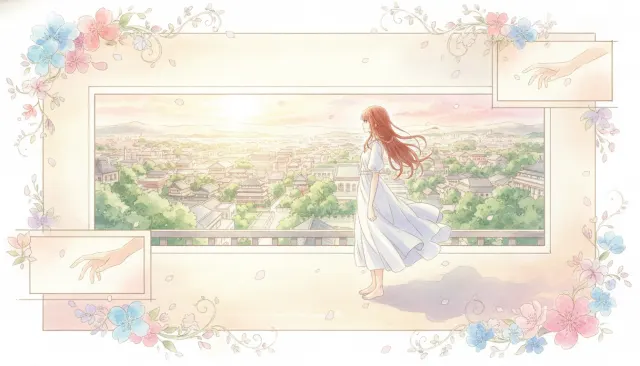
PA Works (Nagi no Asukara, Hanasaku Iroha, Shirobako) watercolor register. Soft transparent palettes, painterly seascapes, gentle character pacing, atmospheric ambient light.
The moves a human crew would use to get here. Cue applies them for you, and knowing their names is how you ask for a change.
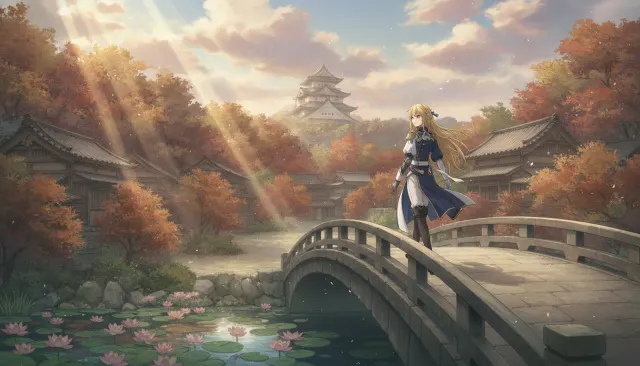
Digital backgrounds painted with visible brushwork organicism, soft edges on foliage and stone, and color blending that recalls traditional watercolor despite digital production tools
Nagi-Asu's signature: wavy refracted light patterns on underwater surfaces, simulating shallow-depth ocean light caustics that shift with water movement
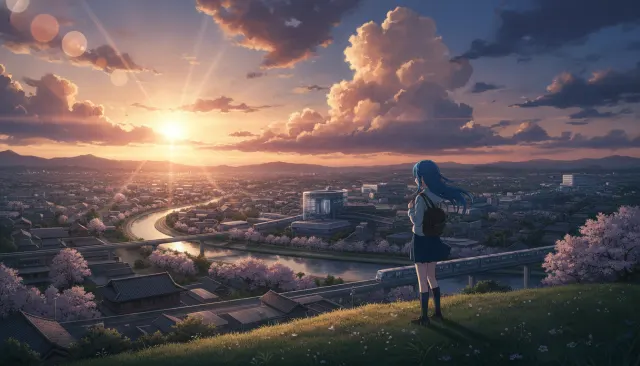
Sky backgrounds that visibly shift hue and value within a scene, not treated as static gradients but as living atmospheric conditions with moment-to-moment variation
Settings grounded in identifiable coastal or mountain Japanese regional environments rather than generic anime cityscapes -- visual commitment to geographic particularity
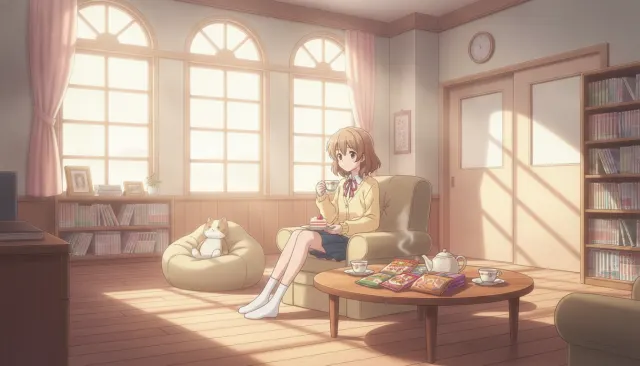
Each scene's lighting condition (golden hour, overcast, interior warm) chosen for specific emotional function rather than time-of-day logic alone
Nagi-Asu's above/below water contrast: warm amber sea-village tones versus cool blue deep-water tones, used as an emotional register for belonging versus alienation
PA Works (Progressive Animation Works), founded in 2000 in Toyama Prefecture, Japan, developed a visual identity centered on painterly, light-saturated backgrounds that recall traditional Japanese watercolor technique applied to naturalistic landscapes. The studio's most visually distinctive production is Nagi-Asu: A Lullaby of the Sea (Nagi no Asukara, 2013-2014), which applied their background art philosophy to an underwater civilization narrative, creating what many consider the most beautiful sustained environment design in television anime.
PA Works' art directors consistently pursue environmental backgrounds that feel atmospherically alive: water that moves with proper light caustic patterns, sky gradients that shift across a scene's duration, foliage that bends and scatters light individually. The studio's background team trained in traditional painting techniques before transitioning to digital tools, and this grounding shows in the organic quality of brushwork visible at high resolution.
Nagi no Asukara's underwater civilization required developing a complete new visual grammar: all backgrounds are rendered with a floating blue-green light scatter that simulates shallow ocean depth, caustic light patterns on surfaces, and a warm amber 'sea village' color palette that coexists with the cold blue of deep water. Above-water scenes use contrast warm sunlight that has new emotional meaning when experienced as a surface-dweller versus an undersea resident's sky.
PA Works' other major productions -- Angel Beats! (2010, P.A.Works), Hanasaku Iroha (2011), Shirobako (2014-2015), and Iroduku: The World in Colors (2018) -- all share the studio's commitment to emotionally purposive lighting. Golden hour, overcast diffusion, and interior warm-source lighting are each deployed for specific emotional work rather than as technical defaults. Iroduku's premise (a colorblind protagonist who gradually perceives color) made this philosophy explicit.
PA Works is geographically located in Toyama, a coastal mountain prefecture, and this regional identity appears in the studio's recurring visual vocabulary: seacoast towns, mountain backgrounds, rural roads. Hanasaku Iroha's hot spring inn setting, Nagi-Asu's sea village, and Iroduku's Nagasaki location all share a non-Tokyo, coastal-regional Japanese aesthetic that distinguishes PA Works from studios that default to urban settings.
PA Works / Mari Okada · 2013
The studio's visual masterwork, developing a complete underwater civilization aesthetic with caustic light and sea-village color grammar
PA Works · 2011
Hot spring inn coming-of-age series establishing the rural Japanese environment and warm interior lighting as PA Works signatures
PA Works / Jun Maeda · 2010
School afterlife fantasy that showcased the studio's ability to render dramatically lit outdoor environments with emotional power
PA Works · 2014
Anime industry slice-of-life with more urban settings but maintaining the studio's lighting quality in workplaces and evening streets
PA Works · 2018
Time-travel romance where a colorblind protagonist's gradual color perception makes PA Works' color philosophy the literal narrative subject
PA Works · 2012
Coastal music club drama with the studio's most direct use of seaside regional light as emotional storytelling infrastructure
A Look is not a filter. It is a set of stored decisions the pipeline reads before it makes a single frame, so two videos in the same Look actually match.