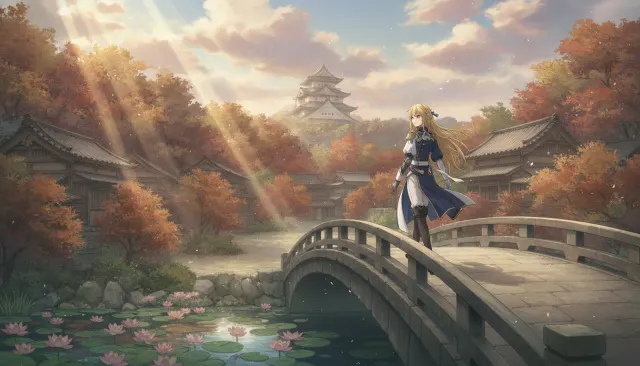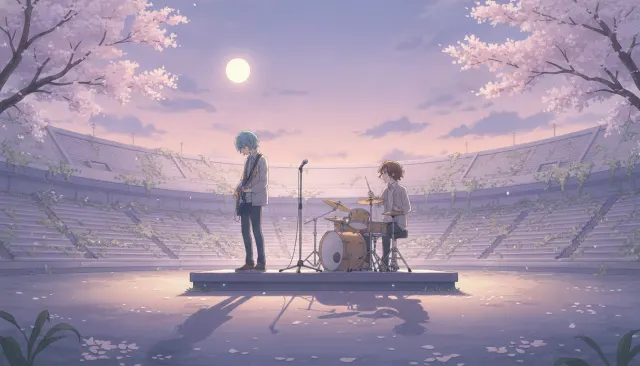
Fruits Basket (2019)
TMS Entertainment / Natsuki Takaya · 2019
Definitive modern remake using contemporary shojo visual grammar to re-adapt a 1998-2006 manga with technical upgrades
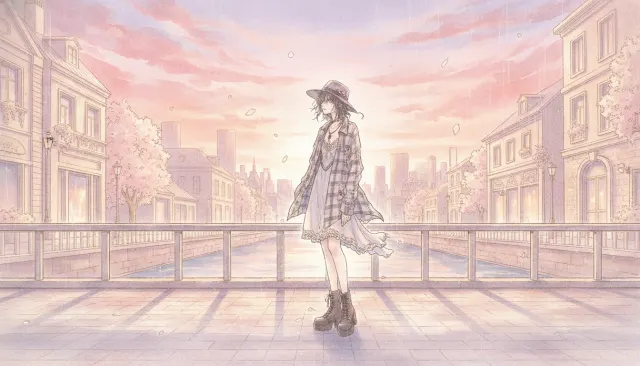
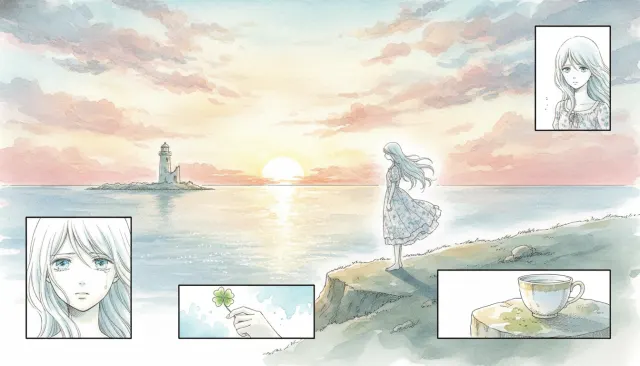
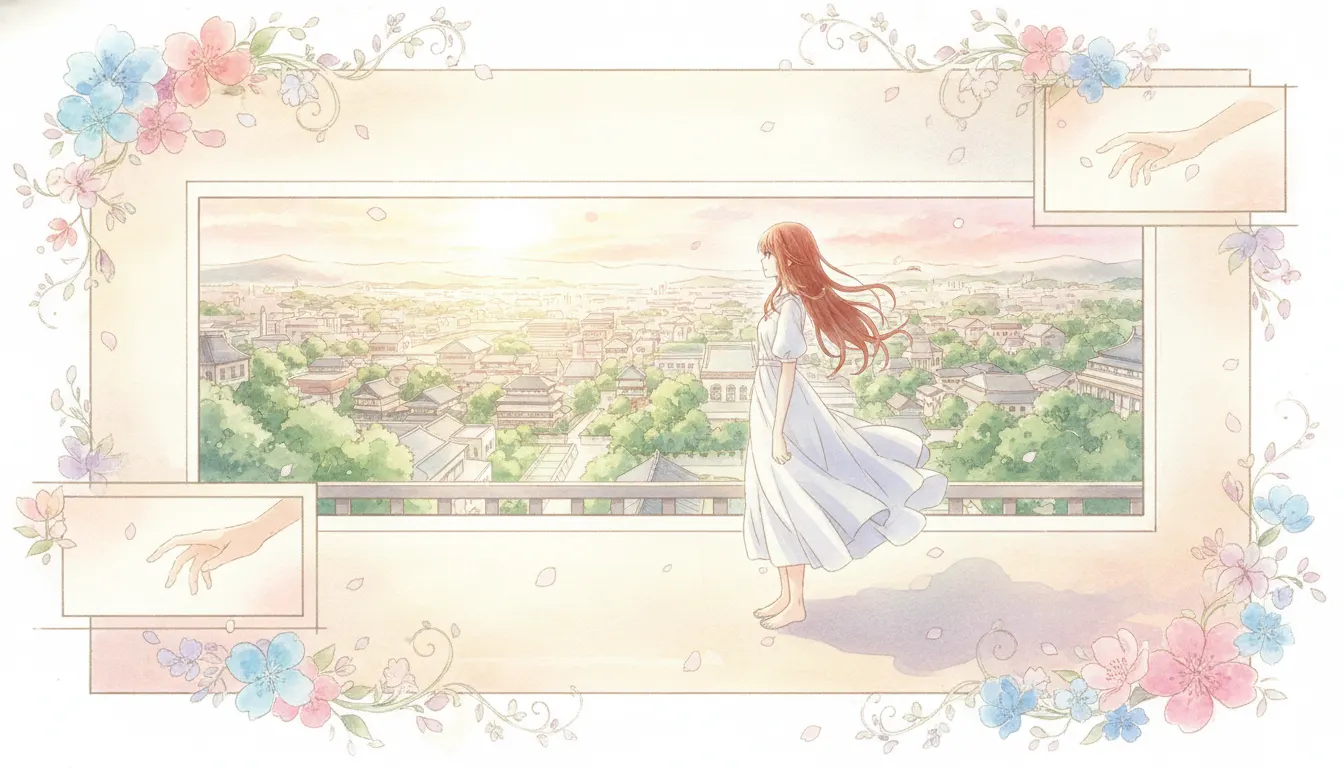
Modern shojo romance register (Fruits Basket 2019, Akagami no Shirayukihime, Ao Haru Ride). Watercolor pastel palette, floral panel transitions, hand-touch close-ups.
The moves a human crew would use to get here. Cue applies them for you, and knowing their names is how you ask for a change.
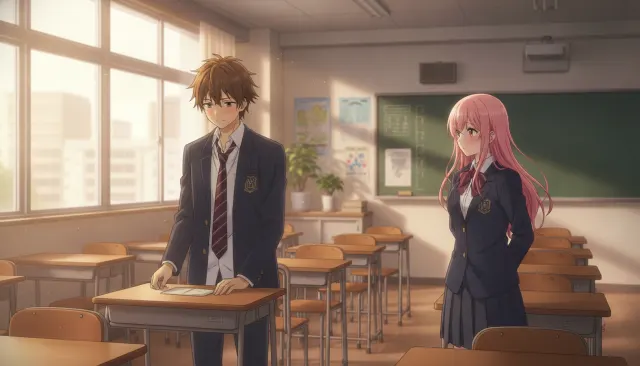
School uniform elements modified individually -- bow tied differently, cardigan added, accessory changes -- to signal personality and emotional state within the standardized template
The genre's primary romantic tension shorthand: face turned slightly away, eyes displaced from direct contact, cheek wash of pink -- the visual grammar for unconfessed reciprocated feeling
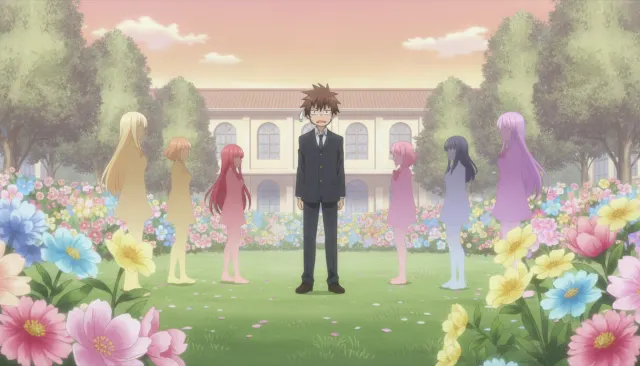
Floral elements (cherry blossoms, roses, lily of the valley) overlaid semi-transparently over characters at moments of emotional idealization, directly inheriting 1970s shojo visual tradition
Background color architecture shifts systematically through cherry blossom pink, summer cyan-green, autumn orange-rust, and winter pale blue -- season as emotional time-keeping
Male romantic leads designed with narrower eyes, sharper jaw geometry, and taller proportions against softer female protagonist designs -- a visual grammar encoding gender difference within the pastel palette
Brief speed-line burst panels or transitions centered on a character's chest during romantic revelation moments -- a physical rendering of the heartbeat as visible emotional data
Modern shojo romance anime occupies the aesthetic territory between the ornate floral excess of 1970s-80s shojo and the restrained emotional realism of josei. Driven by manga adaptations published in Ribon, Betsucomi, and Sho-Comi magazines and animated by studios including Toei Animation, TMS, and Brain's Base, the genre found its contemporary visual identity in the 2010s through titles like Ao Haru Ride (2014), Fruits Basket remake (2019-2021), and My Love Story!! (Ore Monogatari!!, 2015).
The Japanese school uniform functions as the visual anchor of the genre. Standardized sailor uniforms (seifuku) or blazer-and-skirt combinations are the default costume, but the genre's craft lies in how individual variation (a bow tied differently, a cardigan over the uniform, seasonal accessories) signals character personality and emotional state within the shared template. The uniform creates visual equality between characters that makes emotional differentiation through behavior more meaningful.
Modern shojo romance environments favor pale blues, soft pinks, warm creams, and lavender in backgrounds. Classroom windows with afternoon light and cherry blossom petals drifting past are recurring compositional elements. When seasons shift, background palettes shift with them: summer fireworks, autumn leaves, winter snow -- seasonal progression is the genre's primary time-telling mechanism.
Protagonist designs in the modern genre use large, luminous eyes with multiple highlight points and elaborate iris rendering. Blush marks appear frequently during romantic moments, drawn as soft washes rather than hard fills. Male romantic leads (the 'shoujo ikemen') have narrower eyes, sharper jaw geometry, and taller, more angular proportions compared to female protagonists -- a visual grammar for gender differentiation within the soft overall palette.
The genre's shorthand for internal emotion includes: chibi deformation for comedy, speed-line heart-beats for romantic excitement, flower overlays for idealization, and -- the genre's signature -- the blushed-and-averted-gaze composition that signals reciprocated but unconfessed feeling. Background flowers blooming during emotional peaks are a direct inheritance from 1970s shojo's 'flower language' visual tradition.
TMS Entertainment / Natsuki Takaya · 2019
Definitive modern remake using contemporary shojo visual grammar to re-adapt a 1998-2006 manga with technical upgrades
Production I.G / Io Sakisaka · 2014
Summer-to-autumn palette progression and uniform variation as emotional signal in a high-school reconnection romance
Madhouse / Kazune Kawahara · 2015
Subversive shojo romance with a physically atypical male protagonist challenging the ikemen template while maintaining soft pastel environments
Production I.G / Karuho Shiina · 2009
Flower overlay and seasonal palette use at its most intense -- backgrounds of blooming flowers for protagonist idealization
Zexcs / Kanae Hazuki · 2012
More restrained muted palette approach that influenced subsequent shojo toward quieter color registers
Bones / Sorata Akiduki · 2015
Fantasy setting shojo maintaining soft pastel conventions outside the standard school uniform context
A Look is not a filter. It is a set of stored decisions the pipeline reads before it makes a single frame, so two videos in the same Look actually match.