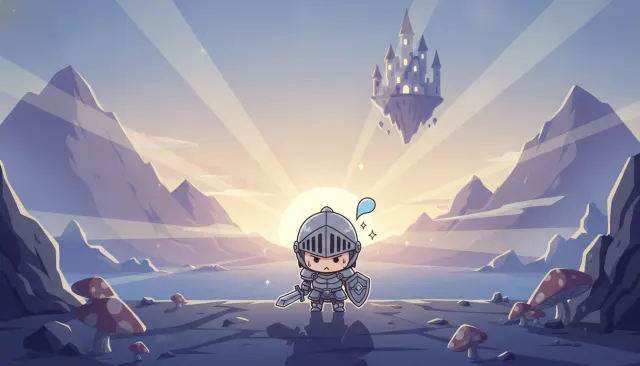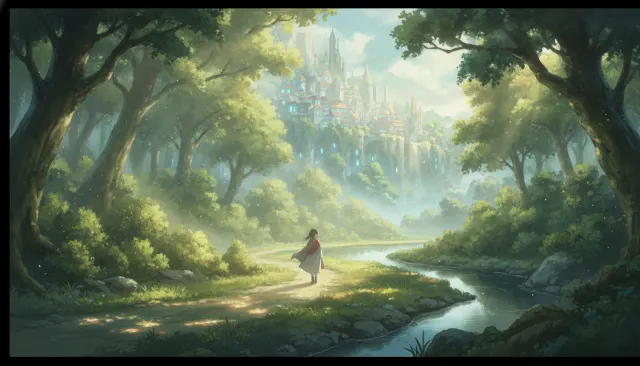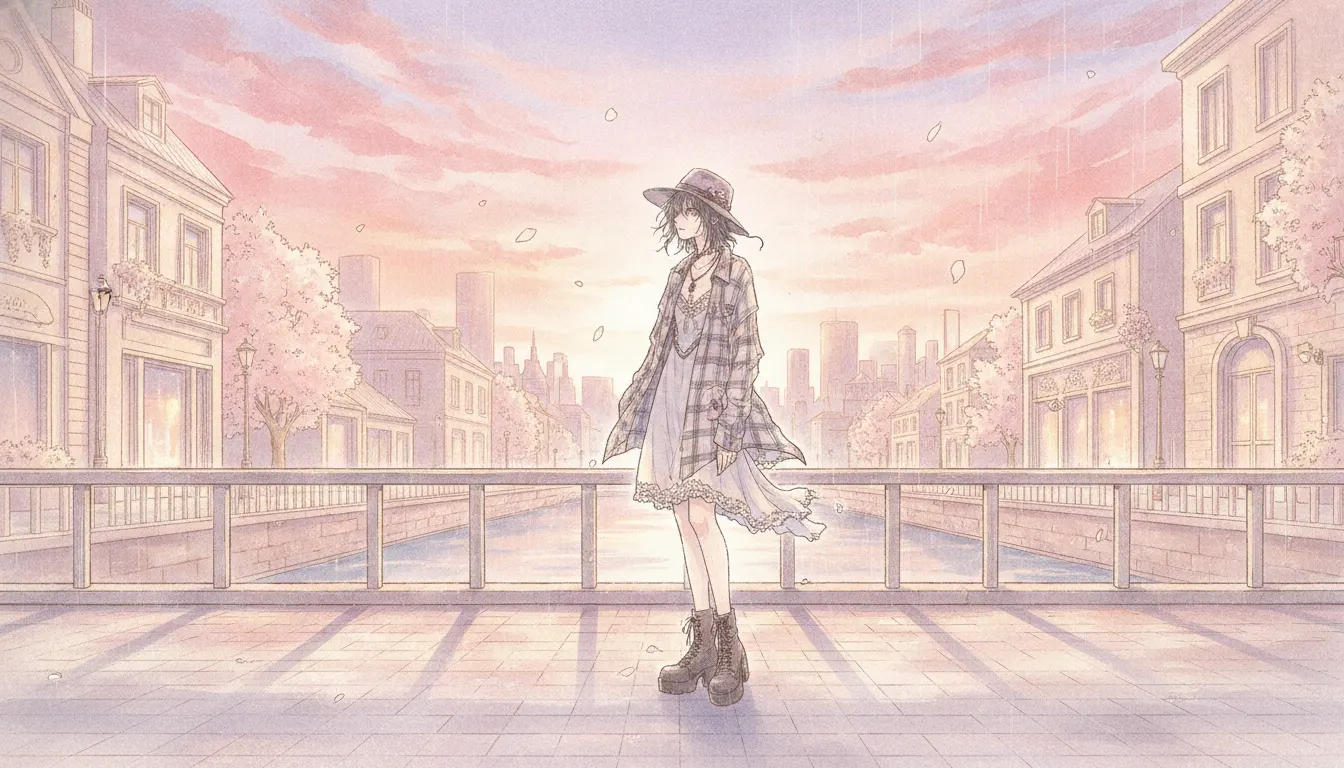
Nana manga (2000-2009) + anime (2006-2007)
Ai Yazawa / Madhouse, josei aesthetic benchmark
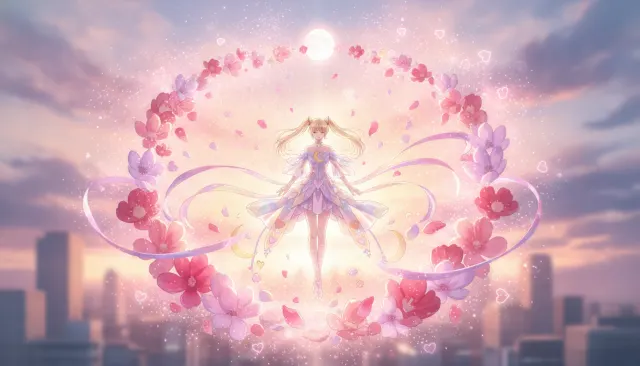
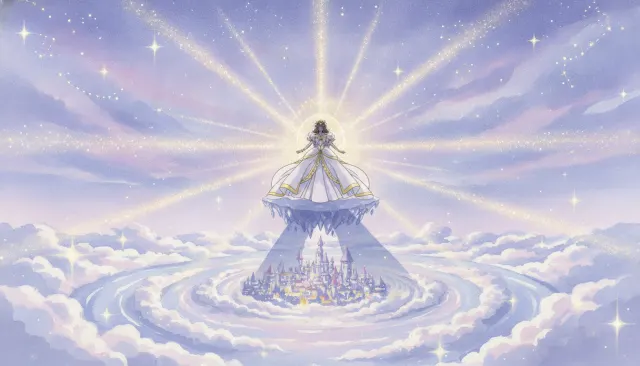
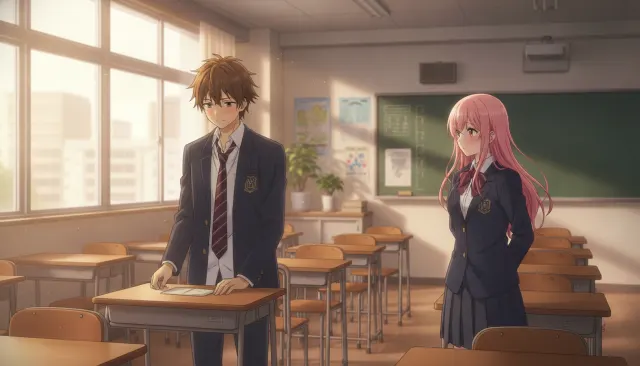
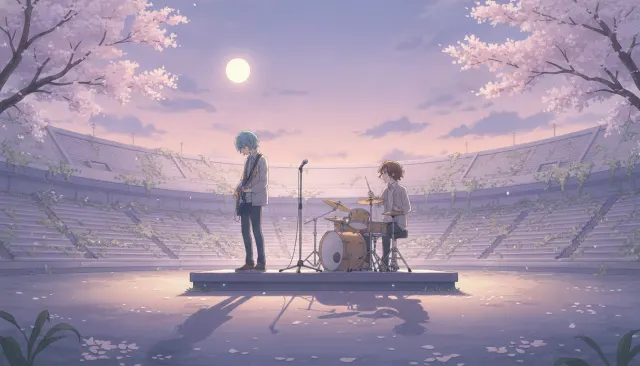
Shojo / josei adult romance manga register (NANA, Paradise Kiss, Princess Jellyfish, Honey and Clover). Pastel watercolor wash, fashion-magazine character design, quiet emotional panels.
The moves a human crew would use to get here. Cue applies them for you, and knowing their names is how you ask for a change.
- no pure saturated colors; everything slightly grayed or washed out
weight character linework with particular attention to hair strand separation and fabric drape detail
forward costuming that changes per scene and functions as character psychology made visible
- no hard shadows, diffused warm glow as emotional warmth signal
edge feathering: backgrounds dissolve into white or pale color at the frame edges
Where shojo targets teenage girls (approximately 12-18), josei (literally 'woman' or 'female') targets women aged 18-40 with more sophisticated, emotionally complex narratives. The visual distinction is subtle but meaningful: josei softens the oversized shojo eye to more naturalistic proportions, replaces the candy palette with muted pastels and grayed tones, and introduces fashion illustration influence that treats clothing as character expression.
The dominant palette is desaturated pink, lavender, cream, slate blue, and warm grey -- colors that evoke adult interior spaces (cafes, apartments, ateliers) rather than school settings. Character linework is finer and more delicate than action anime, with particular attention to hands, clothing drape, and hair movement. Backgrounds tend toward flat pastel washes or impressionistic color fields rather than the detailed environments of action or adventure anime.
The aesthetic's canonical texts include Ai Yazawa's Nana (2000-2009, Shueisha), adapted into anime by Madhouse (2006-2007, dir. Morio Asaka) -- the definitive josei visual benchmark with its fashion-forward character designs, cigarette smoke atmospheres, and Tokyo rock music scene. Yuu Watase's Fushigi Yugi (1992-1996), adapted by Pierrot (1995-1996), and CLAMP's Cardcaptor Sakura (1996-2000) represent the shojo to josei aesthetic transition through the 90s.
Chihayafuru (2011-2020, Madhouse then Brain's Base), adapted from Yuki Suetsugu's manga, demonstrates the contemporary josei aesthetic applied to competitive karuta: the color palette is carefully keyed to seasons, character costuming reflects personality with precision, and emotional moments are signaled through atmospheric light and texture rather than sparkle effects.
Josei character design frequently borrows from fashion illustration -- elongated proportions, visible fabric texture, and clothing that changes panel-to-panel as a form of character expression. This connects to the broader Harajuku and Shibuya fashion scene that josei manga chronicled from the 1990s onward. Paradise Kiss (Ai Yazawa, 2000-2004) is the purest expression of this -- literally set in a fashion design atelier.
The visual language codes for emotional complexity and ambiguity rather than the cleaner emotional arcs of shonen or younger shojo. Hurt and attraction occupy the same frame; endings are bittersweet; adult responsibility complicates romantic possibility. The pastel softness of the aesthetic makes this complexity emotionally accessible rather than brutal.
The transition from cel animation to digital production (completed industry-wide around 2002-2005) affected the josei/shojo pastel aesthetic significantly. Digital tools allowed more precise control of the pastel color grading that had previously been achieved through analog photography of cel stacks. Contemporary productions like Chihayafuru (2011-2020) and Skip and Loafer (2023, P.A. Works) demonstrate digital production capabilities that maintain the aesthetic's essential softness while achieving consistency impossible in analog production. P.A. Works has become the studio most associated with sustained josei-adjacent aesthetics in the digital era, with Hanasaku Iroha (2011), Nagi no Asukara (2013), and Sakura Quest (2017) all working within the aesthetic's parameters.
Ai Yazawa / Madhouse, josei aesthetic benchmark
Ai Yazawa, fashion school josei, most fashion-illustration-influenced
Madhouse / Brain's Base, contemporary competitive josei
TMS Entertainment, emotional depth at shojo-josei border
2018
Madhouse, mature evolution of classic shojo
2007
J.C. Staff, music school josei with strong fashion and atmosphere
2023
P.A. Works, contemporary gentle josei slice-of-life
1998
Gainax/dir. Hideaki Anno, experimental shojo-josei hybrid
A Look is not a filter. It is a set of stored decisions the pipeline reads before it makes a single frame, so two videos in the same Look actually match.