Mushishi manga (1999-2008)
Yuki Urushibara, Monthly Afternoon / Kodansha
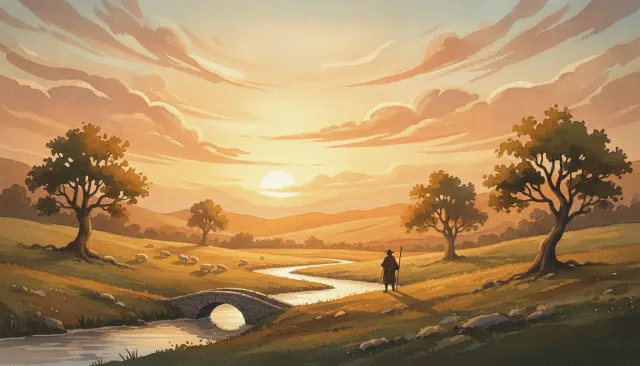
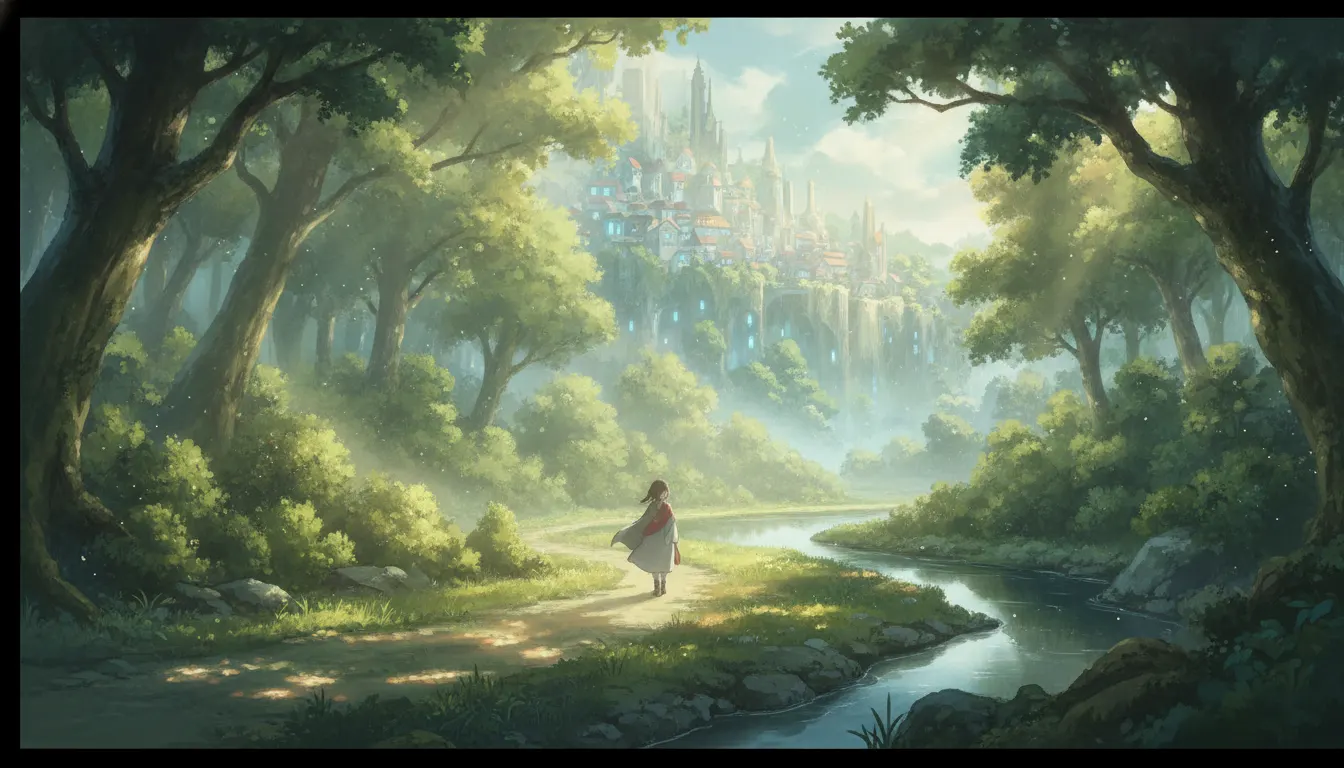
Iyashikei healing-anime register (Mushishi, Natsume Yujincho, Aria, Yokohama Kaidashi Kikou). Painterly nature backgrounds, ambient drift, gentle wandering protagonist.
The moves a human crew would use to get here. Cue applies them for you, and knowing their names is how you ask for a change.
adjacent background painting with visible dry-brush edges and atmospheric haze at depth
moss green, river stone grey, autumn amber, wood brown -- no pure primaries
- water, light, texture -- without character or narrative action
dissolve transitions that bleed one environment into another, emphasizing continuity over separation
focus atmospheric distance haze on backgrounds, with foreground plant and grass elements at higher contrast
- the only consistently high-contrast visual element in an otherwise muted world
Iyashikei (癒し系, literally 'healing type') is a genre designation for manga and anime that aims to soothe rather than excite -- works where the primary emotional effect is relaxation, contemplation, and a quiet sense of wonder. The genre emerged as a recognized category in the late 1990s and 2000s as a cultural counter-response to the intensity of action shonen and the pace of modern urban life.
Yuki Urushibara's Mushishi was serialized in Monthly Afternoon (Kodansha) from 1999 to 2008. The anime adaptation by Artland Studio aired in 2005-2006 (26 episodes, dir. Hiroshi Nagahama), with a second season in 2014 (Artland, dir. Hiroshi Nagahama again) and theatrical continuation Mushishi Zoku Sho: Path of Thorns (2015). The series follows Ginko, a wandering 'mushi-shi' (mushi master), traveling through a pre-Meiji rural Japan inhabited by primordial spirit-like organisms called mushi.
The backgrounds are the emotional center of Mushishi's aesthetic. Background art director Takashi Omori used watercolor-adjacent painting techniques with visible brushwork, atmospheric haze, and saturated-but-muted natural tones: forest green, moss grey, river silver, mountain blue. There are no urban environments in the series -- the visual world is entirely pre-industrial rural Japan, which allows the palette and texture to be consistently organic.
Iyashikei anime deliberately slows visual rhythm. Long dissolves between scenes. Extended holds on environmental details -- a spider spinning a web, light moving through leaves, water flowing over stones. Close-ups on texture: the grain of wood, the weave of fabric, steam rising from food. This visual pacing directly activates the parasympathetic nervous system response its name promises.
The broader iyashikei canon includes: Natsume's Book of Friends (Yuki Midorikawa, 2008+, Brain's Base/Shuka), closely analogous in rural atmosphere and spirit-world premise; Aria (Kozue Amano, 2005-2008, Hal Film Maker) set in a future Venice; Yokohama Kaidashi Kikou (1998, Ajia-Do, post-apocalyptic pastoral); and the contemporary streaming-era entries Laid-Back Camp (2018, C-Station) and Non Non Biyori (2013, Silver Link).
The auditory dimension of iyashikei anime is inseparable from its visual aesthetic. Mushishi's score by Toshio Masuda uses sparse acoustic guitar, shakuhachi (bamboo flute), and ambient environmental sounds -- wind, water, insects -- that blur the boundary between underscore and sound design. Long sequences pass without music, trusting environmental audio to maintain emotional engagement. This 'less is more' auditory philosophy mirrors the visual restraint. Subsequent iyashikei productions follow the same principle: Hiroshi Yoshida's Natsume's Book of Friends score, Yoshiaki Fujisawa's Non Non Biyori work, and Yoshiaki Dewa's Laid-Back Camp compositions all share this quality of music that supports rather than leads.
The COVID-19 pandemic (2020+) drove a significant resurgence in iyashikei content as audiences sought comfort media. Streaming platforms, particularly Crunchyroll and Netflix Japan, actively commissioned iyashikei-adjacent works. Heike Monogatari (2021, Science SARU, dir. Naoko Yamada), Teasing Master Takagi-san (2018+, Shin-Ei Animation), and The Apothecary Diaries (2023, Toei Animation) each draw on iyashikei visual grammar in different degrees.
Yuki Urushibara, Monthly Afternoon / Kodansha
Artland Studio, dir. Hiroshi Nagahama
2014
Artland / dir. Nagahama
Brain's Base, closest iyashikei parallel
Hal Film Maker, future-Venice pastoral
Ajia-Do, post-apocalyptic iyashikei
2018
C-Station, modern streaming-era iyashikei
2013
Silver Link, rural childhood iyashikei
A Look is not a filter. It is a set of stored decisions the pipeline reads before it makes a single frame, so two videos in the same Look actually match.