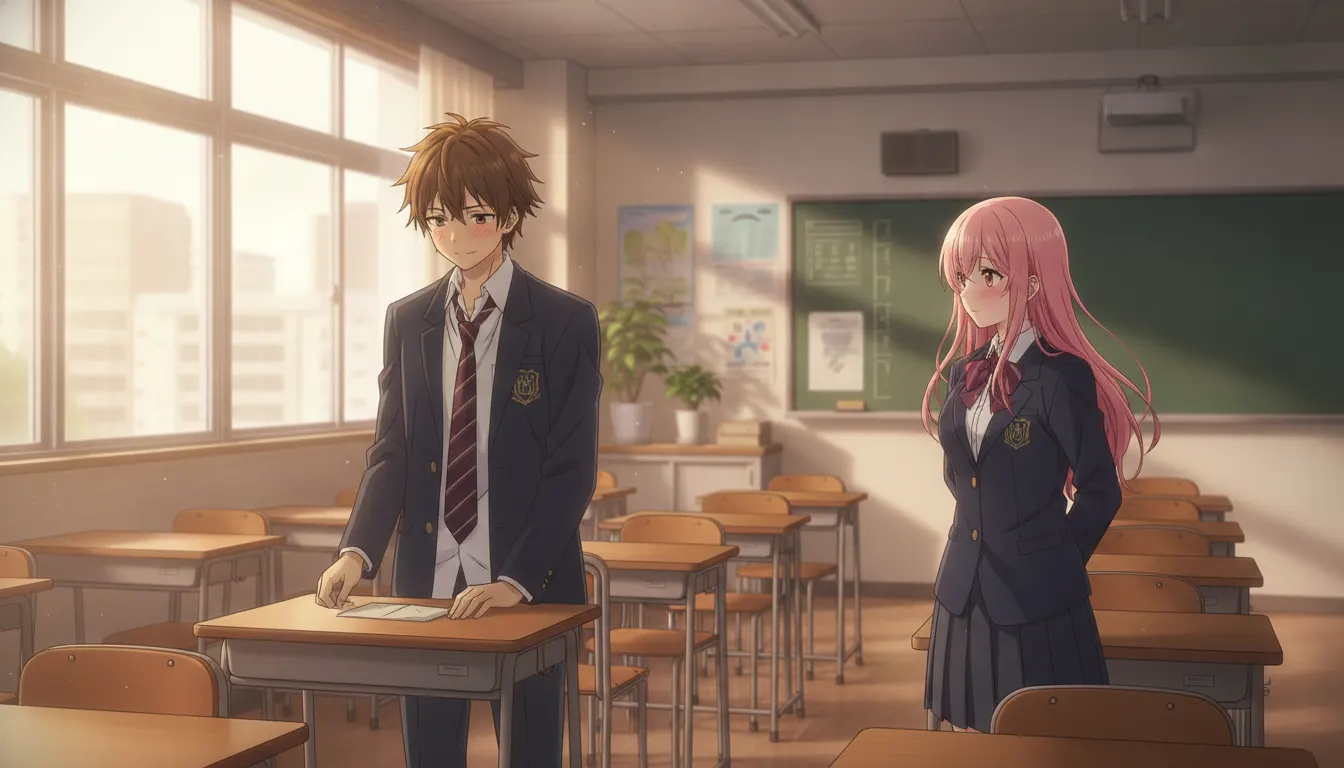
Toradora!
2008
J.C. Staff, dir. Tatsuyuki Nagai, tsundere archetype refinement
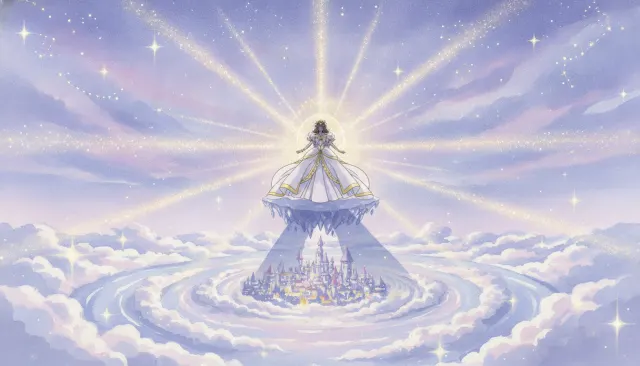
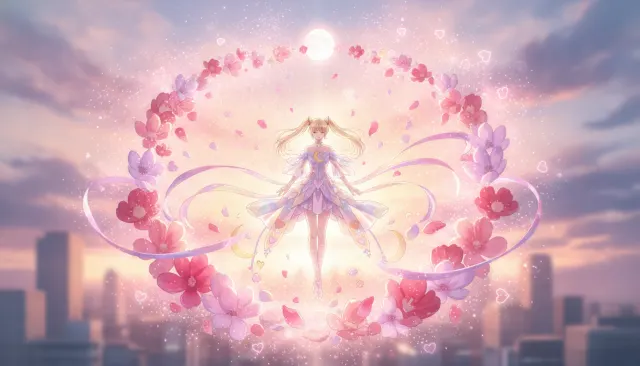
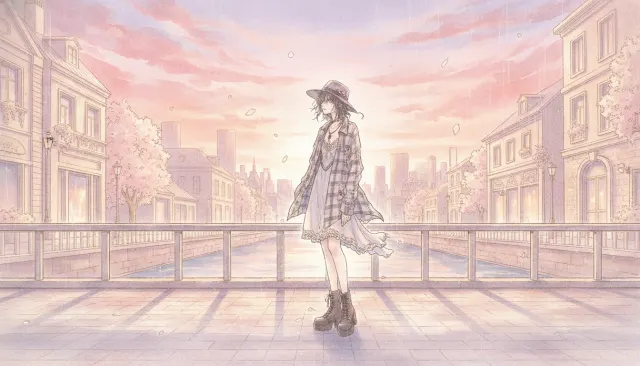
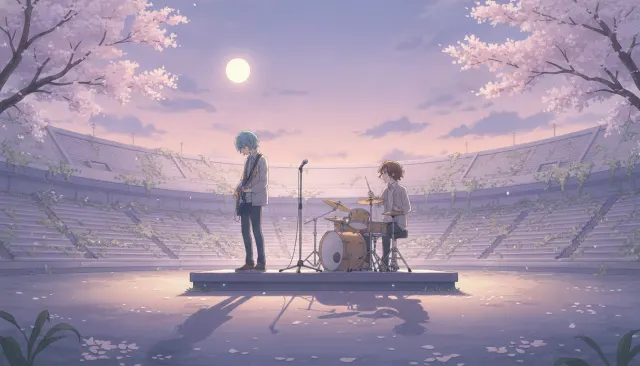
Modern school romance register (Toradora, Kaguya-sama, Horimiya). Golden-hour classroom light, blushing close-ups, uniform-detail charm, gentle melodic pacing.
The moves a human crew would use to get here. Cue applies them for you, and knowing their names is how you ask for a change.
seat staging: protagonist sits beside a large classroom window with soft diffused daylight and out-of-focus greenery outside
locker and rooftop staging for confession scenes -- these locations carry accumulated genre meaning
catch close-ups: extreme close-up on irises reflecting the subject of the character's gaze
- sakura pink to summer green to autumn amber -- used as emotional chapter markers
specific plaid patterns, sailor-collar variations, and PE uniforms serve as character and tone signifiers
The school romance subgenre is one of the most commercially durable in Japanese animation, running from early shoujo works like Aim for the Ace! (1973) through contemporary hits like Horimiya (2021, CloverWorks) and My Dress-Up Darling (2022, CloverWorks). The visual vocabulary has stabilized into a recognizable grammar centered on soft environmental light, intimate scale, and emotionally legible character expression.
The classroom itself is the primary stage: rows of wooden desks, chalk dust in window-light, the view of cherry-blossom trees through glass, the rooftop access door and stairwell. These settings function almost as characters -- the window seat beside the sakura tree is a recognized staging position for confessions and quiet introspection. The shoe locker area and club room are secondary intimate spaces. Scale shifts between wide establishing shots of the school building and tight close-ups on hands, eyes, and mouths during emotional peaks.
The palette is warm and diffused: golden afternoon light, the green of classroom chalkboards, school uniform navy and grey softened with warm undertones. Cherry blossom pink serves as the season marker for new beginnings (April school year start). Autumn golds signal approaching endings and confessions before winter. Backgrounds are painted with a soft photographic blur (bokeh simulation) that keeps focus on characters.
Characters are drawn in a realistic-leaning shoujo style with large expressive eyes but proportions closer to actual human ratios than action anime. Blush marks (horizontal lines or soft pink washes across the nose bridge) are the primary emotional signal for embarrassment and attraction. Hair colors range from natural black/brown in grounded realistic series (Fruits Basket 2019, TMS Entertainment) to fantastical colors in lighter romantic comedies.
J.C. Staff produced Toradora! (2008, dir. Tatsuyuki Nagai) and Your Lie in April (2014, dir. Kyohei Ishiguro). Brain's Base produced Natsume's Book of Friends (2008+). A-1 Pictures handled Anohana (2011, dir. Tatsuyuki Nagai). CloverWorks dominates the current era with Horimiya (2021) and Bunny Girl Senpai (2018). The cinematography in Your Lie in April raised the bar for musical performance integration and seasonal color symbolism in the subgenre.
Kyoto Animation (KyoAni) represents the studio that most fully developed the school romance visual aesthetic into a coherent house style. Clannad (2007-2008) and Clannad After Story (2008-2009) established the emotional ceiling for the subgenre -- an after story that moves from school into adult life without losing the aesthetic's essential quality. The Melancholy of Haruhi Suzumiya (2006, KyoAni) deconstructed school romance conventions while deploying them. A Silent Voice (2016, KyoAni theatrical, dir. Naoko Yamada) represented the feature film refinement of the classroom aesthetic with the most sophisticated cinematography the school setting had received in anime -- using shallow depth of field, rack focus, and environmental light with a naturalism approaching live-action photography.
2008
J.C. Staff, dir. Tatsuyuki Nagai, tsundere archetype refinement
2014
A-1 Pictures, dir. Kyohei Ishiguro, music and color symbolism benchmark
TMS Entertainment, emotional depth + supernatural elements
2021
CloverWorks, contemporary naturalistic school romance
Kyoto Animation, emotional pinnacle of the genre
2006
Kyoto Animation, deconstructive approach to school setting
2018
CloverWorks, light novel adaptation with strong school aesthetic
2006
Madhouse, older josei school romance transition to adult life
A Look is not a filter. It is a set of stored decisions the pipeline reads before it makes a single frame, so two videos in the same Look actually match.