Sailor Moon manga (1991-1997)
Naoko Takeuchi, Nakayoshi magazine
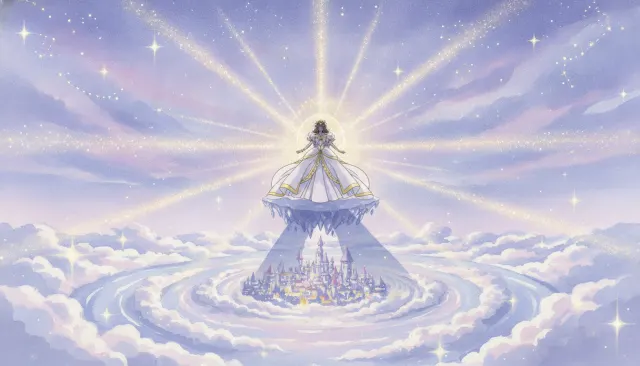
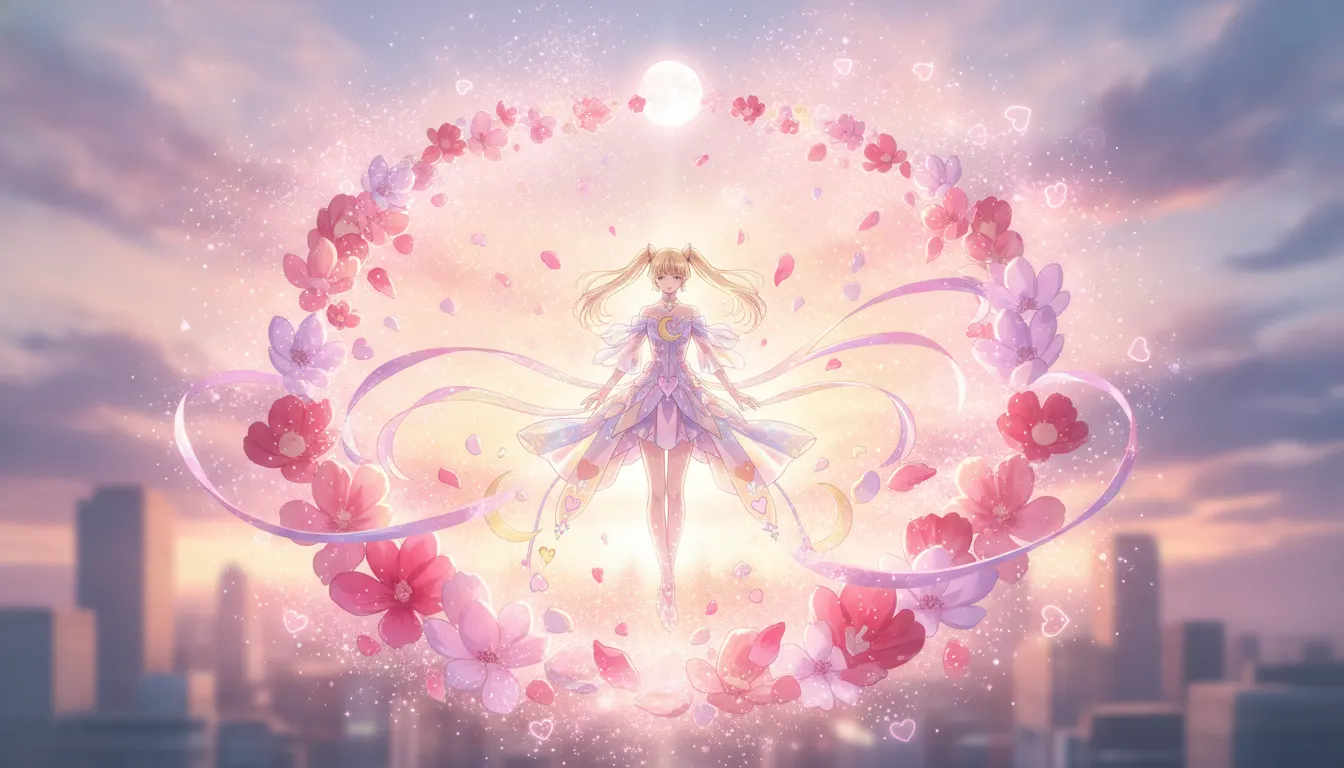
Modern shoujo aesthetic in the Sailor Moon lineage. Pink pastel sparkles, flower transformations, ribbons, hearts, dreamy bloom.
The moves a human crew would use to get here. Cue applies them for you, and knowing their names is how you ask for a change.
burst lens flare particles scattered around magical effects and emotional peaks
- no environment, pure color field
like hair segments that drift in non-physical directions during key poses
Naoko Takeuchi's Bishojo Senshi Sailor Moon began as a manga serialized in Nakayoshi magazine from 1991 to 1997. The anime adaptation produced by Toei Animation aired from 1992 to 1997, running 200 episodes across five seasons (Classic, R, S, SuperS, Stars), with three theatrical films and numerous specials. The franchise sold an estimated 35 million manga volumes globally and became the template for the modern magical girl genre.
Takeuchi trained under the tradition of Osamu Tezuka's bishoujo aesthetic and the earlier Candy Candy (1975) and Aim for the Ace! (1973) shoujo styles, but she synthesized these with 1990s fashion illustration, Western superhero iconography, and European fairy-tale imagery. The result was a visual grammar instantly recognizable across cultures.
The color palette is built on soft pastels -- rose, lavender, sky blue, mint -- punctuated by metallic golds and silvers for magical accessories. Character design uses the classic shoujo ratio: enormous eyes occupying nearly a third of the face, filled with detailed reflective highlights (the 'starshine' that defines the style). Hair is voluminous, gravity-defying, and distinctively colored and styled to function as character identification.
The transformation sequence is the aesthetic's highest expression: a character rotates in void space surrounded by ribbons of prismatic light, star-shaped particles, and prismatic lens-flares. The body is briefly silhouetted before the costume materializes with streaming fabric and jewelry. These sequences were animated with unusual care and became cultural touchstones. The Sailor Moon Crystal (2014) and Sailor Moon Cosmos (2023) revivals recreated them with digital fluidity.
Directed across its run by Junichi Sato (Classic, R), Kunihiko Ikuhara (later S season, later of Revolutionary Girl Utena fame), and Takuya Igarashi (SuperS, Stars). Background art by Kazuko Tadano and design work by Ikuko Itoh shaped the domestic spaces and civilian wardrobe that ground the fantasy in recognizable everyday life.
Sailor Moon established the 'magical girl team' format replicated in Precure (2004+, Toei), Winx Club (2004, Iginio Straffi), and dozens of successors. Its gender politics -- centering female friendship and emotional power as heroic virtue -- made it a foundational text for both feminist anime scholarship and queer fandom.
Sailor Moon's production model -- a mahou shoujo (magical girl) team series with transformation sequences, themed attacks, and a rotating villain structure -- was directly replicated by Toei Animation in the Pretty Cure (Precure) franchise launched in 2004. Precure has run continuously to the present (20+ series) and represents the largest ongoing commercial legacy of the Sailor Moon template. Internationally, the series served as the primary exposure to anime aesthetics for Western women who became the foundation of Western anime fandom in the late 1990s-2000s. The 2014-2016 Crystal remake and the 2023 Sailor Moon Cosmos theatrical films confirm the franchise's continued commercial vitality after 30 years.
Naoko Takeuchi, Nakayoshi magazine
Toei Animation, dirs. Sato/Ikuhara/Igarashi
1993
theatrical film, dir. Kunihiko Ikuhara
Toei Animation digital revival
2023
theatrical finale, Toei Animation
Toei Animation, direct spiritual heir
1997
dir. Ikuhara, deconstructive evolution of the magical girl form
1998
CLAMP/Madhouse, parallel magical girl masterwork
A Look is not a filter. It is a set of stored decisions the pipeline reads before it makes a single frame, so two videos in the same Look actually match.