The 400 Blows
Francois Truffaut / Henri Decae · 1959
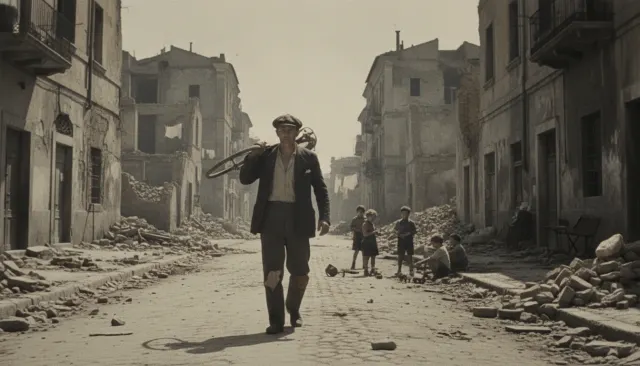
Founding Nouvelle Vague text and Truffaut's autobiographical debut, using location Paris and naturalistic performance to define the movement's lyric strain
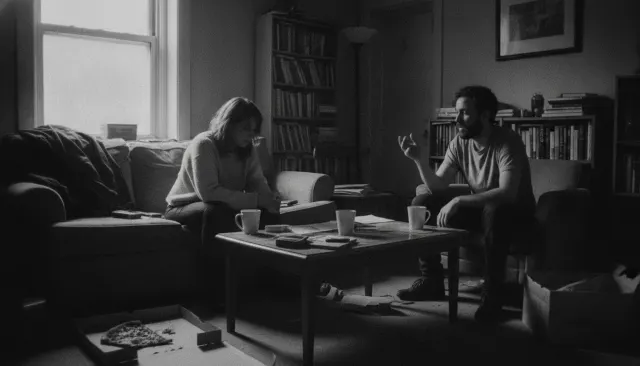
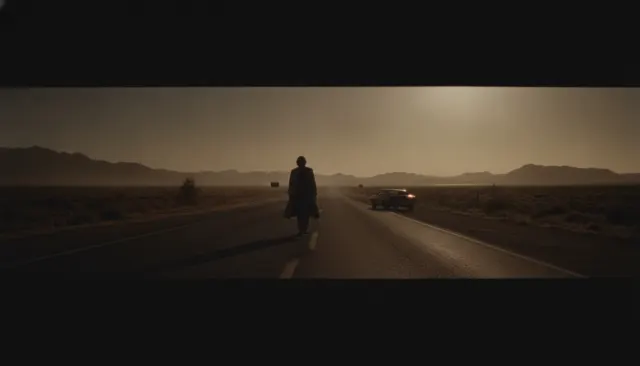
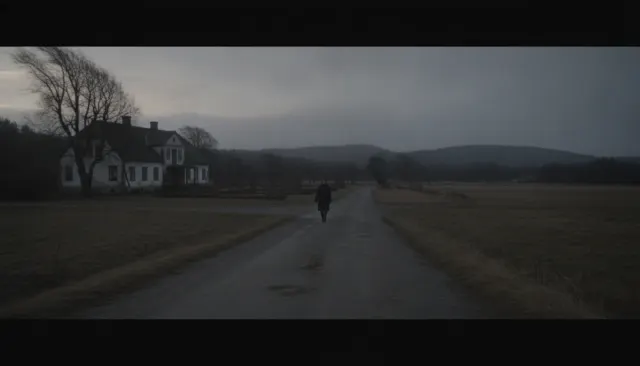
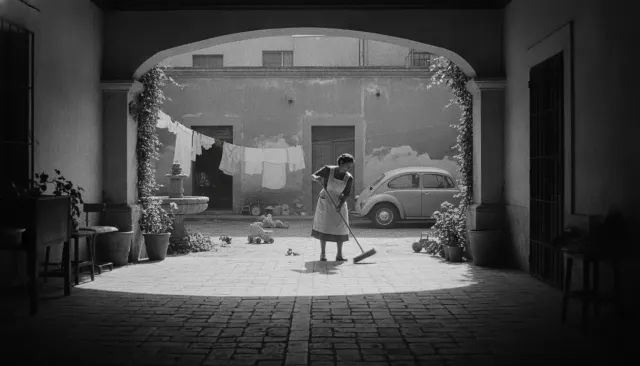
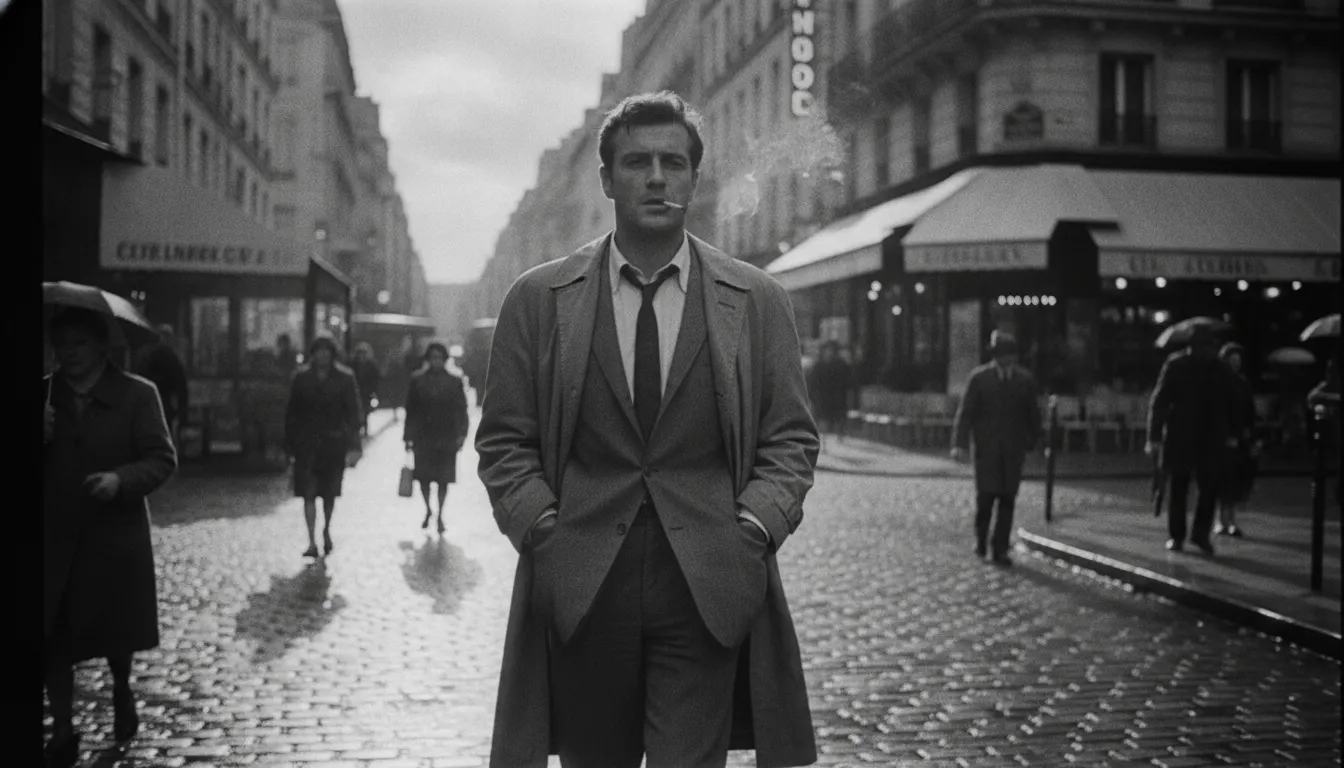
French New Wave. Godard Breathless jump cut, Truffaut handheld Paris street, Coutard available-light 35mm, Belmondo cigarette cool.
The moves a human crew would use to get here. Cue applies them for you, and knowing their names is how you ask for a change.
Cuts within a scene that violate continuity by removing frames or cutting on non-action moments, making the edit visible.
Camera handheld on location in real Paris streets, with the city's ambient life visible and uncontrolled in the background.
Fast 35mm black-and-white stock exposed in available light without artificial augmentation, creating a documentary grain quality.
Characters looking into the camera lens, acknowledging the audience's presence and breaking the fourth wall of classical cinema.
Subject staging with cigarettes as props that carry specific class, gender, and intellectual associations in the French cultural context.
Voiceover narration that references books, cinema, and intellectual positions, placing the film in a cultural conversation.
Synchronous location sound including street noise, ambient conversation, and uncontrolled audio that anchors images in physical reality.
The French New Wave - Nouvelle Vague - was the most consequential revolution in cinema history since the introduction of synchronized sound. Between 1958 and 1968, a group of young French critics-turned-directors, writing for the journal Cahiers du Cinema, dismantled the classical French studio film and invented a new grammar: handheld cameras, location shooting, jump cuts, available light, and an explicit acknowledgment that cinema was made by human beings with points of view. Jean-Luc Godard and Francois Truffaut were its central figures.
The Nouvelle Vague did not emerge from nowhere. It was theoretically prepared by years of critical writing at Cahiers du Cinema, where Godard, Truffaut, Claude Chabrol, Eric Rohmer, and Jacques Rivette developed the auteur theory - the argument that the director was the true author of a film, equivalent to a novelist or painter. This theoretical framework gave the young directors permission to put their own perspectives on screen rather than subordinating themselves to literary adaptation or studio house style.
The social conditions of the late 1950s also enabled the movement. The introduction of lightweight 16mm cameras, fast film stocks like Ilford HP3 and Kodak Tri-X, and portable synchronous sound systems made it possible to shoot on the streets of Paris without studios, large crews, or expensive lighting equipment.
Godard's Breathless (A Bout de Souffle, 1960), shot by Raoul Coutard in handheld 35mm on the streets of Paris, introduced the jump cut to international cinema. Conventional continuity editing preserved spatial and temporal coherence by cutting on action and matching screen direction. Godard violated both rules deliberately: cuts within a single take, missing frames, temporal discontinuities. The jump cut violated classical film grammar and made the editing process visible - forcing audiences to acknowledge they were watching a film, not experiencing transparent reality.
Coutard's cinematography matched the editing's disruption. Available light, fast stock, and handheld camera created images that looked like documentary rather than drama: rough, responsive, alive. Jean-Paul Belmondo's Michel Poiccard walks through Paris and the camera follows, and the city is present as a real environment rather than a controlled backdrop.
Francois Truffaut's The 400 Blows (Les Quatre Cents Coups, 1959), shot by Henri Decae, was the movement's other founding text: more lyrical than Godard's, more focused on childhood psychology, and more technically accomplished. Where Godard embraced roughness as a formal value, Truffaut used the Nouvelle Vague's freedoms to develop a personal voice that was warm and melancholy in equal measure. His Antoine Doinel series - continued through Antoine and Colette (1962), Stolen Kisses (1968), Bed and Board (1970), and Love on the Run (1979) - traced the character of his autobiographical alter ego across twenty years.
The Nouvelle Vague transformed cinema worldwide. The British New Wave, the Czech New Wave, the Brazilian Cinema Novo, the American New Hollywood - all cited the French movement as a model for their own formal revolutions. Godard's influence on music video aesthetics, advertising, and graphic design lasted well beyond cinema.
Francois Truffaut / Henri Decae · 1959
Founding Nouvelle Vague text and Truffaut's autobiographical debut, using location Paris and naturalistic performance to define the movement's lyric strain
Jean-Luc Godard / Raoul Coutard · 1960
Godard's debut introduced the jump cut to international cinema and established the rough, available-light Paris street aesthetic
Francois Truffaut / Raoul Coutard · 1960
Genre-film-inflected thriller demonstrating the Nouvelle Vague's engagement with American film noir
Jean-Luc Godard / Raoul Coutard · 1962
Anna Karina in twelve scenes, each defined by a distinct formal strategy, making visible the film's status as a constructed argument
Francois Truffaut / Denys Clerval · 1968
Third Antoine Doinel film continuing Truffaut's lyric-melancholy approach through young adulthood in Paris
Jean-Luc Godard / Raoul Coutard · 1963
Godard's most commercially oriented film used CinemaScope and color to explore the intersection of art and commerce
A Look is not a filter. It is a set of stored decisions the pipeline reads before it makes a single frame, so two videos in the same Look actually match.