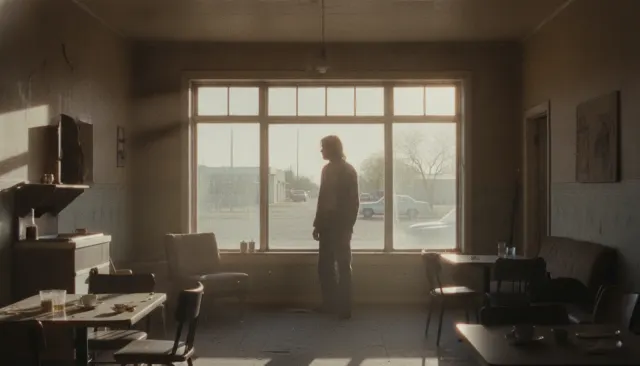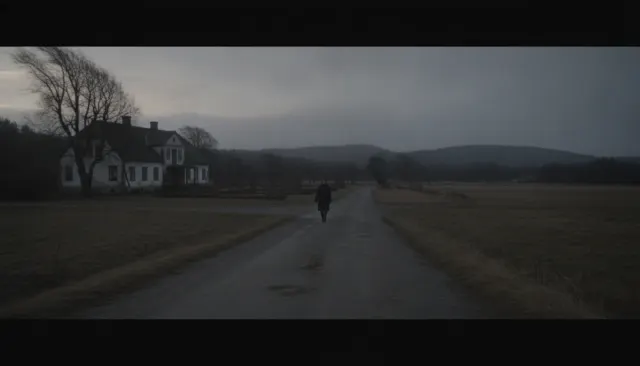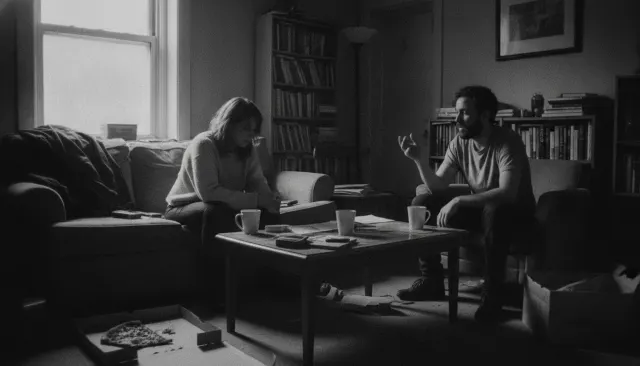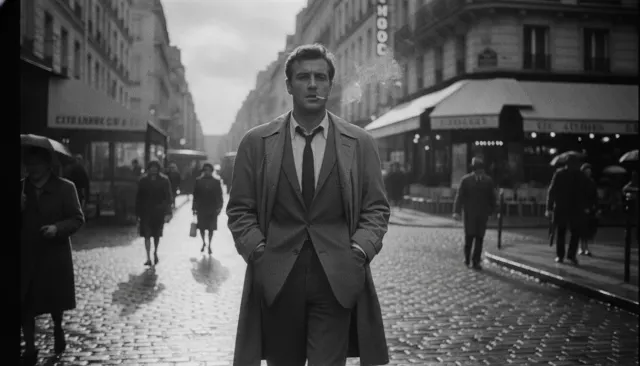
Bicycle Thieves
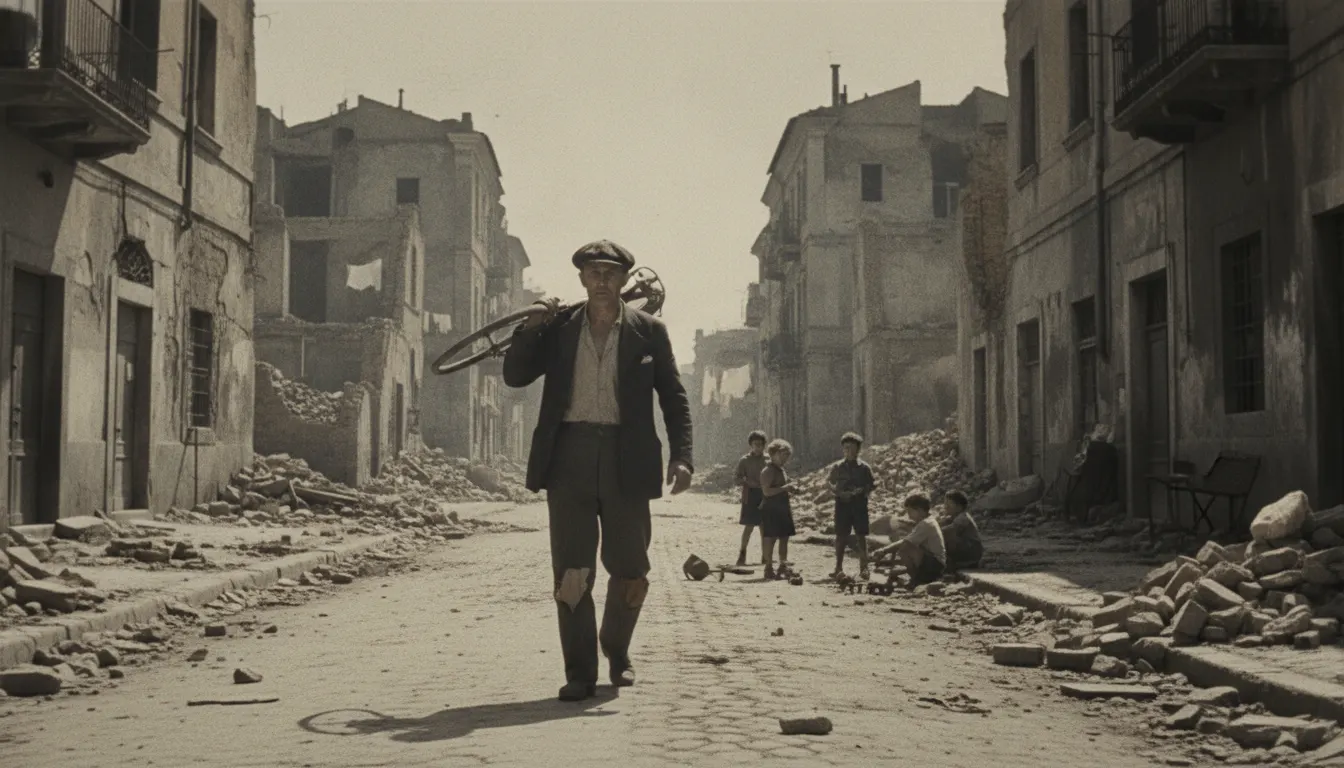
Vittorio De Sica / Carlo Montuori · 1948
The canonical text - factory worker and son search Rome, nonprofessional cast, no narrative resolution
Italian neorealism. Vittorio De Sica Bicycle Thieves, Rossellini Rome Open City, post-war rubble, nonprofessional actors, available daylight.
The moves a human crew would use to get here. Cue applies them for you, and knowing their names is how you ask for a change.
Real workers, actual street children, or genuine residents photographed in the locations they actually inhabit.
No artificial lighting; hard sun, overcast sky, or reflected natural light provides the sole source.
Handheld camera follows subjects through streets at walking pace, environment surrounding rather than backing them.
Inconsistent grain from recycled or low-quality film stock becomes an aesthetic property signaling material precarity.
Worn work clothes, weathered faces, and period-accurate poverty details replace any stylized wardrobe.
Child subject looking up at adult parent or authority figure from below creates the movement's signature vulnerability image.
Italian Neorealism is the most morally urgent aesthetic movement in cinema history. Born in the ruins of Fascist Italy and wartime Rome, the movement rejected the expensive studio productions of the pre-war era and declared that the real world - the streets, the nonprofessional actors, the actual poor - was more cinematically powerful than anything that could be built on a sound stage. Vittorio De Sica's Bicycle Thieves (Ladri di biciclette, 1948) is the movement's canonical text, but the movement encompasses Roberto Rossellini's war trilogy, Luchino Visconti's early work, and Giuseppe De Santis's neo-Marxist peasant epics.
Rossellini's Rome, Open City (Roma, città aperta, 1945) was shot in war-damaged Rome in 1944-1945 while German occupation was still in recent memory. Because of supply shortages, Rossellini used whatever 35mm film stock was available - often scavenged newsreel stock in poor condition - and shot on available daylight. The resulting images, with their inconsistent grain, blown highlights, and uncontrolled exposure, looked unlike anything produced in Hollywood or in the Italian pre-war studio system. This was not a stylistic choice but a material necessity, and Rossellini made a virtue of it. The subsequent films Paisà (1946) and Germany Year Zero (1948) extended the technique to multiple locations and a consistent aesthetic philosophy.
Vittorio De Sica's collaboration with screenwriter Cesare Zavattini produced the movement's ethical manifesto in practice. Shoeshine (Sciuscià, 1946), Bicycle Thieves (1948), Umberto D. (1952), and Miracle in Milan (Miracolo a Milano, 1951) are the key works. Zavattini articulated the theory: cinema should be a camera following an ordinary person through an ordinary day, without narrative structure, without resolution, without falsifying sentiment. The closest any film came to realizing this ideal was Bicycle Thieves, in which a factory worker and his son spend a single day searching Rome for a stolen bicycle on which their economic survival depends. The film was shot entirely on location with nonprofessional leads (Lamberto Maggiorani was an actual factory worker), available daylight, and a 35mm camera operated handheld.
Luchino Visconti's Ossessione (1943), an unauthorized adaptation of James M. Cain's The Postman Always Rings Twice, is technically a pre-Neorealist text that established many of the movement's formal properties: location shooting in the Po Valley, nonprofessional extras, and an honest attention to the physical details of working-class Italian life. La Terra Trema (1948), shot in Sicily with the actual fishermen of Aci Trezza as cast, is the movement's most ambitious class-analysis document.
Italian Neorealism directly influenced the French Nouvelle Vague (Truffaut cited Bicycle Thieves as the film that convinced him to become a director), the Brazilian Cinema Novo, the Iranian New Wave, and the Dogme 95 movement. Its commitment to shooting the actual world rather than a constructed version of it remains the foundational principle of social realism in cinema.
Vittorio De Sica / Carlo Montuori · 1948
The canonical text - factory worker and son search Rome, nonprofessional cast, no narrative resolution
Roberto Rossellini / Ubaldo Arata · 1945
Wartime Rome shot on scavenged stock - the movement's origin document, shot during occupation aftermath
Roberto Rossellini / Otello Martelli · 1946
Six-episode liberation-of-Italy anthology shot on wartime locations with mixed professional and nonprofessional casts
Vittorio De Sica / G.R. Aldo · 1952
Retired civil servant and dog - the movement's most pitiless emotional study of poverty and dignity
Luchino Visconti / G.R. Aldo · 1948
Sicilian fishermen played by the actual fishermen of Aci Trezza - maximum nonprofessional authenticity
Roberto Rossellini / Robert Juillard · 1948
Neorealism exported to post-war Berlin rubble with German child protagonist
Vittorio De Sica / Anchise Brizzi · 1946
Rome street boys and their horse - the first De Sica Neorealist masterpiece, pre-dating Bicycle Thieves
A Look is not a filter. It is a set of stored decisions the pipeline reads before it makes a single frame, so two videos in the same Look actually match.