Slacker
Richard Linklater · 1990
The foundational text - 16mm Austin one-day daisy-chain shot for $23,000, the aesthetic origin point
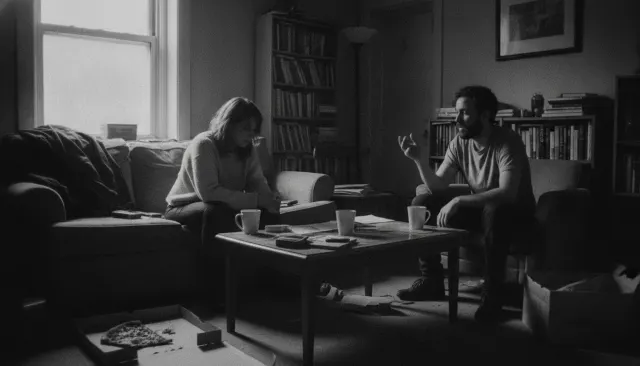
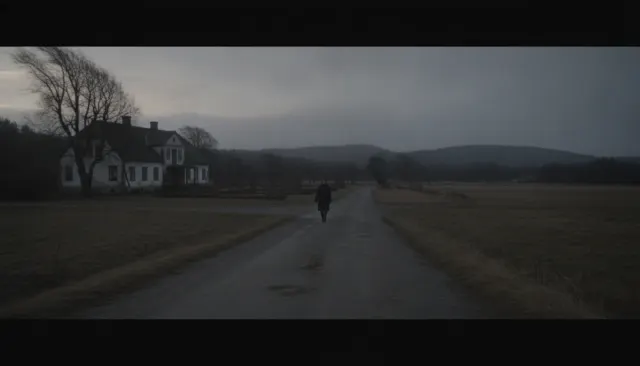
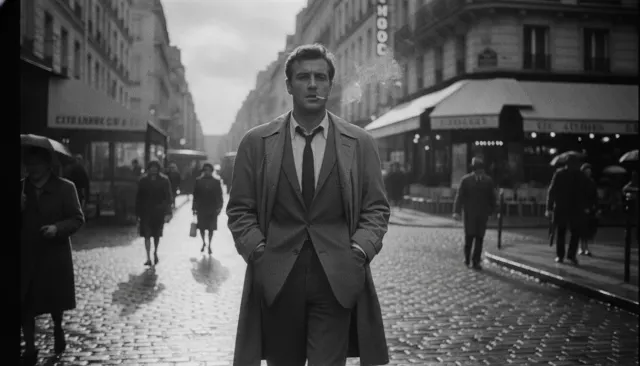
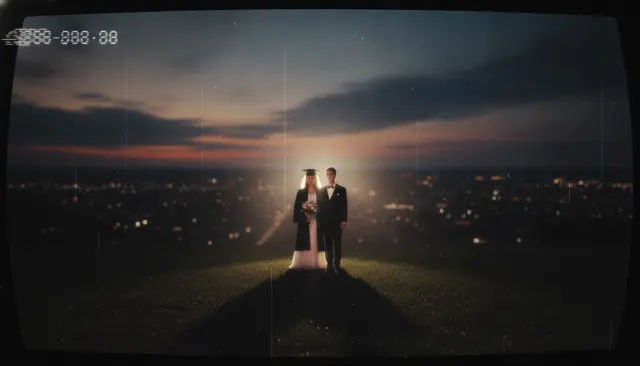
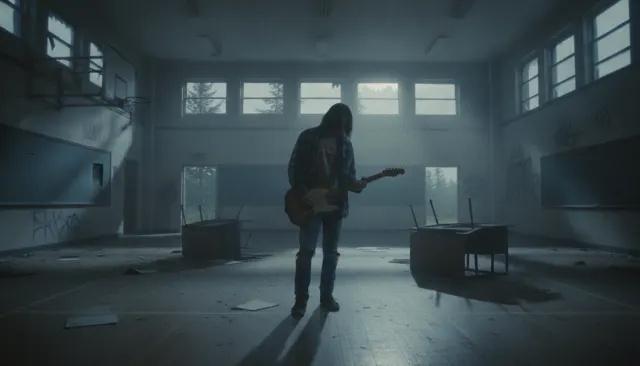
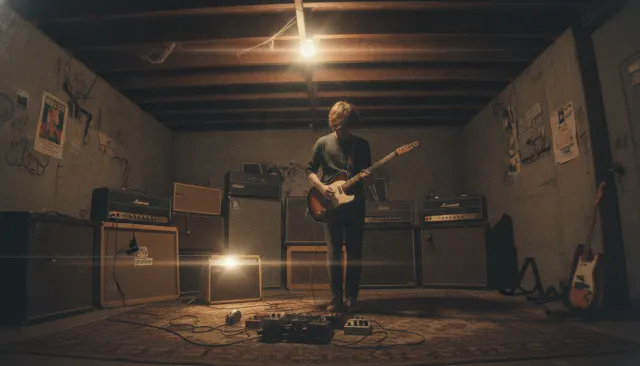
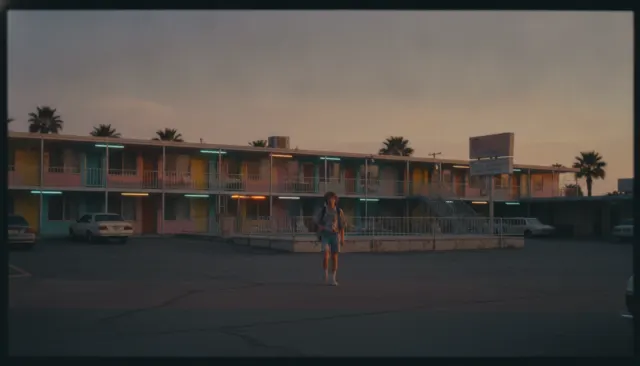
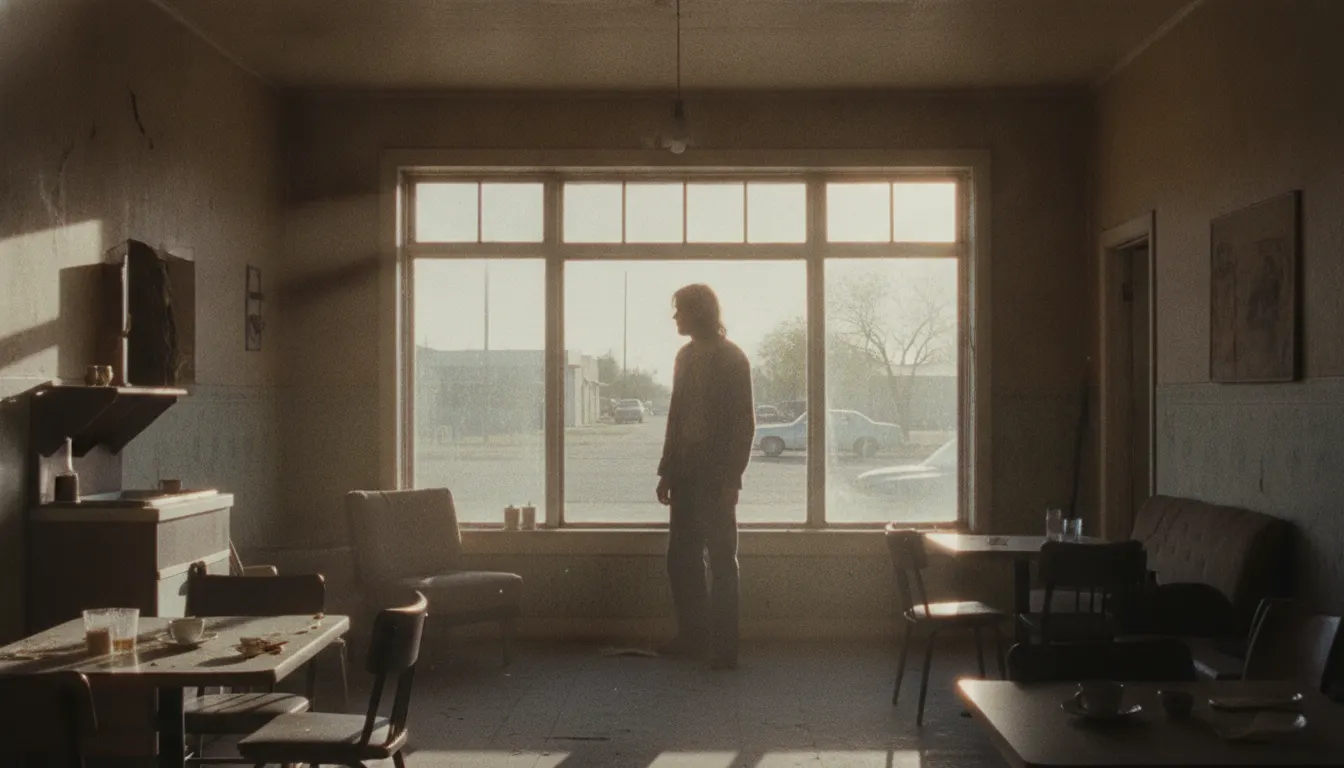
16mm indie aesthetic. Linklater Slacker grain, low-budget naturalism, talky two-shots, faded saturation.
The moves a human crew would use to get here. Cue applies them for you, and knowing their names is how you ask for a change.
Kodak 7245 200 ASA grain visible in shadows and midtones, adding an organic physical texture to every frame.
Interior subjects backlit by daylight windows clip to white highlight, the Sundance indie's universal availability-lighting signature.
Camera placed on a flat axis across a diner booth with two subjects in equal-size two-shot, held for full scene duration.
Mild green color cast in shadow areas, a property of 7245 emulsion pushed in development for exposure.
Actors appear unrehearsed and spontaneous, wardrobe is thrift-store, and performance grammar resists classical Hollywood ease.
Handheld camera follows characters walking at conversation pace through urban environments, the Linklater structural signature.
The 1990s American independent film movement is the defining moment when low-budget cinema became a creative identity rather than a compromise. The Sundance Film Festival, the Miramax effect, and the proliferation of 16mm and Super-16 formats created a decade of films that wore their budget constraints as aesthetic declarations: the coarse grain, the blown windows, the available light, the static two-shot - these were not failures of craft but signals of authenticity.
Richard Linklater's Slacker (1990) - shot on 16mm for $23,000 - is the original Sundance indie document. Shot over a single day in Austin, Texas, following conversations from character to character in an unbroken daisy-chain structure, the film's visual grammar is entirely determined by its resources: available light, a handheld 16mm camera, no lighting equipment. Steven Soderbergh's sex, lies, and videotape (1989, shot by Walt Lloyd) won the Palme d'Or at Cannes and established that personal, intimate cinema could compete internationally. Kevin Smith's Clerks (1994) was shot on black-and-white 16mm in a New Jersey convenience store for $27,575.
16mm Kodak 7245 - the 200 ASA negative stock most commonly used for indie features - has a distinctive look: coarse visible grain at normal shooting conditions, blown windows when interior subjects are backlit by daylight, and a slightly green color cast in shadows. These properties are the result of an emulsion that was designed for documentary news and educational film use, not for cinematic exhibition. When pushed and blown up to 35mm for theatrical distribution, the grain becomes a conscious texture. The Sundance aesthetic celebrated rather than apologized for this.
Hal Hartley (Trust, 1990; Simple Men, 1992; Amateur, 1994) brought a more stylized, European-influenced version of the Sundance aesthetic - deadpan dialogue, static long takes, and an alienated urban palette that owed more to Jean-Luc Godard than to Hollywood. Todd Solondz (Welcome to the Dollhouse, 1995; Happiness, 1998) applied the naturalistic aesthetic to deeply uncomfortable suburban material, using the flat documentary grammar to render the suburbs as a horror landscape. Noah Baumbach's Kicking and Screaming (1995) and Mr. Jealousy (1997) applied the Slacker template to East Coast college environments.
The 16mm grain aesthetic was so thoroughly absorbed into mainstream cinema that by the mid-2000s, it had become a digital filter applied to films shot on Sony digital cameras. Today, the Sundance aesthetic lives in mumblecore cinema (Joe Swanberg, the Duplass Brothers), in early-career features by directors who later moved to studio work, and in the grain and flare of iPhone and mirrorless camera independent productions that deliberately cite the 1990s tradition.
Richard Linklater · 1990
The foundational text - 16mm Austin one-day daisy-chain shot for $23,000, the aesthetic origin point
Steven Soderbergh / Walt Lloyd · 1989
Palme d'Or Sundance breakthrough demonstrating personal indie cinema could compete internationally
Kevin Smith · 1994
B&W 16mm New Jersey convenience store feature for $27,575 - the no-budget extreme of the aesthetic
Richard Linklater / Lee Daniel · 1995
Walking-and-talking naturalism extended into romantic drama in European location
Todd Solondz / Randy Drummond · 1995
Sundance documentary grammar applied to suburban horror - flat light as moral indictment
Noah Baumbach / Steven Bernstein · 1995
East Coast college Slacker - available light, talky static two-shots, and Baumbach's first feature
Tom DiCillo / Frank Prinzi · 1995
The meta-indie text - a film about making a low-budget indie film, shooting 16mm and B&W sequences
A Look is not a filter. It is a set of stored decisions the pipeline reads before it makes a single frame, so two videos in the same Look actually match.