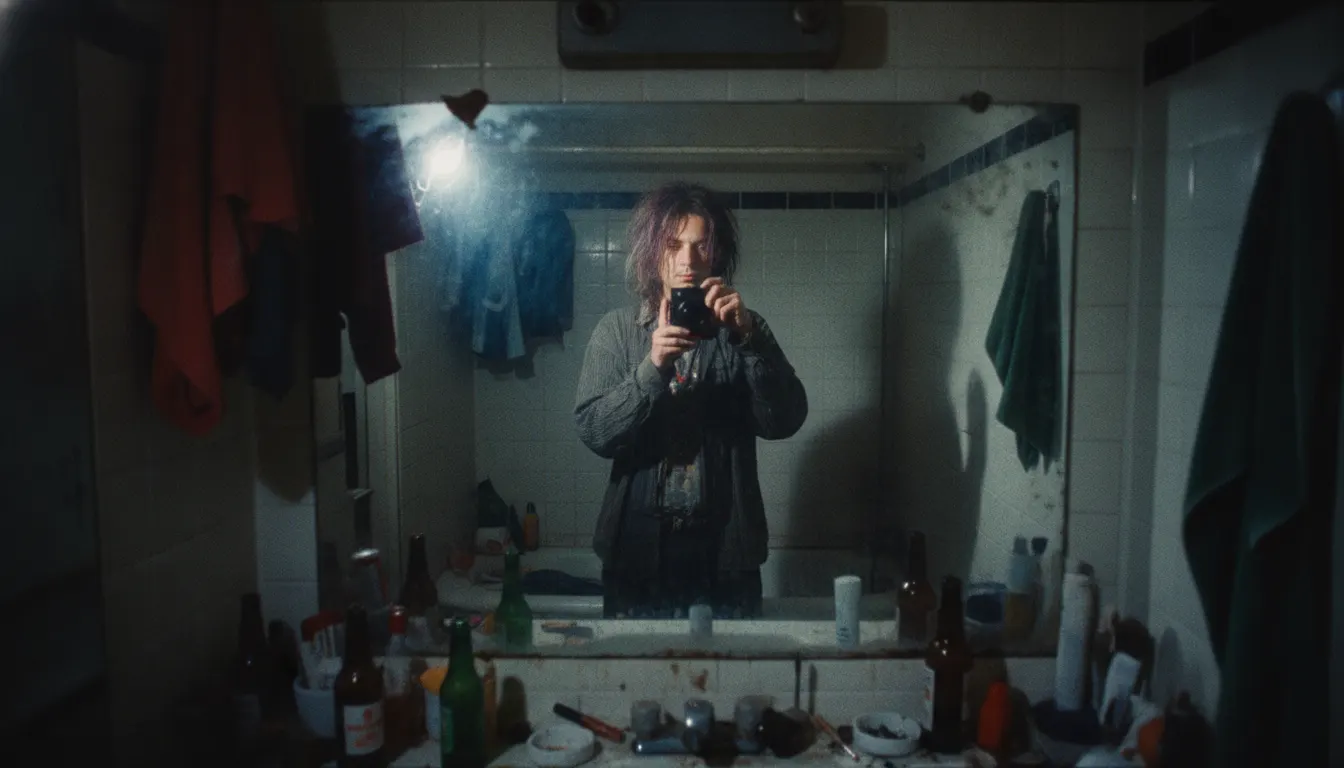
The Ballad of Sexual Dependency
slide show first performed 1980, book published 1986
Nan Goldin Ballad of Sexual Dependency. On-camera flash intimate diary, Lower East Side bathroom mirror, chosen-family raw saturated color.
The moves a human crew would use to get here. Cue applies them for you, and knowing their names is how you ask for a change.
camera hotshoe flash (Vivitar 283 or equivalent) producing flat, even illumination that bleaches foreground and preserves ambient room color
Kodachrome 64 or Ektachrome for warm-to-neutral color saturation and visible fine grain
small, unobtrusive camera presence that allows subjects to forget they are being photographed
subjects rarely isolated from their domestic or social space
motion blur, exposure error, red-eye treated as authentic rather than defect
images gain meaning from neighbors in the sequence, not in isolation
Nan Goldin (born Washington D.C., 1953) created one of the most influential bodies of photography in the late 20th century through a deceptively simple premise: document your own life and community with a camera as honestly as you would write in a diary. The result, accumulated across the 1970s and 1980s in Boston's underground queer and drag communities and New York's Lower East Side, was The Ballad of Sexual Dependency - first presented as a slide show in 1980, expanded and formally exhibited at the Whitney Biennial in 1985, and published as a book in 1986.
The Ballad is 700 images distilled to approximately 127 for the book, presented as a continuous sequential narrative set to a soundtrack ranging from the Velvet Underground to Maria Callas. The subjects - Goldin's friends, lovers, and community members including Cookie Mueller, Brian, Dereyk, and Goldin herself - appear in bedrooms, bathrooms, bars, and kitchens in moments of extraordinary intimacy: sex, arguments, tenderness, drug use, violence, and grief. Goldin photographed the AIDS crisis as it took her community, giving the work an elegiac dimension that crystallized its historical importance.
Goldin's technical approach is deliberately anti-technical. She shoots with available light supplemented by direct on-camera flash (frequently a Vivitar 283 or similar hotshoe strobe), which produces the characteristic flat-yet-saturated look: faces catching bright flashlight against dark, ambient-lit rooms. Film stock was typically Kodachrome 64 or Ektachrome, yielding rich, slightly warm color saturation and visible grain. Images are often slightly over- or under-exposed by precision standards, but this variability is inseparable from their authenticity.
Goldin's work redefined intimate portraiture for generations of photographers. Wolfgang Tillmans, Terry Richardson (controversially), Larry Clark, and Ryan McGinley all work in the aesthetic tradition she established. The 2022 biographical documentary All the Beauty and the Bloodshed (director Laura Poitras) won the Golden Lion at Venice and brought renewed attention to both her photography and her PAIN opioid activism.
The Goldin look is inseparable from trust and consent. Her images are intimate because her subjects consented to radical exposure with a photographer who was also a community member and friend. Invoking the aesthetic without the ethical foundation produces exploitation rather than intimacy.
slide show first performed 1980, book published 1986
commissioned installation, Chapelle des Petits-Augustins, Paris, 2004
A Look is not a filter. It is a set of stored decisions the pipeline reads before it makes a single frame, so two videos in the same Look actually match.
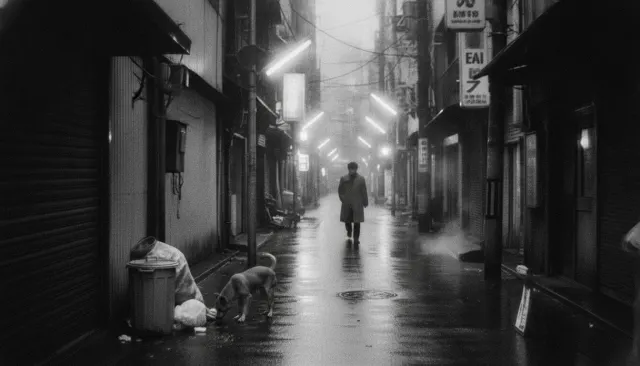 Street PhotographyDaido Moriyama BW Grain Japan
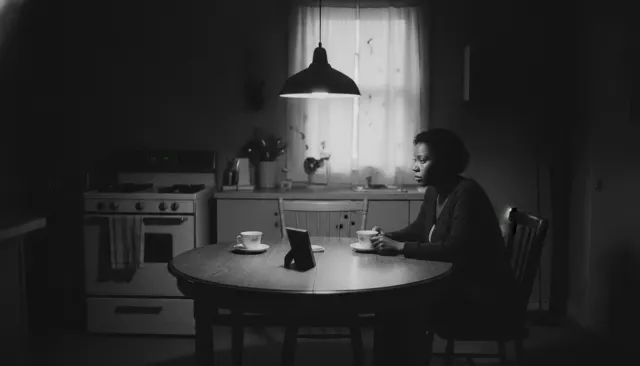 Photographers Color ModernCarrie Mae Weems Narrative BW
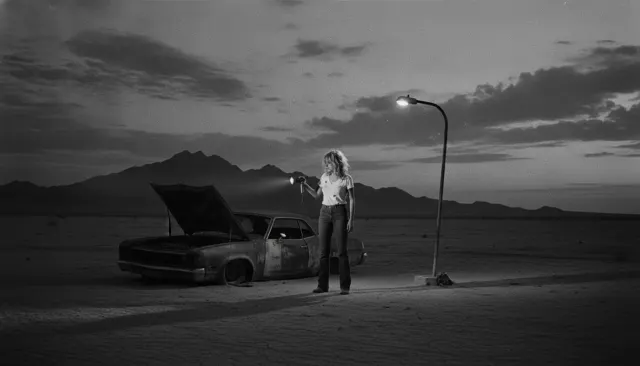 Photographers Fine ArtCindy Sherman Conceptual Portraiture
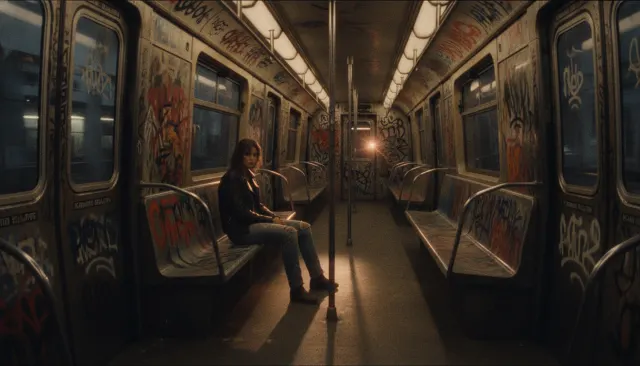 Street PhotographyBruce Davidson Subway Flash
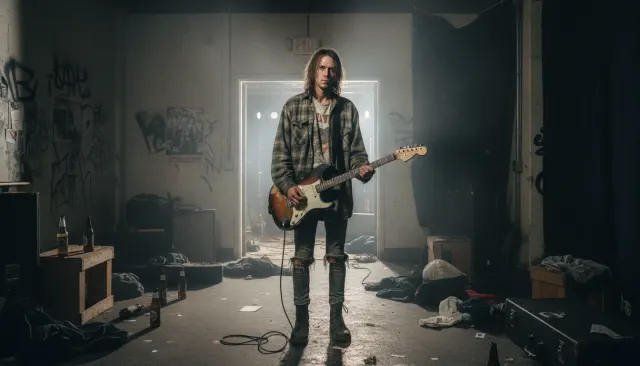 Era Specific Color1990s Grunge Music Portrait
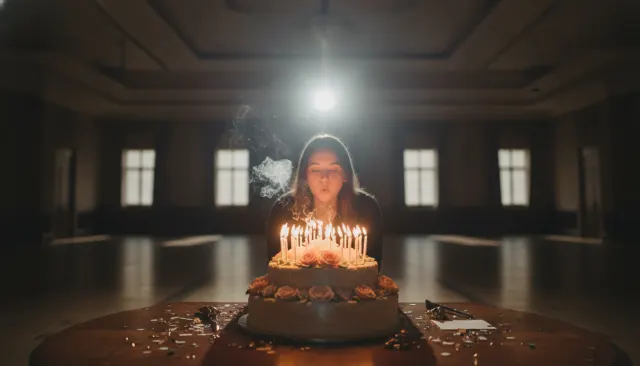 Family Event CasualBirthday Candle Flash
 Era Specific Color1960s Vietnam War Color Magazine