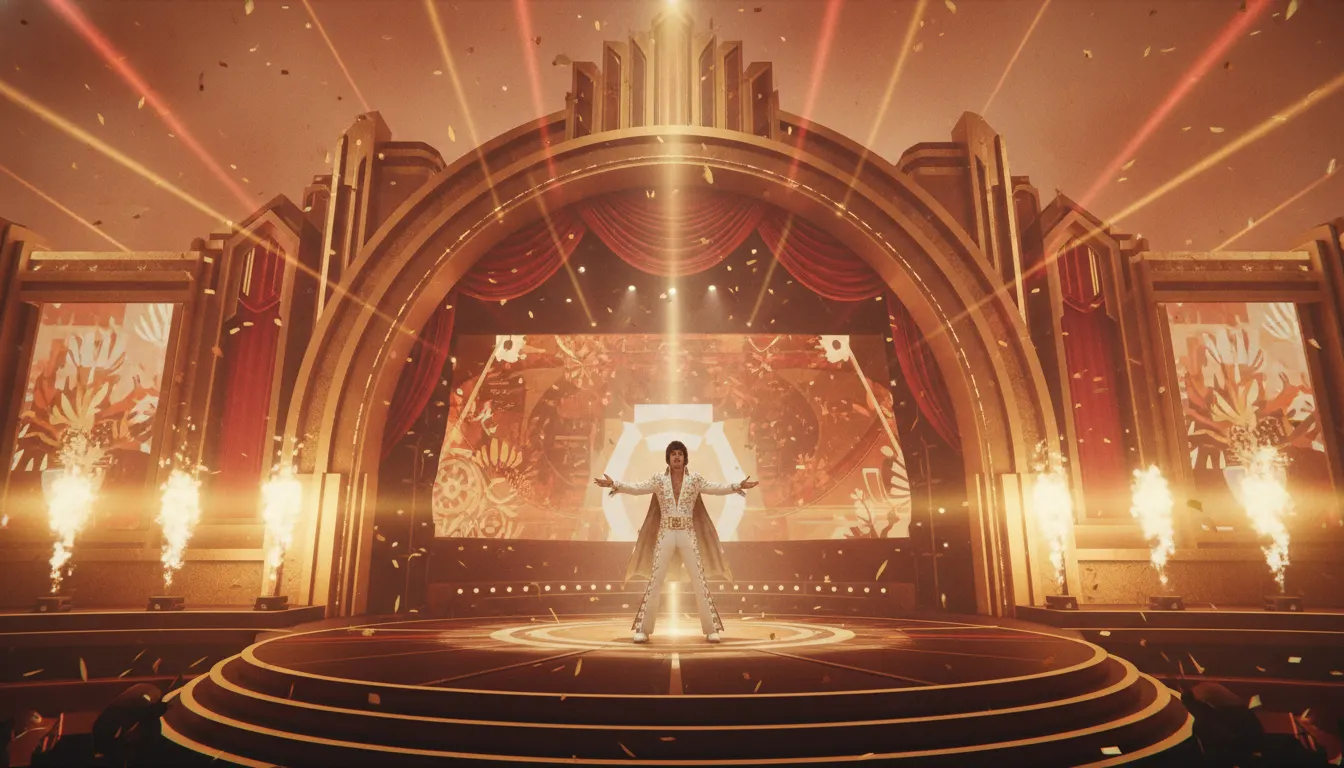
Elvis
Mandy Walker / Baz Luhrmann · 2022
BAFTA-nominated cinematography using stage lights as primary sources and theatrical maximalism to match the performer's energy
Mandy Walker Elvis-Baz Luhrmann hyper-stylized. Saturated stage lighting, rapid push-in, Australia outback warmth, theatrical maximalism.
The moves a human crew would use to get here. Cue applies them for you, and knowing their names is how you ask for a change.
Using practical stage rigs as primary light sources, allowing their saturated reds, ambers, and cyans to define the image.
Fast, physically committed dolly or zoom push-ins during performance moments, creating kinetic connection to the subject's energy.
Handheld camera work in early or backstage sequences that creates contrast with the theatrical coverage of stage moments.
Fast whip pans between subjects or locations used as a visual exclamation mark matching the cutting pace.
In pre-fame sequences, a warm, raw earth palette referencing Walker's Australian film work and Elvis's Southern roots.
Late-period sequences pushed toward intense gold and amber, reflecting the gilded-cage quality of Elvis's Las Vegas imprisonment.
High crane positions that capture the full scale of the performance environment and the crowd's response simultaneously.
Australian cinematographer Mandy Walker created the visual language for Baz Luhrmann's Elvis (2022), one of the most formally ambitious biographical films in recent Hollywood history. Walker's cinematography synthesized Luhrmann's signature maximalism with a visual strategy appropriate to a subject who was himself a maximalist performer - saturated stage lighting, rapid push-in moves, a theatrical color palette ranging from raw Memphis blues to Las Vegas gold.
Walker came to international prominence through her work with director Luhrmann on Australia (2008), a sweeping outback epic that established their shared visual language: wide landscapes, intense color, and a willingness to push saturation and contrast beyond naturalistic limits. She had previously established her reputation in Australian cinema through Shiner (2000), Lantana (2001), and the biographical drama Stepmom (1998).
Elvis earned Walker a BAFTA nomination for Best Cinematography. The film's visual strategy was to match the energy and transformation of Elvis Presley himself: raw and earthy in his early Memphis years, explosive in his TV appearances, and ultimately trapped and gilded in his late Las Vegas period. The cinematography tracks this arc from handheld documentary-style shooting in the early scenes to hypersaturated, crane-mounted theatrical coverage in the showroom sequences.
Luhrmann's films are defined by their refusal of restraint, and Walker's Elvis cinematography embraces this as a formal principle. The camera is almost always moving - push-ins, whip pans, handheld drift - and the editing pace is Luhrmann's characteristic frenetic cut. But Walker distinguishes herself through her handling of actual stage lighting: rather than augmenting or replacing the stage lights visible in frame, she works with them, using the practical stage rigs as the primary source and allowing their color - reds, ambers, cyans - to saturate the image.
The result is a film that looks different from any other biopic: not the controlled, naturalistic palette of Bohemian Rhapsody (2018) or Rocketman (2019), but something more operatic and disorienting. Walker has cited the influence of fashion photography and rock concert photography on her approach, noting that she wanted the film to feel like a visual experience rather than a historical record.
Mulan (2020), Walker's Disney live-action epic, demonstrated her ability to work at scale with a very different aesthetic mandate - Chinese landscape painting-influenced wide shots, constrained color palette, and choreographic precision. The contrast between Mulan and Elvis demonstrates Walker's range: she is not a cinematographer with a signature personal look but one who subordinates her craft to each project's specific demands.
Mandy Walker / Baz Luhrmann · 2022
BAFTA-nominated cinematography using stage lights as primary sources and theatrical maximalism to match the performer's energy
Mandy Walker / Baz Luhrmann · 2008
Outback epic establishing Walker and Luhrmann's shared visual language of wide landscapes and intense color
Mandy Walker / Niki Caro · 2020
Disney live-action epic using landscape painting-influenced cinematography and constrained color palette
Mandy Walker · 2001
Australian thriller that established Walker's reputation for controlled, emotionally precise naturalistic cinematography
Newton Thomas Sigel · 2018
Comparative music biopic approach using more naturalistic, controlled cinematography than Walker's Elvis work
George Richmond · 2019
Elton John biopic using theatrical musical staging as a point of comparison for Walker's more saturated, kinetic approach
A Look is not a filter. It is a set of stored decisions the pipeline reads before it makes a single frame, so two videos in the same Look actually match.
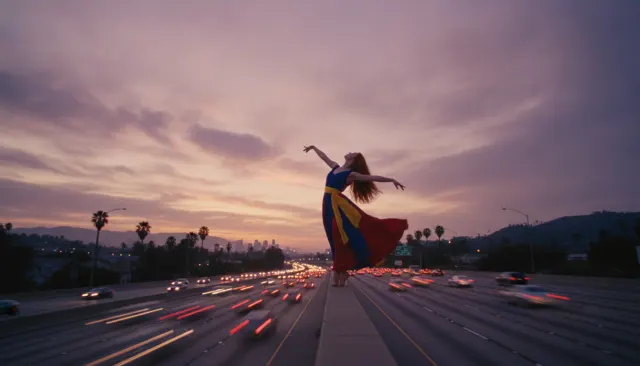 Cinematographer AcclaimedLinus Sandgren La La Land Pastel
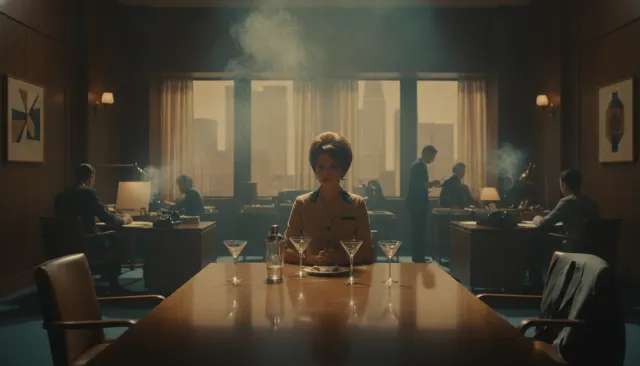 Period PieceMad Men 1960s Saturated Office
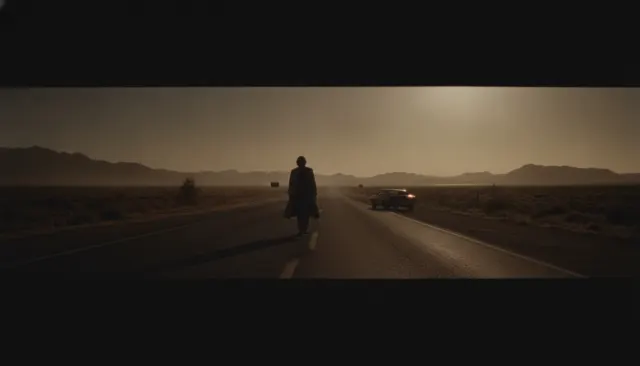 Cinema EraNew Hollywood 1970s
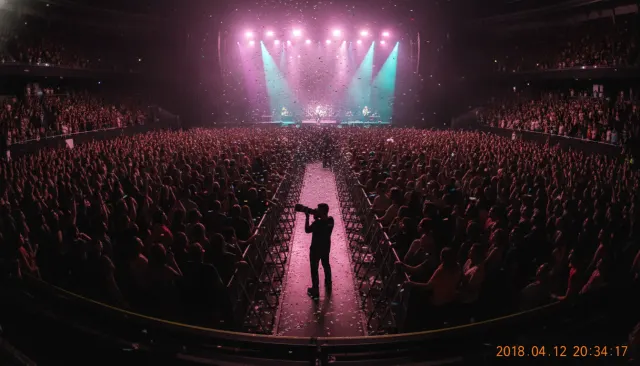 Genres ExtendedConcert Photography Stage Lights
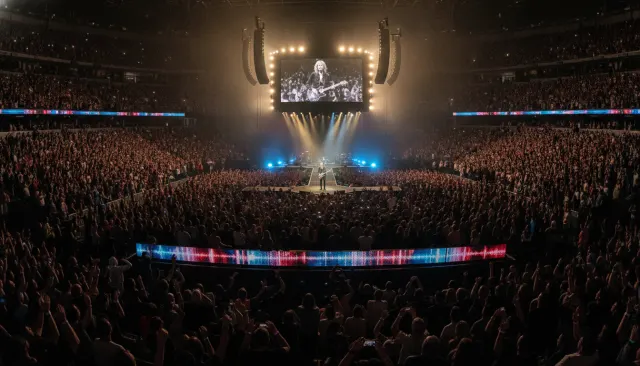 Mv Performance CaptureConcert Footage Multicam Arena
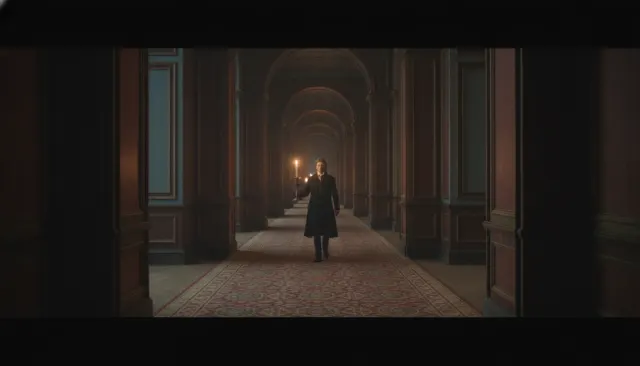 Director AestheticKubrick Symmetrical
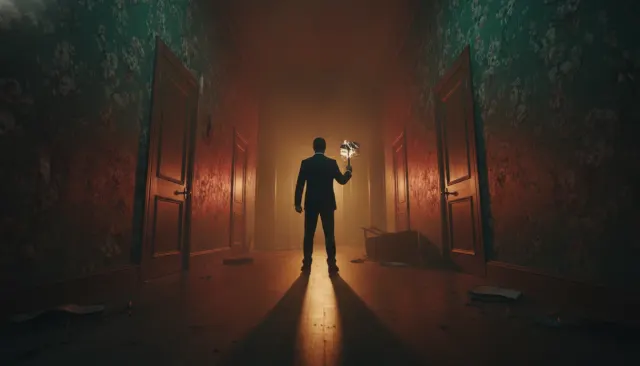 Director Aesthetic ModernPark Chan-wook Revenge Saturated