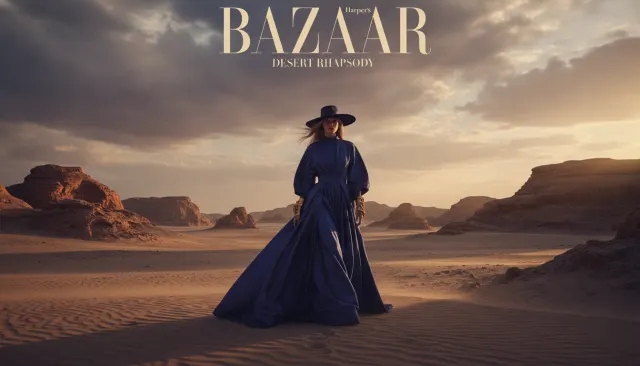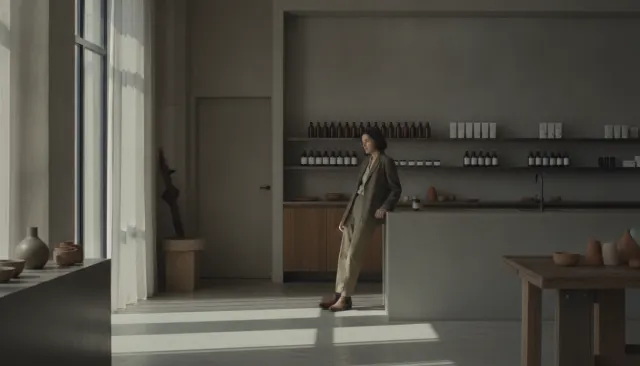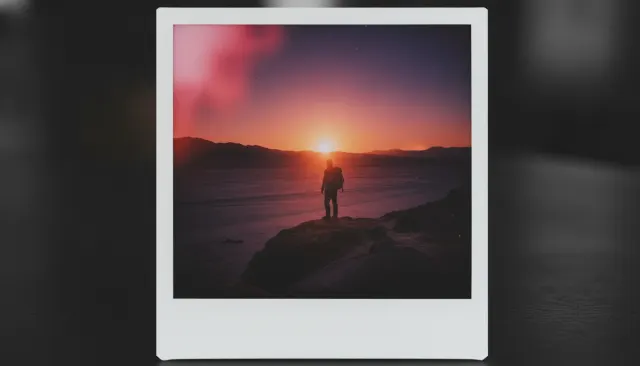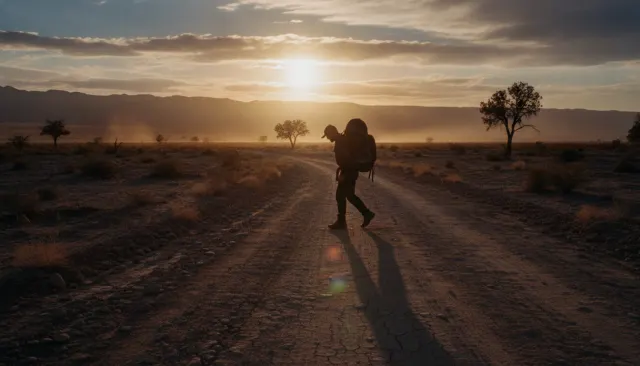
Various celebrity portraits
Annie Leibovitz · 1990s-present
Leibovitz's extensive use of Portra across decades of Rolling Stone and Vanity Fair portrait work defined the film's association with humanistic celebrity photography
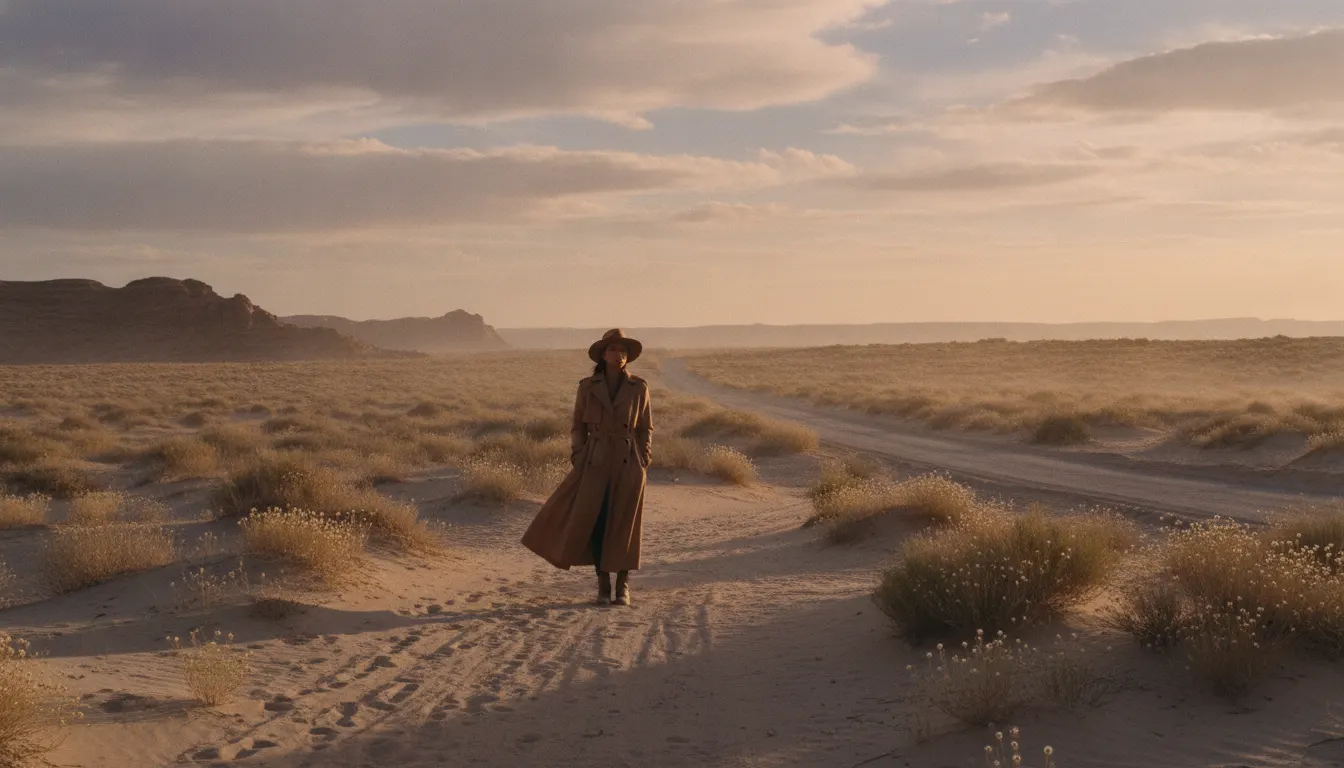
Kodak Portra 400 still-photo emulation. Skin-tone-true editorial portrait, neutral creamy mids, considered medium-format-feel framing.
The moves a human crew would use to get here. Cue applies them for you, and knowing their names is how you ask for a change.
Shadows that never go fully to black, maintaining a slight warmth in dark areas characteristic of negative film's toe response.
Gentle rolloff in bright areas rather than hard clipping, preserving texture in skin and white fabric.
Slight orange-amber push in mid-skin tones that flatters a wide range of complexions without oversaturation.
Environmental colors that are present but not aggressive, keeping attention on subjects rather than surroundings.
Subtle, even grain that adds texture without obscuring detail - coarser in shadow areas, finer in highlights.
The depth-of-field and focal plane characteristics of shooting at 80mm on a medium format body, creating a particular spatial quality.
Kodak Portra 400 is the most widely used color negative film in professional portrait and documentary photography, and its visual properties have become a benchmark aesthetic for a generation of photographers and filmmakers. The film's distinctive rendering of skin tones, its compressed contrast in highlights, and its fine, creamy grain structure define a look that digital technology has spent twenty years attempting to replicate.
Kodak introduced the original Portra line in 1998, reformulating it significantly in 2010 into what photographers now consider the definitive version. Portra 400 is characterized by exceptional latitude - the film holds detail in both shadows and highlights well beyond what most digital sensors can resolve without HDR processing. Its color rendering prioritizes accurate, flattering skin tones: it adds warmth to flesh without oversaturating, and it renders greens and blues with a softness that avoids the aggressive saturation of slide films like Velvia.
Portra 400 became the standard choice for photojournalists and documentary photographers who needed a versatile, pushable film that could handle mixed and low-light situations. Photographers including Annie Leibovitz, who has used Portra extensively for celebrity portraiture, and documentary photographers working for National Geographic and Time established the film's association with considered, humanistic image-making.
The medium format version of the Portra look - shot on Hasselblad or Mamiya cameras - adds a compression and depth-of-field quality that 35mm cannot match. Fashion photographers adopted medium format Portra for its ability to render fabric texture, skin detail, and environmental context simultaneously without the clinical sharpness of digital medium format.
The commercial dominance of digital photography in the 2000s created a paradox: as Portra sales declined, demand for Portra-emulating digital presets surged. VSCO's film preset packs, launched in 2011, put Portra emulation on millions of smartphones. The analog film revival of the 2010s brought a new generation of photographers back to actual Portra use, while simultaneously expanding the digital emulation market through tools like Lightroom presets, LUTs, and plugins like Mastin Labs.
Portra's aesthetic now operates across two registers simultaneously: actual film shooters who value the medium for its genuine optical properties, and digital creators who apply emulation presets to achieve the warmth, grain, and skin-tone rendering that Portra represents. In video production, the Portra look is applied through color grading to achieve a warm, slightly lifted black point, compressed highlights, and fine grain overlay - the hallmarks of a documentary aesthetic that feels human rather than clinical.
Annie Leibovitz · 1990s-present
Leibovitz's extensive use of Portra across decades of Rolling Stone and Vanity Fair portrait work defined the film's association with humanistic celebrity photography
Various photographers · 2000s
Documentary photographers using Portra in mixed and challenging light conditions established its reputation for latitude and reliability
VSCO · 2011-2015
Digital emulation packs that brought Portra aesthetics to millions of smartphone users and defined the Instagram film look era
Mastin Labs · 2013-present
Lightroom preset system built specifically from Portra film samples that became standard in wedding and portrait photography
Various photographers · 2010s-present
Fashion photographers including Juergen Teller and others who kept actual Portra in their kits through the digital transition
A Look is not a filter. It is a set of stored decisions the pipeline reads before it makes a single frame, so two videos in the same Look actually match.