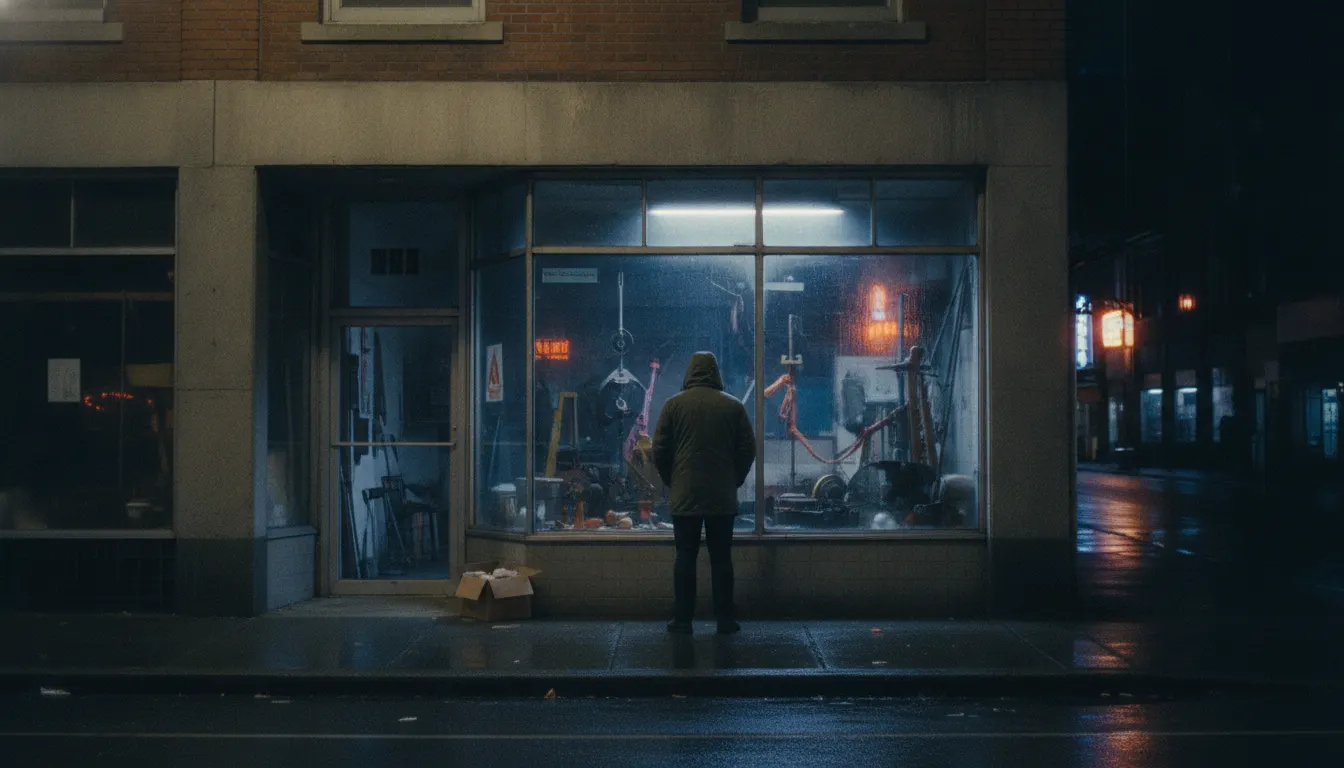
PHOTOGRAPHERS FINE ART · 1990S · CANADA
Jeff Wall Staged Tableau Narrative
Jeff Wall cinematographic staged tableau. Lightbox transparency, Vancouver storefront restaged, painting-history scale, Mimic Picture for Women.
fine-artstagedcinematographictableau
LUT jeff-wall-lightbox
WHEN TO USE
- Large-scale installation photography for gallery or commercial art contexts
- Highly staged narrative commercial photography - fashion film stills, campaign imagery
- Documentary-style fiction: content that looks unstaged but is rigorously constructed
- Luxury brand content requiring the aesthetic authority of painting and cinema simultaneously
- Video or photography projects exploring the boundary between documentary and fiction
WHEN NOT TO USE
- Candid documentary or news contexts where staging would be ethically problematic
- Quick-turnaround commercial work - Wall's method requires extensive pre-production
- Small-format or mobile-optimized content where the scale is irrelevant
- Casual or lifestyle photography requiring spontaneity and warmth
SIGNATURE TECHNIQUES
How the look is made.
The moves a human crew would use to get here. Cue applies them for you, and knowing their names is how you ask for a change.
- 01Custom aluminum lightbox with fluorescent backlighting
the print glows from within
- 02Large
scale Cibachrome transparency, typically 2-3 meters wide
- 03Composite assembly from multiple frames
days or months of shooting for one image
- 04Cinematic lighting rigged for exterior scenes (lights disguised or removed in compositing)
- 05Casting non
professional actors in roles derived from daily life
- 06Historical painting references embedded in contemporary settings (Manet, Hokusai, Velazquez)
- 07Compositional balance derived from Western painting traditions - horizon, figure groupings
HISTORY & CONTEXT
Where it comes from.
Jeff Wall: Staged Tableau Narrative
Jeff Wall (born 1946, Vancouver) occupies a singular position in the history of photography - he is simultaneously a photographer, a filmmaker, a painter, and a theorist, and his work cannot be understood without engaging all four roles. Since 1977 he has produced large-scale staged photographs mounted in custom-built backlit aluminum lightboxes, creating images that sit precisely between painting and cinema in both scale and intent.
The Lightbox
Wall's medium is the Cibachrome transparency mounted in a fluorescent backlit aluminum lightbox of his own design. The photographs glow with even, internally generated light, unlike conventional prints which reflect ambient light. At scales of 2x3 meters or larger, the images become environmental: they fill a wall, they emit light into a room, they demand physical navigation. This scale and luminosity position the photographs closer to cinema or large-scale painting than to conventional photography.
Tableau and Narrative
Wall calls his approach 'cinematographic photography' - each image is staged like a film still from a film that does not exist. Subjects are cast, locations are scouted, lighting is rigged, and the scene is photographed over multiple sessions with the final image often composited from dozens of separate frames. A Sudden Gust of Wind (after Hokusai) (1993) took over a year to produce. The image reconstructs a Hokusai print in a contemporary Vancouver landscape; papers scatter in the wind, figures react to the gust. The several elements were photographed separately and composited, yet the image reads as a single instant.
His 'near documentary' images are a second category: A View from an Apartment (2004-2005) shows two women in a Vancouver apartment; the scene looks like a documentary photograph until the impossibly perfect light and spatial arrangement reveal the staging. These works engage directly with photography's documentary tradition by imitating it precisely while disclosing that the imitation is deliberate.
Intellectual Context
Wall trained as an art historian at UBC and the Courtauld Institute, and his photographic theory is explicitly grounded in the Frankfurt School, particularly Walter Benjamin's essay 'The Author as Producer' and T.J. Clark's writing on Manet. He is one of the few photographers whose critical writing matches his visual work in rigor and influence. His 1984 essay 'Marks of Indifference' is a foundational text on photography and conceptual art.
NOTABLE WORKS
Where you have seen it.
The Destroyed Room, 1978 (his first lightbox work, after Delacroix)
Milk, 1984
A View from an Apartment, 2004-2005
Insomnia, 1994
After 'Invisible Man' by Ralph Ellison, the Preface, 1999-2000
The Flooded Grave, 1998-2000
THE RECIPE
The exact knobs
the renderer turns.
A Look is not a filter. It is a set of stored decisions the pipeline reads before it makes a single frame, so two videos in the same Look actually match.
SettingValue
GradeColour LUT applied to every frame
jeff-wall-lightboxTransitionHow one shot becomes the next
dissolve cuts · 720ms · ease-in-outKen BurnsCamera move applied to stills
Slow push · 0.015 · rule-of-thirdsTypographyDisplay / body / mono pairing
Source Serif Pro · Lora · CourierMusic moodWhat the bed under the voice sounds like
contemporary-classical · sparse-stringsPrompt suffixAppended to every shot prompt in this Look
Jeff Wall cinematographic staged tableau 1990s 2000s, lightbox transparency, Vancouver storefront restaged, painting-history scale narrativePALETTE
Primary
#5C5040
Secondary
#8A7460
Accent
#1F6FB8
Text/Light
#1A1410
Text/Dark
#E5DED0
BG 900
#0F0B08
BG 800
#1F1810
RELATED LOOKS
Next to it on the shelf.
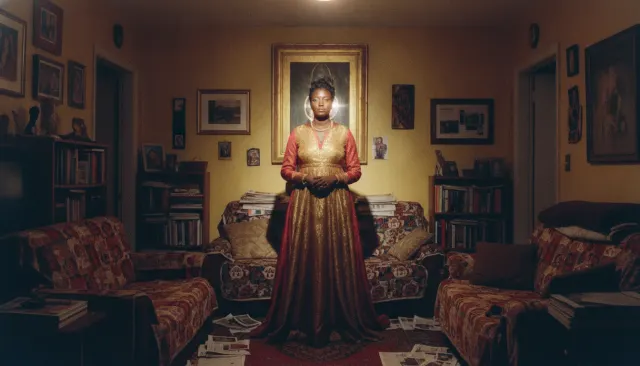 Photographers Color ModernDeana Lawson Staged Color Portrait
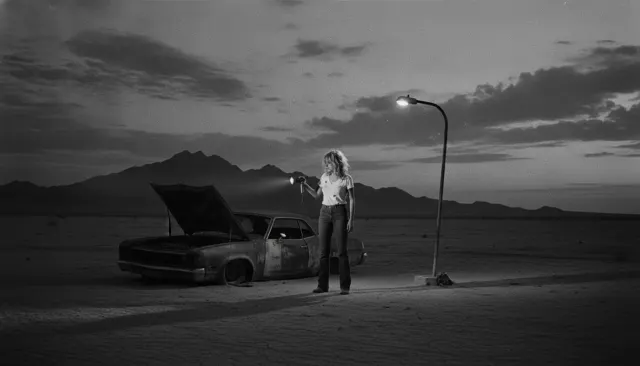 Photographers Fine ArtCindy Sherman Conceptual Portraiture
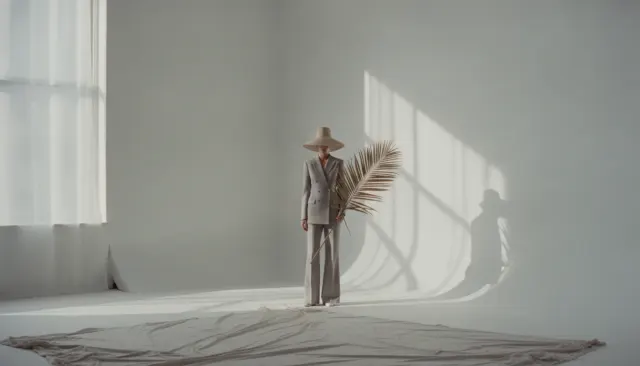 Fashion EditorialIrving Penn Still Life Fashion
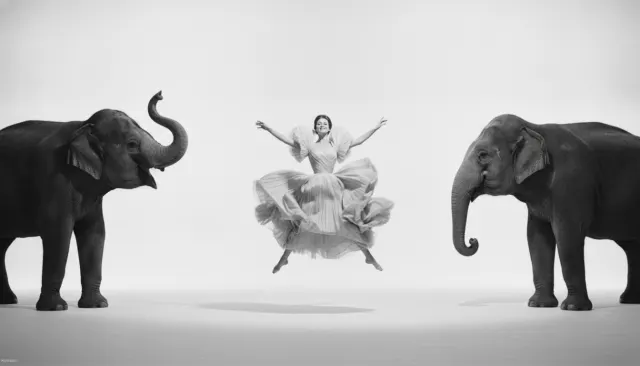 Fashion EditorialHarpers Bazaar Richard Avedon
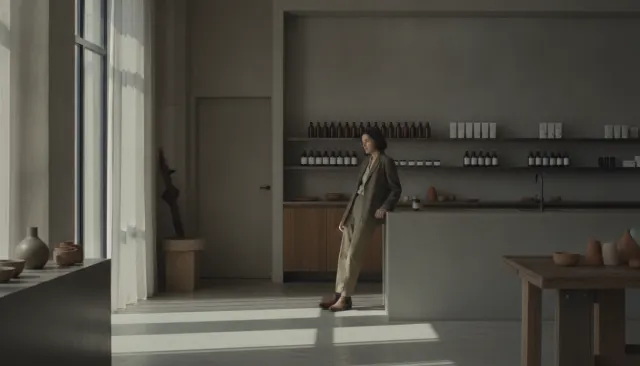 Portrait TraditionsLifestyle Editorial Portrait
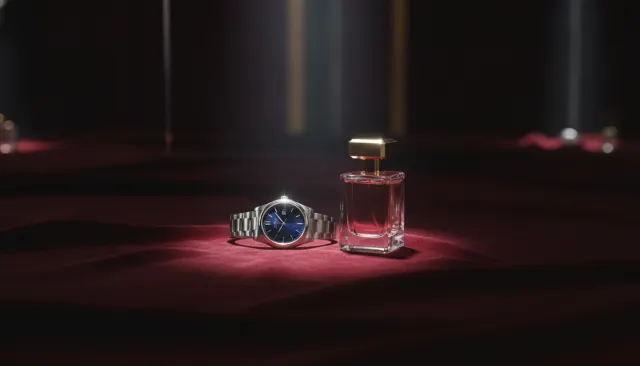 Food Product StillLuxury Product Still Life
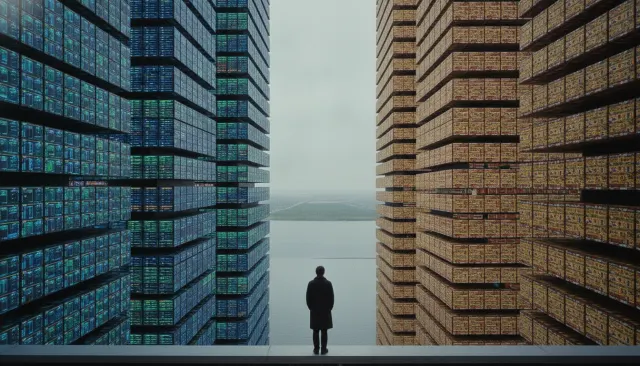 Photographers Fine ArtAndreas Gursky Large Format Monumental
Your first cut
is on us.
+ New videoFree plan · no card · 1080p export