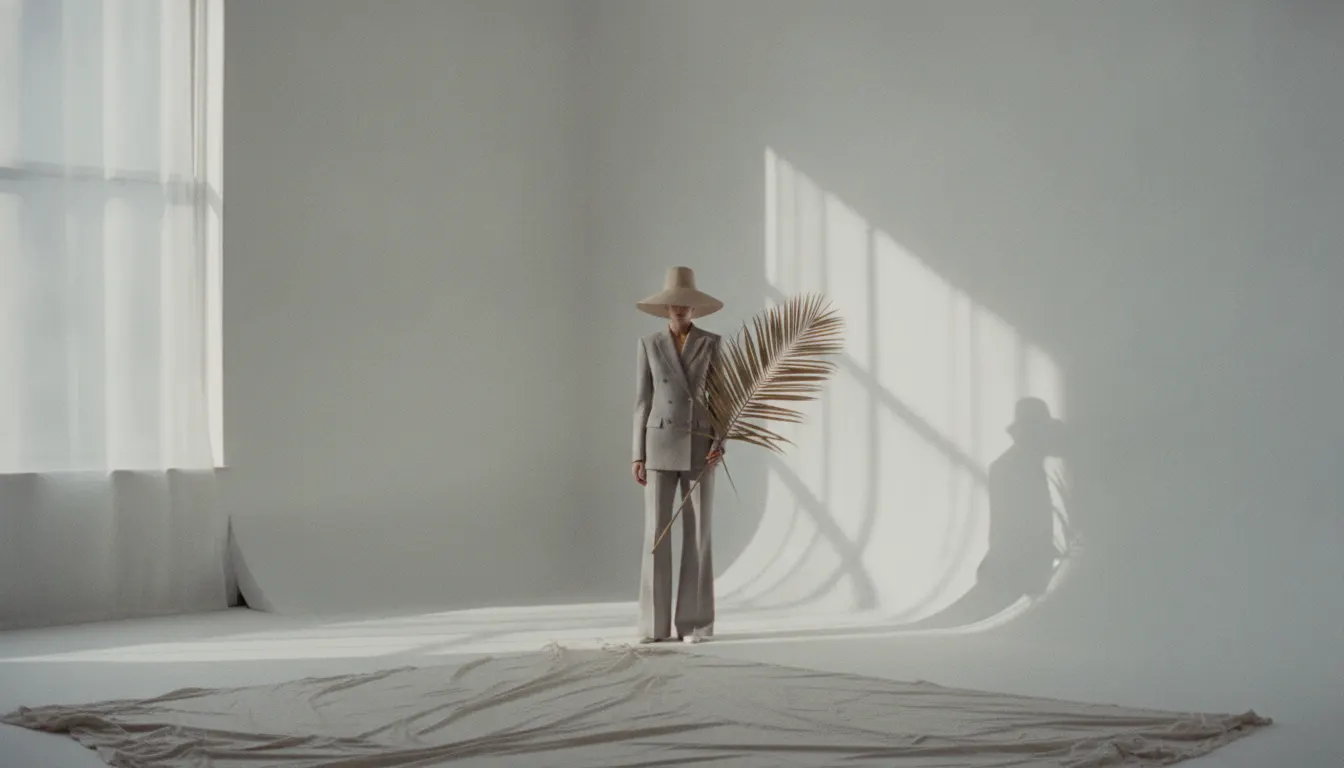
FASHION EDITORIAL · 1950S · USA
Irving Penn Still Life Fashion
Irving Penn studio precision. Corner backdrop, single north window light, still-life as portrait, considered Vogue still life.
pennprecisionstill-lifeconsidered
LUT penn-window-precise
WHEN TO USE
- Premium still life photography for luxury goods, beauty, and fashion brands
- Portrait series requiring formal rigor and tonal precision
- Editorial product photography for print publication or large-format reproduction
- Documentary portrait series treating ordinary subjects with extraordinary care
- Art photography contexts where technical mastery and process are part of the work
WHEN NOT TO USE
- Dynamic or motion-based content - Penn's aesthetic demands stillness and control
- Casual, lifestyle, or social media contexts requiring approachability
- Color-saturated content: Penn's palette tends neutral to cool, never warm or punchy
- Outdoor or environmental photography: the look is inherently studio-based
SIGNATURE TECHNIQUES
How the look is made.
The moves a human crew would use to get here. Cue applies them for you, and knowing their names is how you ask for a change.
- 01Corner set
two converging walls creating spatial compression for portrait subjects
- 02North
facing diffused skylight as primary light source in studio
- 03Neutral grey or white seamless backgrounds
all visual attention on the subject
- 04Platinum
palladium printing for exhibition work: extended midtone range, matte surface
- 05Large
format 4x5 or 8x10 view camera for maximum tonal resolution
- 06Formal, symmetrical subject placement with architectural precision
- 07Extreme close
up of surfaces: fabric, skin, food, material texture at macro scale
HISTORY & CONTEXT
Where it comes from.
Irving Penn: Still Life and Fashion at Vogue
Irving Penn's career at Vogue began in 1943 and continued until his death in 2009 - sixty-six years of work that produced some of the most technically precise and visually refined photography in the history of the medium. Unlike Richard Avedon's theatrical dynamism, Penn's work is characterized by restraint, formal rigor, and an almost scientific attention to surface and material.
The Corner Series and Compression
Penn's most immediately recognizable device is the Corner series (1948-1951): he built a V-shaped set of two converging walls and placed his subjects - celebrities, socialites, models - into the tight apex of the corner, forcing them into physical contact with the walls and with each other. The compression produced poses that no conventional studio setup could generate; subjects leaned, twisted, and pressed against the converging planes. Duke Ellington, Spencer Tracy, Marlene Dietrich, Truman Capote all submitted to this architectural compression. The images are psychologically intense in proportion to their spatial restriction.
Small Trades (1950-1951)
In 1950 Penn traveled to London, Paris, and New York to photograph tradespeople and craftspeople in their occupational clothing: chimney sweeps, fishmongers, pastry chefs, carpenters. Each subject was photographed against a plain canvas drop in the same neutral-ground studio setup. The dignity and formality Penn applied to Vogue fashion subjects was extended without condescension to a baker in a flour-dusted apron. The 252-print series was not fully published until 2009, the year of Penn's death.
Still Life
Penn's still life photography for Vogue - cigarettes, flowers, food, cosmetics - is characterized by the same formal economy: objects placed against white or neutral backgrounds, lit by a single north-facing skylight or diffused artificial source, printed with maximum tonal range. His cigarette series (1972) photographed individual cigarette butts on white grounds at large scale with a clinical, beauty-free objectivity that made anti-smoking advocacy groups and art collectors equally interested.
Platinum-Palladium Printing
Penn is associated with the revival of platinum-palladium printing, an 1870s process abandoned when gelatin silver paper became cheaper. The platinum process produces an extended tonal range, particularly in the midtones, with a matte surface that absorbs rather than reflects light. Penn began printing in platinum in the 1960s and continued for the rest of his career; many of his most celebrated images exist in both gelatin silver (for publication) and platinum (for exhibition and collecting).
NOTABLE WORKS
Where you have seen it.
Small Trades series, 1950-1951 (published fully 2009)
Cigarettes series, 1972 (individual butts, clinical still life)
Flowers series, 1980s-2000s
Vogue covers and fashion editorials, 1943-2009
Issey Miyake Pleats Please campaign photography, 1990s
Platinum prints retrospective, Museum of Modern Art, 1984
THE RECIPE
The exact knobs
the renderer turns.
A Look is not a filter. It is a set of stored decisions the pipeline reads before it makes a single frame, so two videos in the same Look actually match.
SettingValue
GradeColour LUT applied to every frame
penn-window-preciseTransitionHow one shot becomes the next
dissolve cuts · 540ms · ease-in-outKen BurnsCamera move applied to stills
Slow push · 0.015 · centerTypographyDisplay / body / mono pairing
Cormorant · Lora · CourierMusic moodWhat the bed under the voice sounds like
solo-cello · minimal-pianoPrompt suffixAppended to every shot prompt in this Look
Irving Penn studio Vogue, corner backdrop two walls, single north window key, still life precision portraitPALETTE
Primary
#A89B82
Secondary
#6E5A48
Accent
#3A3026
Text/Light
#1F1A14
Text/Dark
#F0E5D2
BG 900
#1F1A14
BG 800
#2F2820
RELATED LOOKS
Next to it on the shelf.
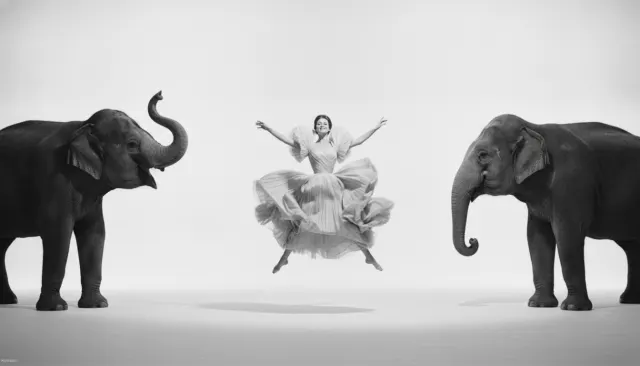 Fashion EditorialHarpers Bazaar Richard Avedon
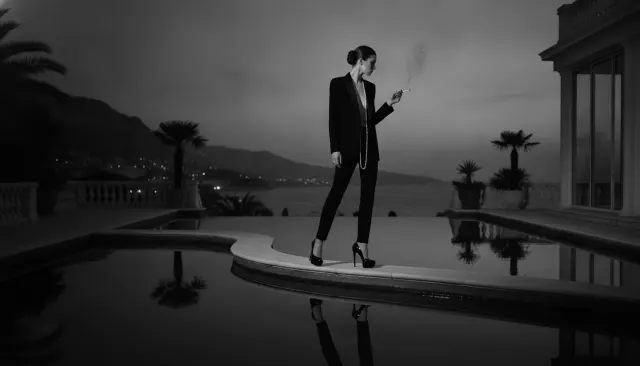 Fashion EditorialHelmut Newton Noir Glamour
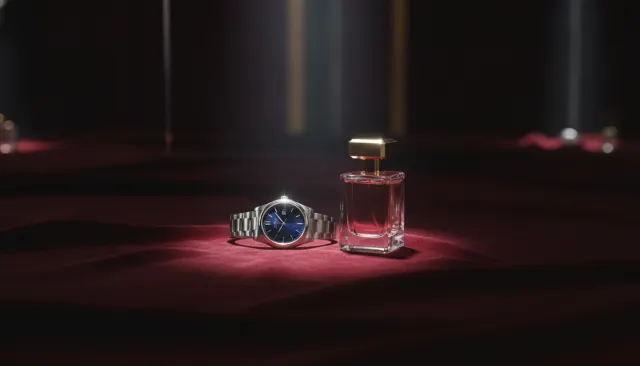 Food Product StillLuxury Product Still Life
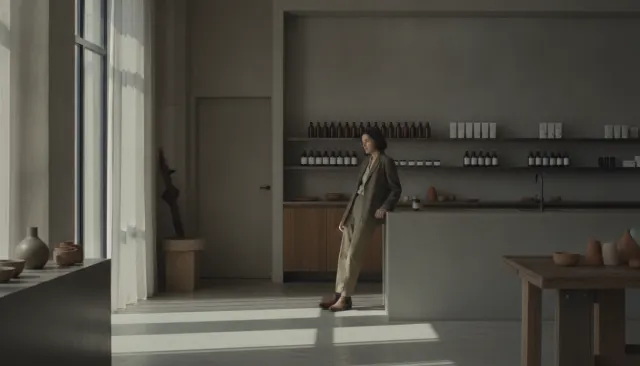 Portrait TraditionsLifestyle Editorial Portrait
 Fashion EditorialAnnie Leibovitz Celebrity Portrait
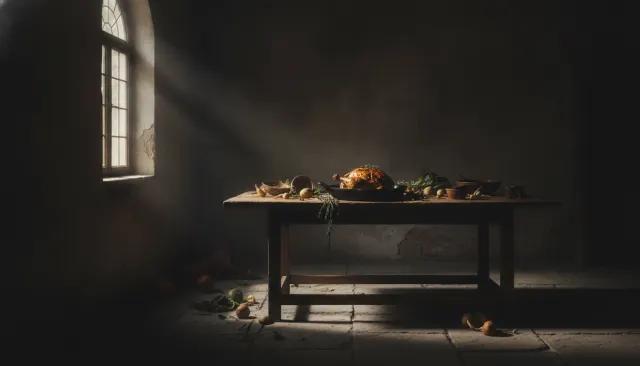 Food Product StillDark Moody Food Photography
 Brand Identity ExtendedApple Product Minimal Modern
Your first cut
is on us.
+ New videoFree plan · no card · 1080p export