iMac G3 launch campaign
1998
Apple/TBWA\Chiat\Day
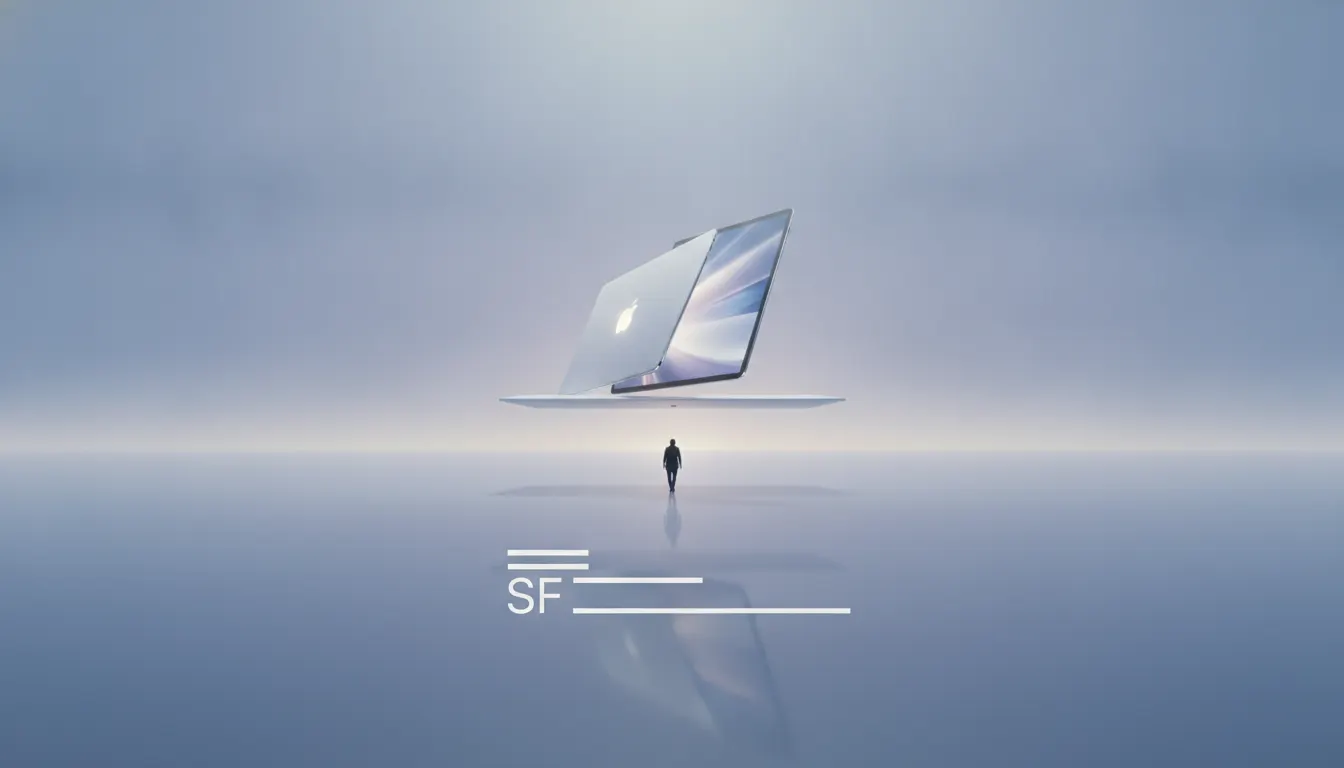
Apple product minimal modern brand aesthetic. SF Pro typography, product-on-white floating render, generous whitespace, marketing copy with feature-stacked layouts.
The moves a human crew would use to get here. Cue applies them for you, and knowing their names is how you ask for a change.
white backgrounds with zero texture
source soft diffuse lighting that renders product surfaces without glare
serif typography
wide cinematic aspect ratios with generous breathing room around subjects
no handheld, no jump cuts
ups: aluminum grain, glass reflection, rubber gasket seams
often white, silver, and one accent color only
The Apple minimal modern aesthetic is inseparable from Jonathan (Jony) Ive, who joined Apple in 1992 and became Senior Vice President of Industrial Design in 1997 when Steve Jobs returned to the company. Their collaboration produced the most influential product design language of the digital age.
The iMac G3 (1998) was the opening statement - translucent Bondi Blue polycarbonate, a single cable, a machine that looked like a toy and a tool simultaneously. By 2001, the first iPod distilled a thousand songs to a white rectangle with a scroll wheel. The industrial language was minimal in a specific way: every unnecessary element was a failure, every material choice was a statement.
Ive's team developed a consistent vocabulary: brushed aluminum (introduced with the PowerBook G4 Titanium in 2001), chamfered edges on iOS devices from 2012, and the liquid metal curves of the iPhone 4 (2010) that Ive described as resembling a Leica camera. The 2013 Mac Pro - a black cylinder with a single visible seam - represented the philosophy at its most extreme.
Digitally, the aesthetic shifted in 2013 with iOS 7, which Ive oversaw after Scott Forstall's departure. Skeuomorphism - the leather-bound calendars and green-felt game tables of earlier iOS - was replaced with flat color, translucency, and thin typography. The transition was controversial but permanent.
San Francisco, Apple's proprietary typeface released in 2014, was engineered for legibility across watches, phones, and billboards. It replaced Helvetica Neue and became a marker of the Apple ecosystem. Combined with abundant white space, left-aligned product copy, and photography against pure white, these elements form the canonical Apple product visual.
After Ive's departure in 2019, the aesthetic has softened slightly - more color, rounder corners with the M1 iMac (2021) - but the core grammar persists. The 2023 Vision Pro launch materials demonstrated that the language still centers on material beauty, negative space, and the illusion that complexity has been effortlessly removed.
1998
Apple/TBWA\Chiat\Day
2003
TBWA\Media Arts Lab
2010
Jony Ive design era
2013
2014
Apple
2013
Apple Industrial Design
2021
Apple
2023
WWDC keynote film
A Look is not a filter. It is a set of stored decisions the pipeline reads before it makes a single frame, so two videos in the same Look actually match.