Muji brand identity and product design
Kenya Hara as design consultant (2001-present)
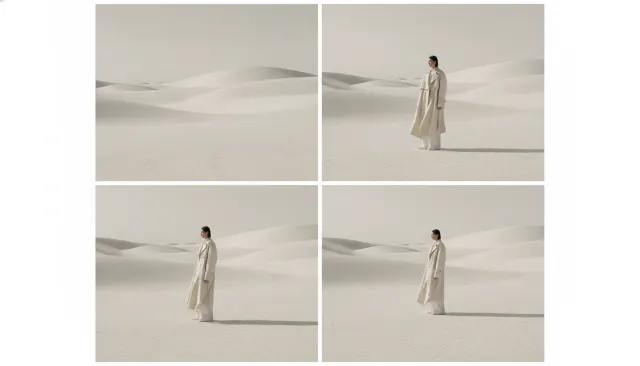
Apple-keynote-clean. Bright whites, ultra-minimal compositions, soft natural light.
The moves a human crew would use to get here. Cue applies them for you, and knowing their names is how you ask for a change.
serif typeface in one or two weights maximum
to-four color palette with one dominant neutral and one accent
flat graphic elements with minimal shadow or depth cues
height and letter-spacing that prioritizes breathing room over density
Clean modern is the dominant visual language of early 21st century premium brand design: a synthesis of Swiss grid modernism, the digital minimalism pioneered by Apple, and the Scandinavian design tradition's emphasis on function without fuss. It is less a singular movement than a shared set of values - clarity, restraint, confidence, and a belief that white space is not emptiness but presence.
The clean modern aesthetic descends from the International Typographic Style (Swiss Style) developed in Zurich and Basel in the 1950s by designers including Josef Müller-Brockmann, Emil Ruder, and Armin Hofmann. Their principles: mathematical grid systems, sans-serif typefaces (particularly Helvetica, released 1957), photography over illustration, and visual hierarchy created through scale and weight rather than decoration. These principles were systematized in Müller-Brockmann's foundational text 'Grid Systems in Graphic Design' (1981).
The digital translation came in stages. Apple under Jony Ive applied the aesthetic to hardware from 1998 and to software interfaces from 2013. Design systems at Google, Airbnb, and Dropbox in the 2010s standardized clean modern principles at scale - responsive grids, token-based spacing systems, type scales derived from mathematical ratios.
The current clean modern vocabulary includes: generous white or off-white backgrounds with ample negative space; a type palette of one or two typefaces maximum, typically a geometric or humanist sans-serif (GT Walsheim, Neue Haas Grotesk, Inter, or custom faces in the same tradition); photography that is warm, natural, and precisely lit without obvious artifice; a limited color palette of two to four colors with one dominant neutral.
Brands that have defined the aesthetic include: Muji (minimal Japanese consumer goods, since the 1980s), Aesop (skincare since 1987, famously spare stores and packaging), Everlane (fashion direct-to-consumer, 2010), and Linear (software tools, 2019). Each uses the grammar of clean modern to signal quality, transparency, and the absence of persuasion as persuasion.
Kenya Hara as design consultant (2001-present)
2010
2019
clean dark/light mode system
1981
Josef Müller-Brockmann
2013
clean flat language
2017
Rasmus Andersson, used in clean modern digital products
A Look is not a filter. It is a set of stored decisions the pipeline reads before it makes a single frame, so two videos in the same Look actually match.