FASHION EDITORIAL · 1970S · INTERNATIONAL
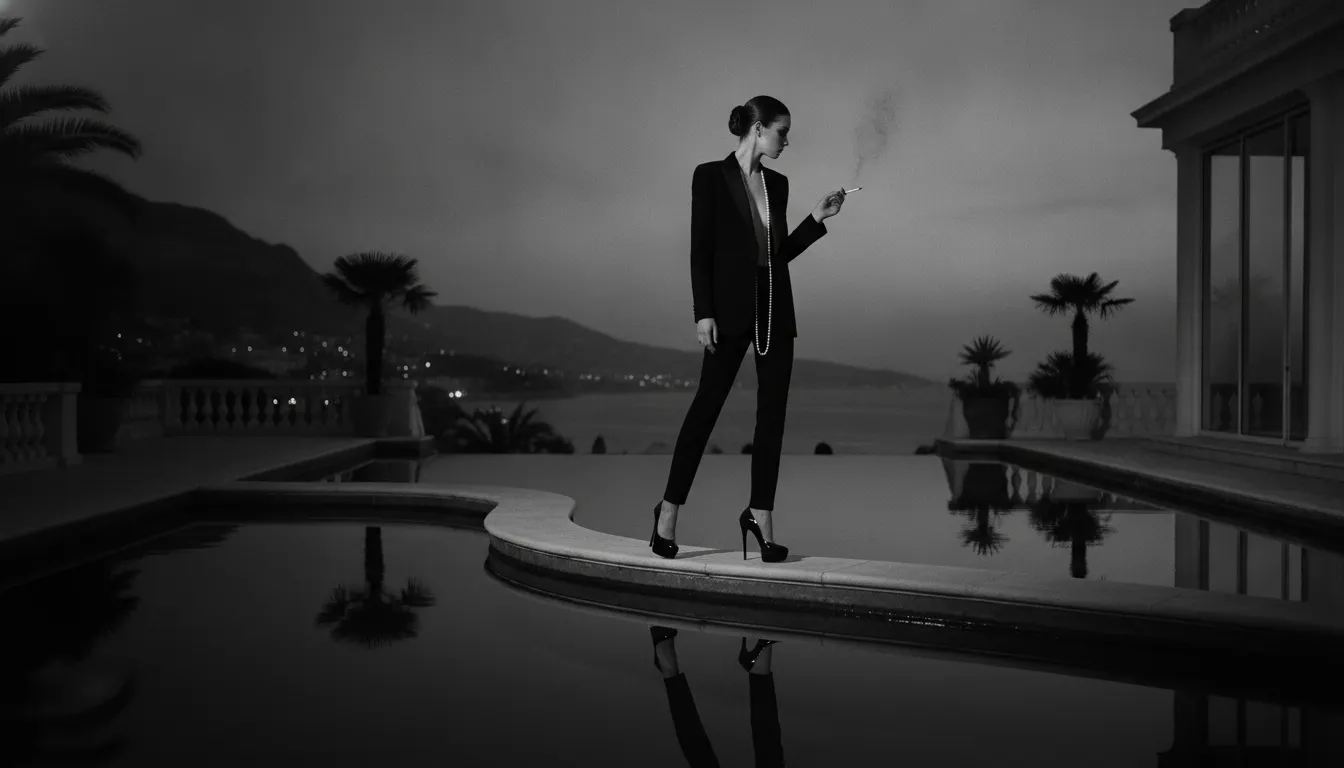
Helmut Newton Noir Glamour
Helmut Newton high-glamour noir. Stiletto by pool, towering nude, monaco villa edge, hard direct flash, transgressive glossy luxe.
newtonnoirglamourtransgressive
LUT newton-noir-flash
WHEN TO USE
- Luxury fashion campaigns requiring psychological edge and tension
- Editorial spreads for prestige magazines - fashion, culture, lifestyle
- Perfume and beauty campaigns that trade on sophisticated provocation
- Architecture and interior shoots where glamour meets structural geometry
- Portrait series demanding a dominant, authoritative subject stance
- Night or indoor location fashion work with minimal equipment
WHEN NOT TO USE
- Family-friendly or mass-market retail campaigns - the register is explicitly adult
- Warm, approachable lifestyle imagery: Newton reads cold and architectural
- Natural light or outdoor golden-hour aesthetics - the look requires hard artificial light
- Brand contexts requiring collaborative, empathy-forward visual language
SIGNATURE TECHNIQUES
How the look is made.
The moves a human crew would use to get here. Cue applies them for you, and knowing their names is how you ask for a change.
- 01Hard single
source artificial flash creating deep lateral shadows
- 0235mm film grain embraced rather than suppressed
- 03Life
size or oversized print scale confronting the viewer directly
- 04Architectural locations
hotel corridors, parking garages, European villas
- 05Dominant subject posture
standing, staring, commanding frame space
- 06Cool to neutral color palette with minimal warm tones
- 07Night or interior settings reinforcing noir atmosphere
- 08Minimal styling
nudity or simple couture, never fussy accessories
HISTORY & CONTEXT
Where it comes from.
Helmut Newton: Noir Glamour
Helmut Newton (1920-2004) created a fashion photography language unlike anything before or since - equal parts haute couture and hard-boiled noir, with a persistent erotic charge that made his work controversial, celebrated, and instantly recognizable across fifty years of production.
Vogue Paris and the Power Portrait
Newton's long relationship with Vogue Paris began in the mid-1960s and produced the images that define the aesthetic. Working primarily with a 35mm camera and on-camera or single hard flash, he placed models in hotel corridors, parking garages, Monaco streets, and Beverly Hills interiors - locations with an architecture of controlled glamour. His women were not passive; they commanded space, they stared back, they stood astride other figures with the ease of Roman senators.
The Big Nudes series (1981) is Newton at his most concentrated. Life-sized prints of standing female figures, lit with a single hard source, backgrounds stripped to near-nothing. The scale was deliberately confrontational - the prints matched the height of the viewer, demanding engagement rather than contemplation.
Technical Signature
Newton worked almost exclusively with 35mm film (Nikon), embracing the grain and speed that his contemporaries were trying to suppress. He preferred hard, directional artificial light - on-camera flash, single umbrella, or bare strobe - creating the deep shadows and crisp highlight edges that evoke noir cinema more than fashion photography. Color saturation was cool to neutral, never warm; his palette is all silver, black, and European stone.
Locations carried as much meaning as lighting: the Hotel Negresco in Nice, the streets of Monte Carlo at 2am, the antiseptic rooms of German Modernist villas. Architecture was not background but character.
Legacy and Controversy
Newton's work attracted sustained feminist critique - Laura Mulvey's gaze theory was frequently invoked - while also being defended as depicting female power rather than female objectification. This tension is intrinsic to the aesthetic and cannot be separated from it. The Helmut Newton Foundation in Berlin continues to archive and exhibit his work. His 1978 book White Women and 1981 Big Nudes remain benchmarks of provocative editorial photography.
NOTABLE WORKS
Where you have seen it.
White Women, 1976 (Vogue Paris editorial series, book 1978)
Sie Kommen (They Are Coming), 1981
four women in heels, iconic Vogue Paris spread
Saddle I, 1976
woman in saddle, Monte Carlo
Various Vogue Paris covers and editorials, 1968-2000
Domestic Nudes series, 1992
Portraits book, 1987 (celebrity portrait series)
THE RECIPE
The exact knobs
the renderer turns.
A Look is not a filter. It is a set of stored decisions the pipeline reads before it makes a single frame, so two videos in the same Look actually match.
SettingValue
GradeColour LUT applied to every frame
newton-noir-flashTransitionHow one shot becomes the next
hard cuts · 240ms · ease-in-outKen BurnsCamera move applied to stills
Slow push · 0.02 · rule-of-thirdsTypographyDisplay / body / mono pairing
Playfair Display · Inter · CourierMusic moodWhat the bed under the voice sounds like
italodisco · serge-gainsbourg-coolPrompt suffixAppended to every shot prompt in this Look
Helmut Newton 1970s 1980s high glamour noir, stiletto pool edge, Monaco villa, hard direct flash, transgressive luxePALETTE
Primary
#0A0A0A
Secondary
#5C5040
Accent
#D4A78A
Text/Light
#0A0A0A
Text/Dark
#F0E0C8
BG 900
#000000
BG 800
#0A0A0A
RELATED LOOKS
Next to it on the shelf.
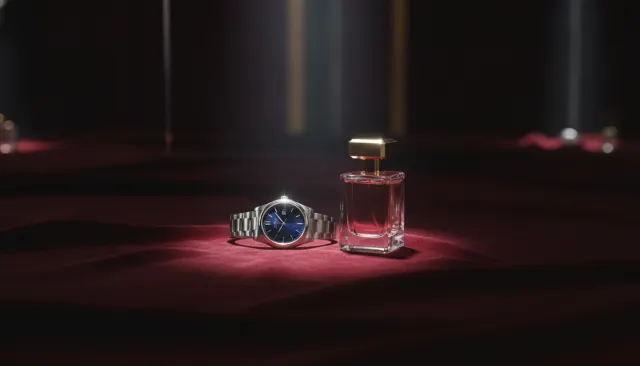

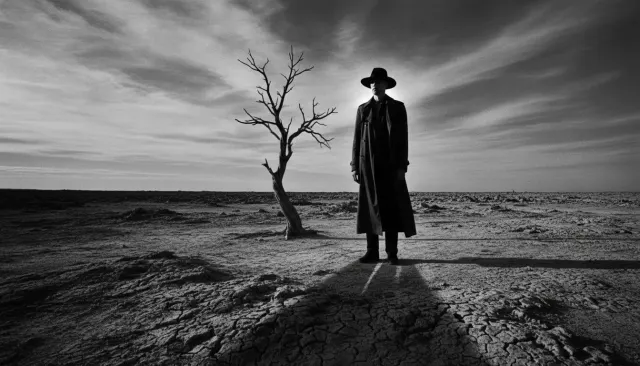

Your first cut
is on us.
+ New videoFree plan · no card · 1080p export