STREET PHOTOGRAPHY · 1950S · INTERNATIONAL
Henri Cartier-Bresson Decisive Moment
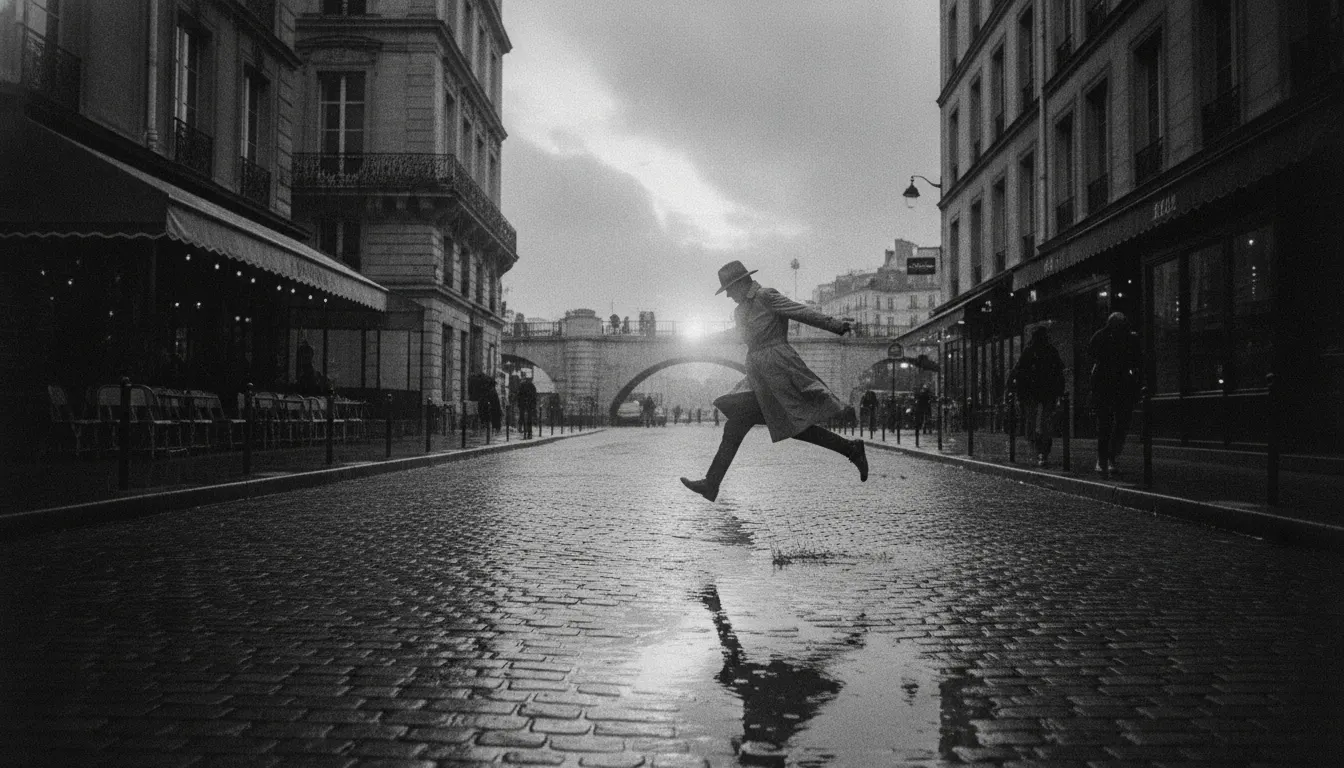
Cartier-Bresson Leica street. Geometric composition, the decisive moment captured in mid-stride, Paris puddle leap, Magnum origin.
streetdecisive-momentmagnummonochrome
LUT cartier-bresson-tri-x
WHEN TO USE
- Street photography and candid documentary work in urban environments
- Event photography seeking spontaneous, unposed human moments
- Travel content where cultural observation matters more than scenery
- Photojournalism and editorial work about human experience
- Black-and-white portrait series emphasizing geometric composition
- Any project requiring the feel of documentary authenticity and restraint
WHEN NOT TO USE
- Commercial product or fashion photography requiring controlled setups
- Color-dependent subjects: the look is inherently monochrome
- Landscape or architectural photography without strong human element
- Highly staged or art-directed scenes that conflict with the candid ethic
- Low-light environments that preclude the shutter speeds required for sharp action
SIGNATURE TECHNIQUES
How the look is made.
The moves a human crew would use to get here. Cue applies them for you, and knowing their names is how you ask for a change.
- 0135mm rangefinder (Leica M) with 50mm lens
minimal, unobtrusive equipment
- 02Black
and-white film, typically Kodak Tri-X or Ilford HP5, printed full-frame
- 03Geometric composition
diagonals, circles, shadows used as formal elements
- 04Patient waiting at a location until movement and light align
not hunting
- 05Close approach without telephoto
2-4 meter working distance with wide field
- 06Full
frame printing with black border as proof of no cropping
- 07Available light only
no flash, no reflectors, no artificial intervention
- 08Simultaneous attention to background geometry and foreground action
HISTORY & CONTEXT
Where it comes from.
Henri Cartier-Bresson: The Decisive Moment
Henri Cartier-Bresson (1908-2004) is the founding figure of modern street photography and humanist photojournalism. His concept of l'instant decisif - the decisive moment - describes the fraction of a second when form, light, geometry, and meaning converge perfectly in the viewfinder. His images make this fraction look inevitable, which is the illusion: behind each one were hours of patient waiting and thousands of frames that did not work.
Leica, 50mm, and the Street
Cartier-Bresson worked almost exclusively with a Leica M rangefinder and a 50mm lens - the so-called normal lens that most closely approximates human field of vision. He taped over the Leica's chrome fittings with black tape to minimize reflection and allow close approach without attracting attention. The 35mm format's light body and quiet shutter let him work invisibly in crowded streets, markets, and political events that a large camera would have disrupted.
His formal training under André Lhote (a Cubist painter) and his early Surrealist associations shaped how he read space geometrically. He studied the frame for diagonal lines, circular forms, and spatial paradoxes before he raised the camera. Behind the Gare Saint-Lazare (1932) is the paradigm case: a man leaping a puddle behind the Gare Saint-Lazare, his reflection mirroring the pose below, a ladder and circus poster in the background forming a compositional rhyme. The geometry is extraordinary; it also happened in a fraction of a second.
Magnum and Humanist Photojournalism
In 1947 Cartier-Bresson co-founded Magnum Photos with Robert Capa, David Seymour (Chim), and George Rodger - the first photographer-owned agency, giving photographers editorial control over their work. For the next two decades he photographed the liberation of Paris, Gandhi's funeral (1948), the Communist takeover of mainland China (1949), the coronation of George VI, and the civil rights movement in America.
He published Images à la Sauvette (translated as The Decisive Moment) in 1952 with a cover by Henri Matisse - the theoretical statement of his approach and still the essential text on street photography. He stopped photography almost entirely around 1975, returning to drawing and painting until his death.
Printing and Processing
Cartier-Bresson printed on Ilford fiber-based paper, typically 8x10 or 11x14, and insisted his negatives be printed full-frame - a black border around the image was his signature, proving no cropping occurred. He rejected dodging, burning, and manipulation; the image had to work as captured.
NOTABLE WORKS
Where you have seen it.
Hyères, France, 1932 (man on bicycle, spiral staircase)
Gandhi's funeral, New Delhi, 1948
Crossing the Chinese border, 1949 (Communist takeover series)
Brussels, 1932 (children playing in rubble)
Images à la Sauvette (The Decisive Moment), book published 1952
The Europeans, book published 1955
Cuba, 1963 (portrait of Che Guevara)
THE RECIPE
The exact knobs
the renderer turns.
A Look is not a filter. It is a set of stored decisions the pipeline reads before it makes a single frame, so two videos in the same Look actually match.
SettingValue
GradeColour LUT applied to every frame
cartier-bresson-tri-xTransitionHow one shot becomes the next
hard cuts · 180ms · linearKen BurnsCamera move applied to stills
Slow push · 0.02 · rule-of-thirdsTypographyDisplay / body / mono pairing
Source Serif Pro · Lora · CourierMusic moodWhat the bed under the voice sounds like
french-jazz-accordion · cool-jazz-quintetPrompt suffixAppended to every shot prompt in this Look
Henri Cartier-Bresson decisive moment, Leica 50mm Paris street, geometric composition, mid-stride puddle leap, MagnumPALETTE
Primary
#1A1A1A
Secondary
#5C5040
Accent
#A89B82
Text/Light
#0A0A0A
Text/Dark
#E5DED0
BG 900
#0A0A0A
BG 800
#1A1A1A
RELATED LOOKS
Next to it on the shelf.
 PhotojournalismMagnum Photojournalism BW
 Street PhotographyJoel Meyerowitz Color Street
 PhotojournalismJames Nachtwey War Photo
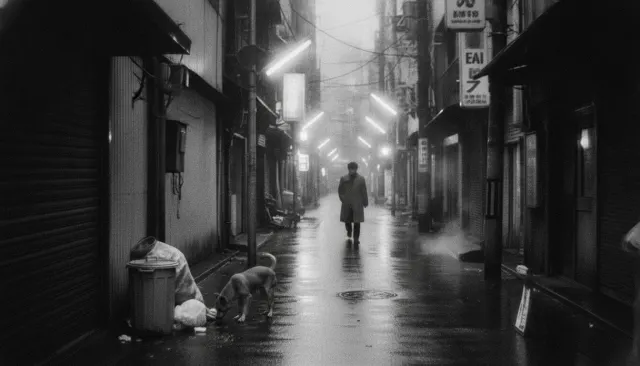 Street PhotographyDaido Moriyama BW Grain Japan
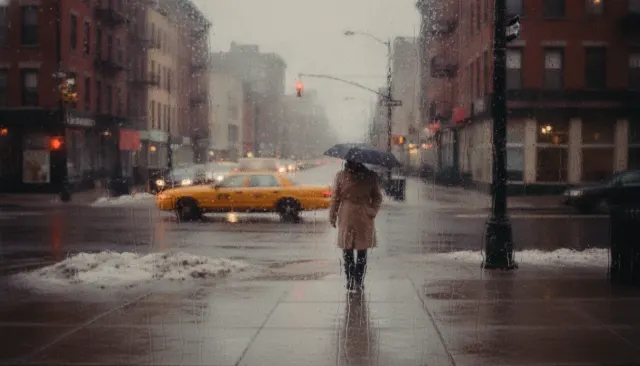 Era Specific Color1970s Gritty New York Color Saul Leiter
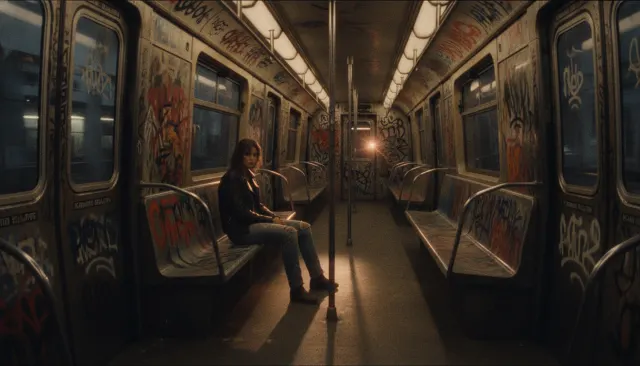 Street PhotographyBruce Davidson Subway Flash
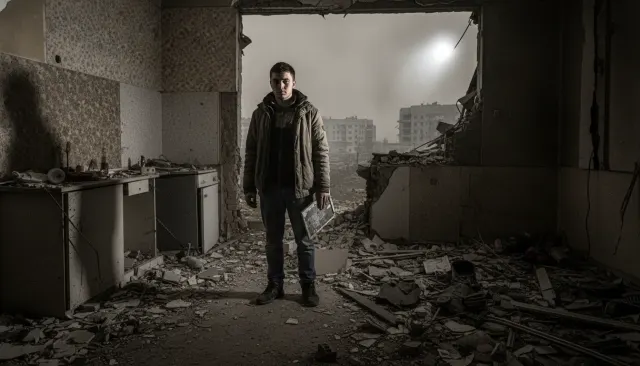 Genres ExtendedConflict Zone Photojournalism Color
Your first cut
is on us.
+ New videoFree plan · no card · 1080p export