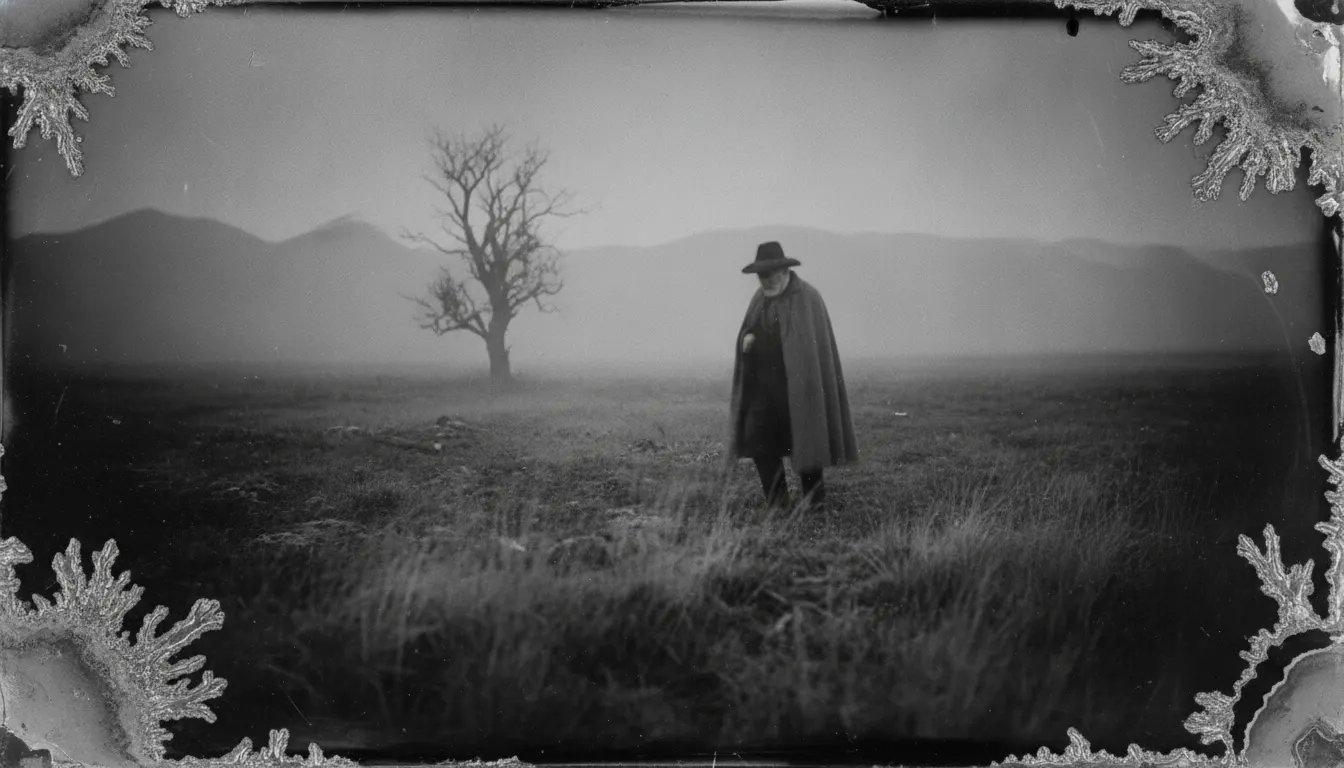
Collodion process publication
Frederick Scott Archer · 1851
Free public domain publication in The Chemist establishing the wet plate process and catalyzing global photography adoption within a decade
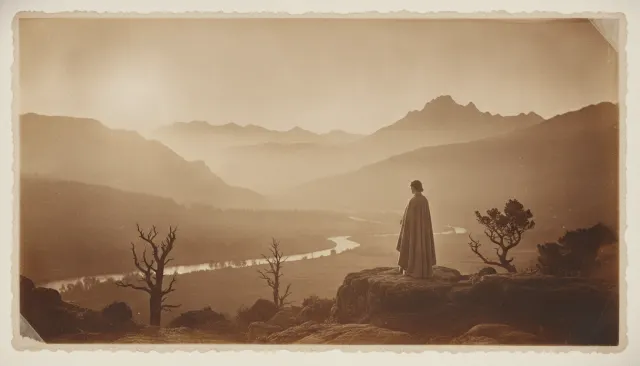
Contemporary wet-plate collodion portrait aesthetic. Hand-poured collodion on black glass, deep silver tonal scale, motion-blur on long exposure, organic chemical edge artefact.
The moves a human crew would use to get here. Cue applies them for you, and knowing their names is how you ask for a change.
Blue-sky darkening to near-black and pale, luminous rendering of skin tones from the process's limited spectral sensitivity that excludes red wavelengths.
Visible rippling or pooling of the collodion coating layer in raking light, most pronounced in shadow areas and at the plate edges.
The abrupt edge where collodion coating stops - often irregular, pulled by gravity during coating - that frames the image in an organic, non-rectangular border.
Petzval, Voigtlander, or period brass lens soft bokeh at wide apertures, with field curvature that keeps only the central focus sharp and rolls gently out of focus at the frame edges.
Wet plate has extreme contrast relative to modern materials - deep, impenetrable blacks and brilliant, clear highlights with a compressed tonal mid-range.
Fixing streaks, development marks, and silver migration patterns that are visible in the final image as part of the process's material character.
Each ambrotype or tintype is a one-of-a-kind physical object - unlike gelatin silver prints, it cannot be reprinted from the negative in the traditional sense.
Wet plate collodion photography uses a 19th-century process invented in 1851 that requires coating a glass or metal plate with liquid collodion (nitrocellulose dissolved in ether/alcohol), sensitizing it with silver nitrate, exposing it in the camera while still wet, and developing within 10-15 minutes before the collodion dries. The resulting images - ambrotypes on glass, tintypes on iron, or large-format glass negatives - have a quality unlike any other photographic process: luminous shadows, crystalline highlights, and an impossibly detailed surface that looks simultaneously ancient and current.
Frederick Scott Archer published the collodion wet plate process in The Chemist in March 1851, providing it to the public domain without patent - a gift that accelerated the adoption of photography worldwide. The wet plate displaced both the Daguerreotype (which required expensive silver-plated copper) and the calotype (which produced softer paper prints) within a decade. By 1860, wet plate photography dominated professional portrait studios across Europe and North America.
The tintype (also called ferrotype), made on japanned iron rather than glass, was the most democratic application: tintype operators at fairs and markets could produce a portrait in minutes for a few cents. Civil War soldiers had their portraits made on tintypes before departing, making the format the most documented visual record of ordinary Americans in the 19th century.
The contemporary wet plate revival was catalyzed by Sally Mann's Deep South series (2000-2003), in which she used a large-format camera with antique brass lenses and wet plate chemistry to document Southern landscapes with a quality she described as "deliberately imprecise." Her exhibition and book Proud Flesh (2009) made wet plate ambrotype portraits that became the benchmark for the contemporary revival.
Joni Sternbach's Surfland series (2005-ongoing) takes wet plate collodion photography to the beach, making 8x10-inch ambrotype and tintype portraits of surfers in outdoor light. The technical challenge - wet plate requires coating, exposing, and developing in minutes - is itself part of the content: the subjects must be still for 2-5 second exposures, and the working conditions create a collaborative, slowed-down portrait session that produces images with palpable presence.
Mark Osterman at the George Eastman Museum and Quinn Jacobson have published comprehensive contemporary guides to the process. The annual Wet Plate Collodion Fellowship brings practitioners together for intensive study.
Wet plate collodion's visual signature comes from its orthochromatic sensitivity (sensitive to blue and UV but not red), producing deep black skies and pale, white skin in outdoor work; its collodion surface texture, visible as a slightly rippled or pooled surface in raking light; and the characteristic hard-edged coating boundary at the plate's edge.
Frederick Scott Archer · 1851
Free public domain publication in The Chemist establishing the wet plate process and catalyzing global photography adoption within a decade
various itinerant tintype photographers · 1861-1865
Hundreds of thousands of tintype portraits of Union and Confederate soldiers documenting ordinary American faces with unprecedented democratic scale
Sally Mann · 2000-2003
Large-format wet plate collodion landscapes of the American South that catalyzed the contemporary revival and established the process's fine art legitimacy
Sally Mann · 2009
Wet plate ambrotype portraits of her husband Larry, setting the benchmark for contemporary large-format wet plate portraiture
Joni Sternbach · 2005-ongoing
Outdoor beach wet plate ambrotype portraits of surfers demonstrating the process's viability in field conditions and establishing a new portrait aesthetic
Edward S. Curtis · 1890s-1900s
Large body of wet plate and early dry plate portraits defining the aesthetic that many contemporary wet plate practitioners consciously reference
A Look is not a filter. It is a set of stored decisions the pipeline reads before it makes a single frame, so two videos in the same Look actually match.
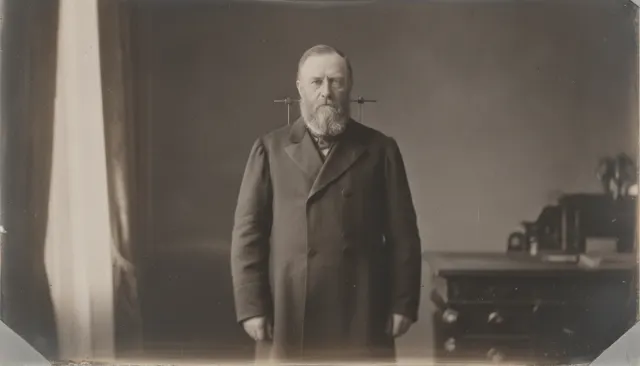 Photographic EraDaguerreotype 1840s Portrait
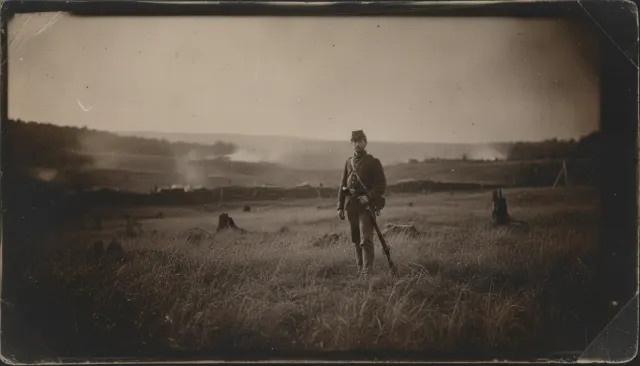 Photographic EraTintype 1850s Civil War
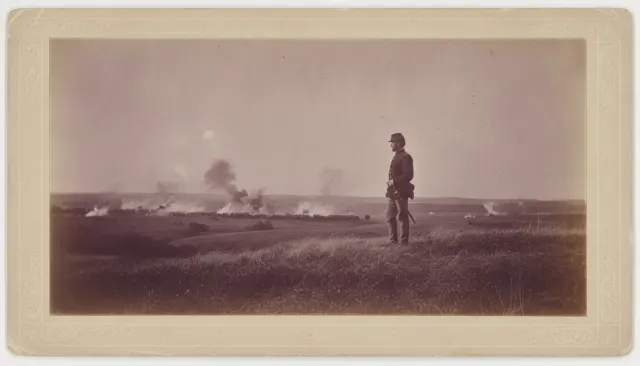 Vintage Formats ExtendedAlbumen Print 1860s Portrait
 Analog Process ExtendedSalt Print Modern Experimental
 Analog Camera ExtendedCamera Obscura Pinhole Historical Aesthetic
 Analog Process ExtendedDaguerreotype Modern Recreation