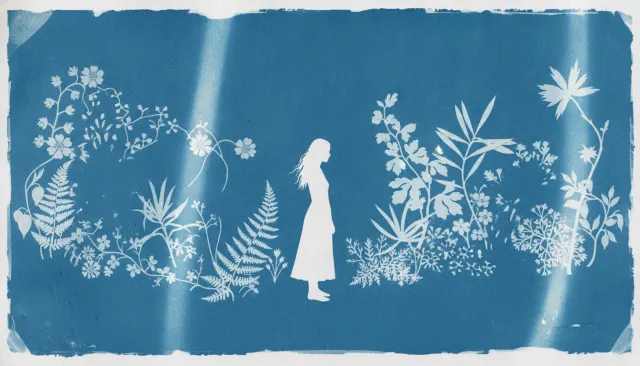
Photogenic drawings of botanical specimens
William Henry Fox Talbot · 1834-1840
First salt prints, placing specimens on sensitized paper to record their silhouette form - the origin of the entire photographic tradition
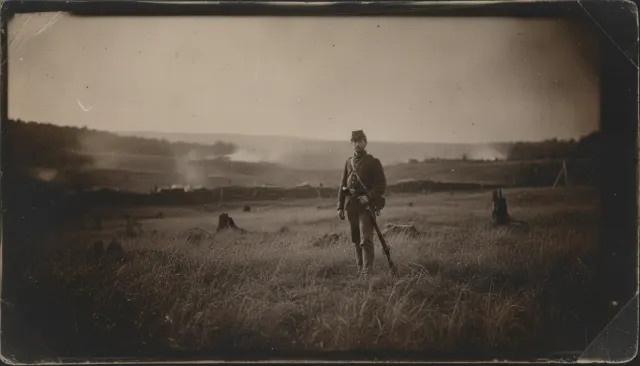
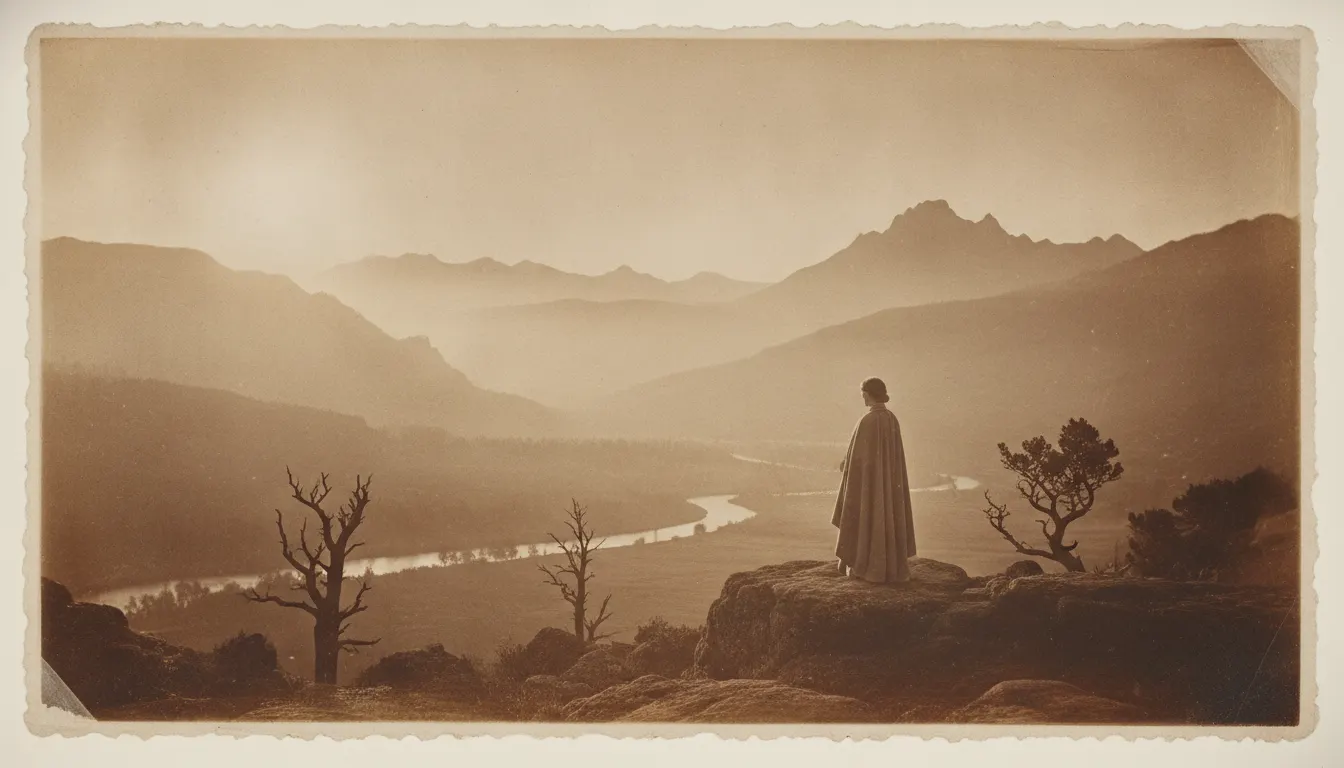
Modern revival of Talbot salt-print process. Warm rust-brown silver image on hand-coated cotton paper, soft long-tonal scale, organic edge texture.
The moves a human crew would use to get here. Cue applies them for you, and knowing their names is how you ask for a change.
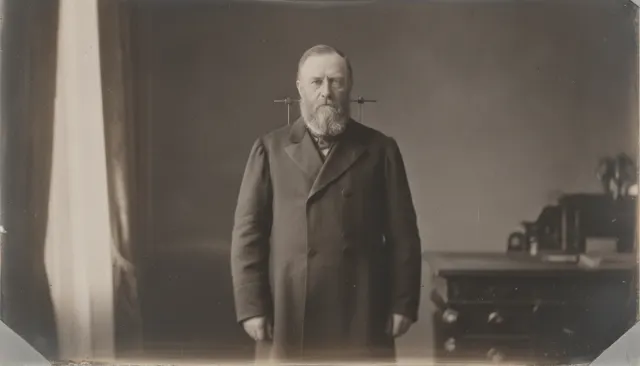
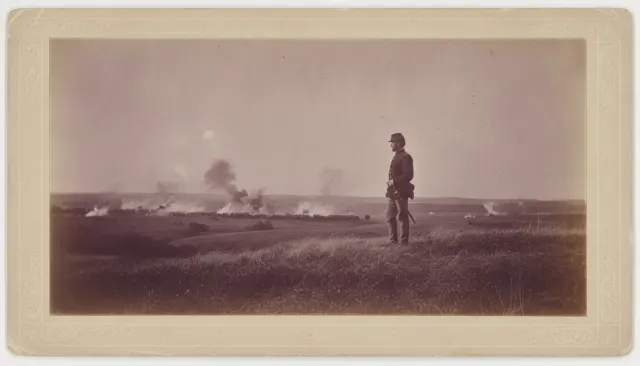
The inherent color of silver chloride paper images: a warm brown-red that is darker than albumen and warmer than platinum/palladium.
Salt prints have no binder layer - the image lives directly in the paper fibers, producing a flat, matte surface that shows paper texture through the image.
Visible brushstroke texture at the coating edges and in the shadow areas, a mark of the hand-applied chemistry that mechanical prints cannot produce.
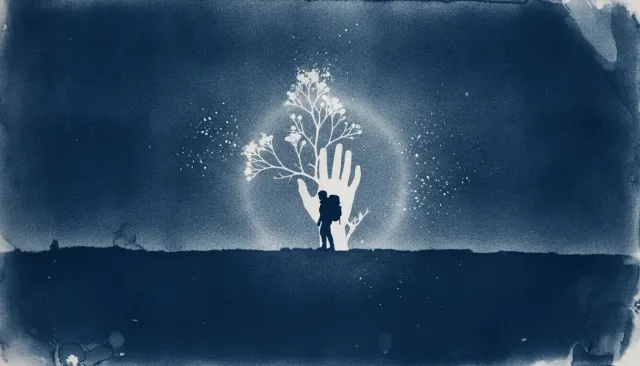
Post-fixing gold chloride toning shifts the warm brown toward cool purple, blue-black, or neutral - a color transformation not available in albumen prints.
No sharp edge to the image field - the salt coating bleeds beyond the negative's edge, creating a soft, feathered transition from image to bare paper.
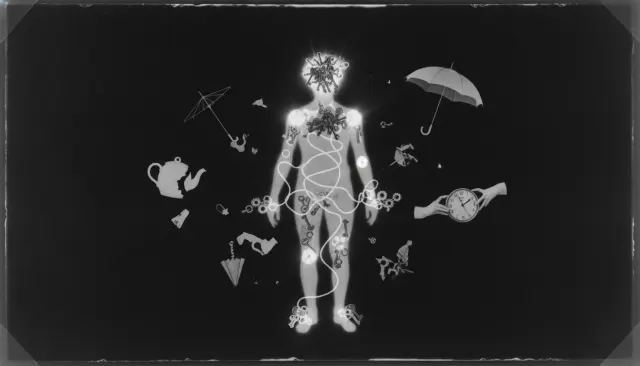
Extended UV exposure can solarize salt print highlights, reversing dense areas to positive tones in the Sabattier-effect variant of the process.
Applying two coating cycles before a single exposure builds density and produces image layers that can be partially revealed through selective bleaching.
The salt print is the oldest reproducible photographic process, invented by William Henry Fox Talbot in 1839 and dominant until the albumen print replaced it in the mid-1850s. Paper is coated with sodium chloride solution, dried, sensitized with silver nitrate (forming silver chloride in the paper fibers), exposed under a glass-covered negative in sunlight, and fixed. The result is a warm-toned, matte-surface image with a characteristic reddish-brown color and a softness that feels painted rather than photographic.
William Henry Fox Talbot's photogenic drawings (1834) were the first salt prints - they pre-dated Daguerre's announcement in January 1839 and represent the true origin of negative-positive photography. Talbot refined the process through his calotype patent (1841), and the salt print became the standard paper photographic process until approximately 1855, when albumen paper (using egg white as a binder) produced sharper, higher-contrast images preferred by portrait photographers.
Anna Atkins' British Algae: Cyanotype Impressions (1843) was the first photographically illustrated book, but her contemporaries also produced salt print botanical albums that defined the aesthetic of early scientific photography. David Octavius Hill and Robert Adamson made thousands of salt print portraits in Edinburgh between 1843 and 1847 - their calotype portraits remain the most significant body of salt print work from the process's primary era.
The contemporary hand-coated photography movement, led in part by practitioners documented in Christopher James' The Book of Alternative Photographic Processes (2002, 3rd ed. 2015), revived salt printing as an art medium. Modern practitioners coat Arches Platine, Fabriano Artistico, or cotton rag papers with hand-brushed chemistry, contact-print digital negatives (inkjet-output on transparency film) under UV light sources, and hand-tone with gold toner to shift the characteristic brown toward purple, blue, or neutral.
The experimental variant pushes the process into deliberate irregularity: uneven coating producing visible brushstroke texture, extended UV exposure producing solarization effects, multiple coating and exposure cycles producing layered image structures, and intentional chemical contamination producing unexpected color shifts. Contemporary artists including France Scully Osterman and Mark Osterman at the George Eastman Museum have documented and developed the process's experimental frontier.
William Henry Fox Talbot · 1834-1840
First salt prints, placing specimens on sensitized paper to record their silhouette form - the origin of the entire photographic tradition
David Octavius Hill and Robert Adamson · 1843-1847
Most significant body of salt print portraiture, thousands of images documenting Scottish society with a soft, painterly quality
Anna Atkins · 1843
While cyanotype rather than salt, the parallel project defines the scientific botanical photography aesthetic of the same era
various calotype practitioners · various 1840s-1855
Salt print era travel and architectural photography documenting Egypt, Italy, and the Middle East by Maxime du Camp and others
France Scully Osterman and Mark Osterman · 2000s-present
Contemporary revival practitioners at George Eastman Museum documenting and extending experimental salt print chemistry
Christopher James · 2002
Definitive technical reference that enabled the contemporary revival of salt printing as an art practice
A Look is not a filter. It is a set of stored decisions the pipeline reads before it makes a single frame, so two videos in the same Look actually match.