A.M. Cassandre
Étoile du Nord (1927, PLM railway poster)
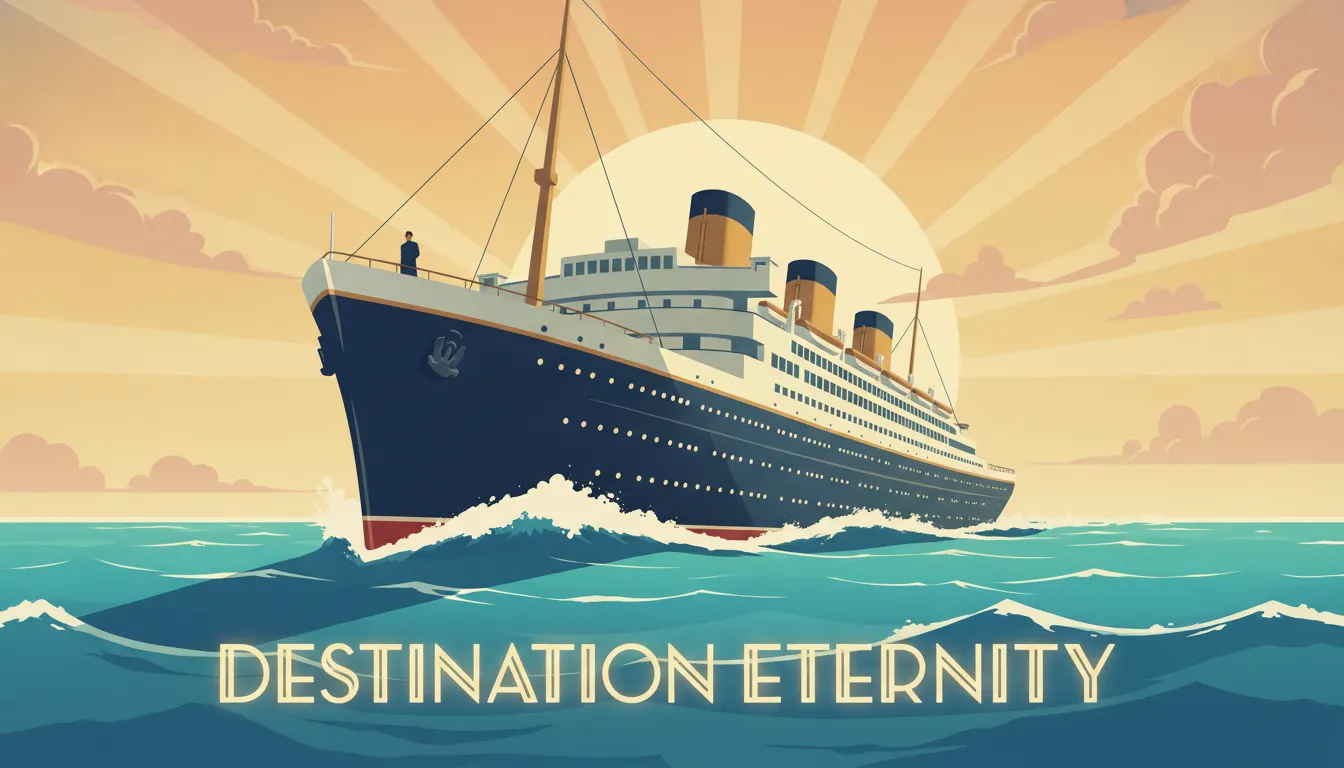
A.M. Cassandre 1930s travel poster. Bold flat color planes, art-deco ocean liner, glowing typography, optimistic destination glamour.
The moves a human crew would use to get here. Cue applies them for you, and knowing their names is how you ask for a change.
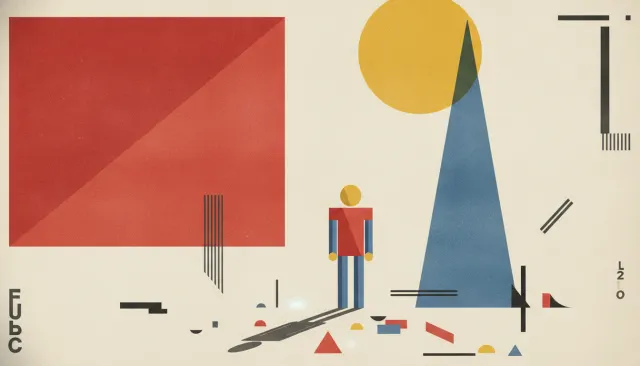
locomotive, ship, or mountain reduced to pure form
8 separations maximum): cerulean, deep blue, black, ochre, vermilion - no photographic color complexity
no gradients within color areas, only between the poster's large fields
format sans-serif or art deco serif typography integrated as part of the poster composition, not added to it
a city skyline becomes five rectangles of descending size
The golden age of travel poster art spans roughly 1920–1940, coinciding with the expansion of commercial aviation, transatlantic ocean liner travel, and the European railway network. Posters commissioned by railway companies (LNER, PLM, London Underground), shipping lines (White Star, Cunard), and national tourism boards were produced as large-format offset lithographs - typically 100×62 cm - using 4–8 color separations. The technical constraint of limited color separations and the visibility requirement of a public display space drove designers toward bold simplification: strong silhouettes, minimal internal detail, clean typography.
Adolphe Mouron Cassandre is the defining genius of the form. His Étoile du Nord (1927) for French railways reduced a locomotive's wheel and rail into pure geometric force. SS Normandie (1935, one of the most celebrated posters of the 20th century) depicts the transatlantic liner as a geometrically simplified wedge of black hull against an impeccably graded cerulean sky, the horizon perfectly centered, the only detail a row of porthole lights. The poster was produced in three colors - black, blue, and white - and achieved a sense of oceanic scale that no photograph could. Cassandre also designed the Pernod poster (1934) and the Dubonnet triptych (1932), which prefigured sequential advertising animation by decades.
Cassandre's contemporary Roger Broders produced vivid poster images for the PLM railway's Mediterranean tourist routes - Menton (1929), Cannes (1928) - using saturated Mediterranean palette and a simpler, less geometric but equally bold style. German designer Jupp Wiertz's Hamburg-America Line posters brought a more illustrative approach to ocean liner imagery. British poster artists for LNER - Tom Purvis, Frank Newbould - developed a parallel tradition of landscape simplification in the service of regional British tourism.
Cassandre's typographic work ran parallel to his poster art. He designed the Bifur (1929), Acier (1930), and Peignot (1937) typefaces, each attempting to apply the same radical geometric simplification to letterforms. In the 1960s, Cassandre designed the YSL logo for Yves Saint Laurent - one of the most recognizable fashion logos of the century.
The 1930s travel poster look signals adventure, optimism, craftsmanship, and a pre-digital sense that the world was a place of limitless discovery. As a video aesthetic, it communicates wanderlust, escape, and a slightly romantic historical glamour - perfectly suited to travel, hospitality, and outdoor adventure brands.
Étoile du Nord (1927, PLM railway poster)
SS Normandie (1935, Compagnie Générale Transatlantique)
1932
Dubonnet triptych
1931
L'Atlantique
Menton (1929, PLM railway)
Cannes (1928, PLM railway)
East Coast Joys series (c. 1925–1930, LNER)
Your Britain, Fight for It Now series (1942, WWII variant tradition)
A Look is not a filter. It is a set of stored decisions the pipeline reads before it makes a single frame, so two videos in the same Look actually match.