Krzysztof Wodiczko
1985
South African Embassy projection, Trafalgar Square London
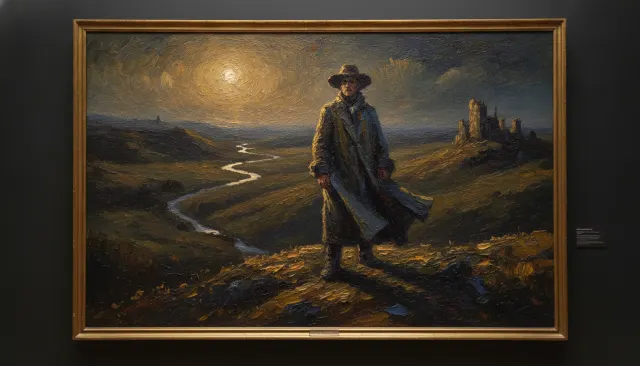
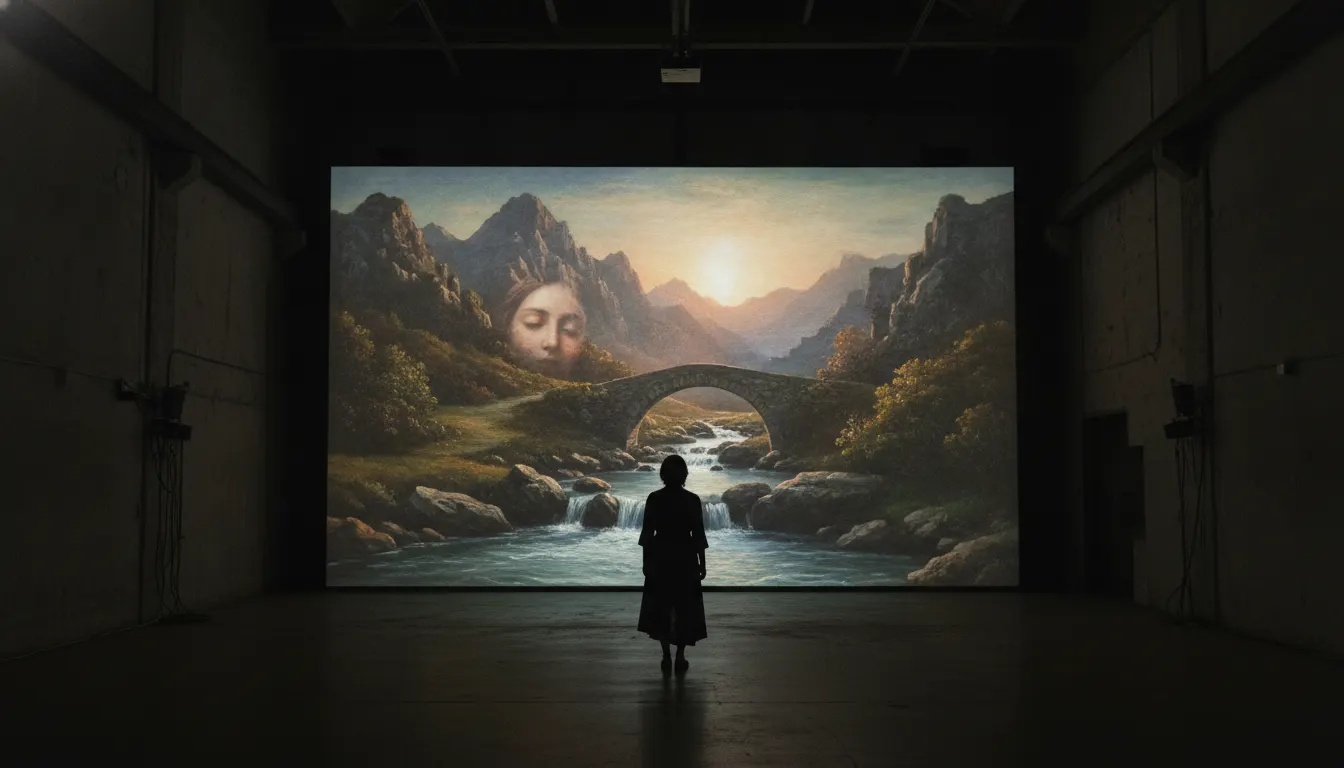
Video projection mapped onto physical painted canvas. Static oil painting alive with moving light overlay, eyes blink, water flows, the painted scene gains time.
The moves a human crew would use to get here. Cue applies them for you, and knowing their names is how you ask for a change.
the projected image is mapped to the exact surface geometry of the painting, including canvas stretcher edges
projected warm light over cool-painted passage creates mixed tones not achievable in painting or video alone
impasto marks cast micro-shadows that fragment the projected image
painted areas remain static while projected areas animate
painting surface changes character in bright versus dark projected areas
projector beam visibly grazes surface at shallow angle, revealing material texture
image falls slightly beyond painting onto wall, confirming physical placement
Video projection on painting places moving or still video imagery onto a physically painted or textured surface, creating a hybrid work where the pre-existing pigment, brush marks, and material of the painting interact with the moving projected image. The painted surface is not merely a neutral screen: its texture modulates the projection, its colors mix optically with the projected light, and its original subject matter creates dialogue with whatever is projected onto it.
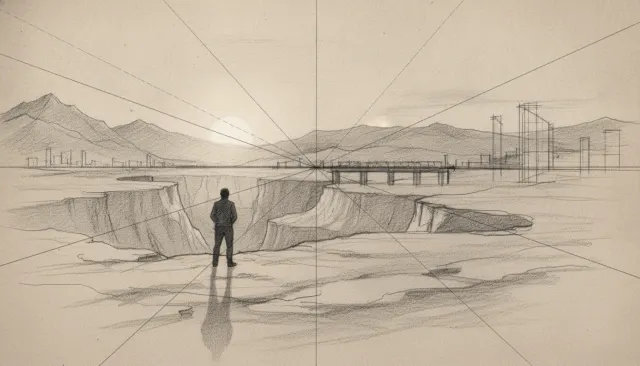
Polish-Canadian artist Krzysztof Wodiczko began projecting images onto the facades of institutional buildings in the 1980s. His 1985 projection onto the South African Embassy in Trafalgar Square, London (during the apartheid era), placed a swastika onto the building's facade. His 1988 projections at Hiroshima, Tokyo's Imperial Palace, and various American homeless shelter facades brought documentary imagery – hands, faces, objects – onto architectural surfaces already carrying institutional meaning. Wodiczko's work established video projection as a public art form that transforms the meaning of its physical support.
Tony Oursler (American, active 1980s–present) took video projection in a different direction: projecting faces onto small, irregular sculpted surfaces (fabric pouches, oval objects, stuffed shapes) so that the animated projected face appears to inhabit the object. His Crying Doll series (early 1990s) and the installations shown at Metro Pictures Gallery (New York, from 1994) placed distressed, speaking faces on organic forms in ways that made the projection feel animate. Oursler's work demonstrated that the physical object receiving a projection fundamentally shapes the meaning of the projected image.
Projection onto painted canvases extends this logic. The canvas surface absorbs and modulates the projected light differently in painted areas versus bare canvas; brushwork casts micro-shadows that break the projected image into facets; the painting's original color shifts the white-balance of the projection. Artists including Bill Viola, Gary Hill, and Pipilotti Rist have all explored projection as medium, though Rist's work most directly addresses the painting-projection hybrid in works like Open My Glade (2000).
The technical capability underpinning contemporary video projection on painting expanded dramatically with projection mapping software (MadMapper launched 2010; Resolume Arena from 2004; disguise from 2012) that allows video output to be precisely warped to fit irregular surfaces including canvas stretcher shapes, curved sculpture, and architectural reliefs. What required custom optical work in Wodiczko's 1985 projections can now be accomplished with consumer-grade projectors and open-source software.
This democratization has made projection-on-surface a viable option for smaller productions: a single projector, a laptop, and appropriate software can transform a painted canvas into a hybrid moving-still work. The aesthetic consequence is that the technique is no longer restricted to well-resourced gallery installations. Music video directors, event designers, and documentary filmmakers can now achieve the Wodiczko-Oursler effect at production scale, making the visual language broadly available.
1985
South African Embassy projection, Trafalgar Square London
1988
Hiroshima and Tokyo Imperial Palace projections
*Crying Doll* projection-on-fabric series (early 1990s, Metro Pictures New York)
1992
*SETUP* installation, documenta IX Kassel
*Open My Glade* video projection installation (2000, Times Square New York)
1995
*The Greeting* , video projected large-scale on wall surface
1997
projection of text onto architectural surfaces including the Guggenheim Bilbao
A Look is not a filter. It is a set of stored decisions the pipeline reads before it makes a single frame, so two videos in the same Look actually match.