FAMILYMIXED MEDIA & HYBRIDSUBFAMILYDIGITAL PHYSICAL MIXERACONTEMPORARYREGIONINTERNATIONAL

AR Overlay on Physical Art

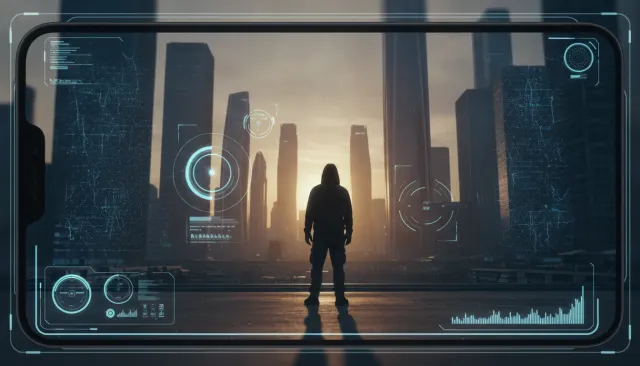
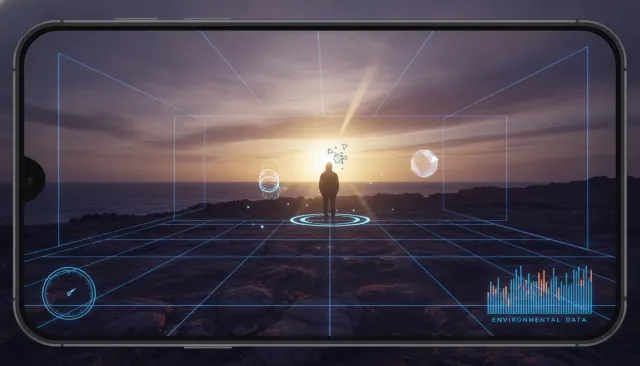
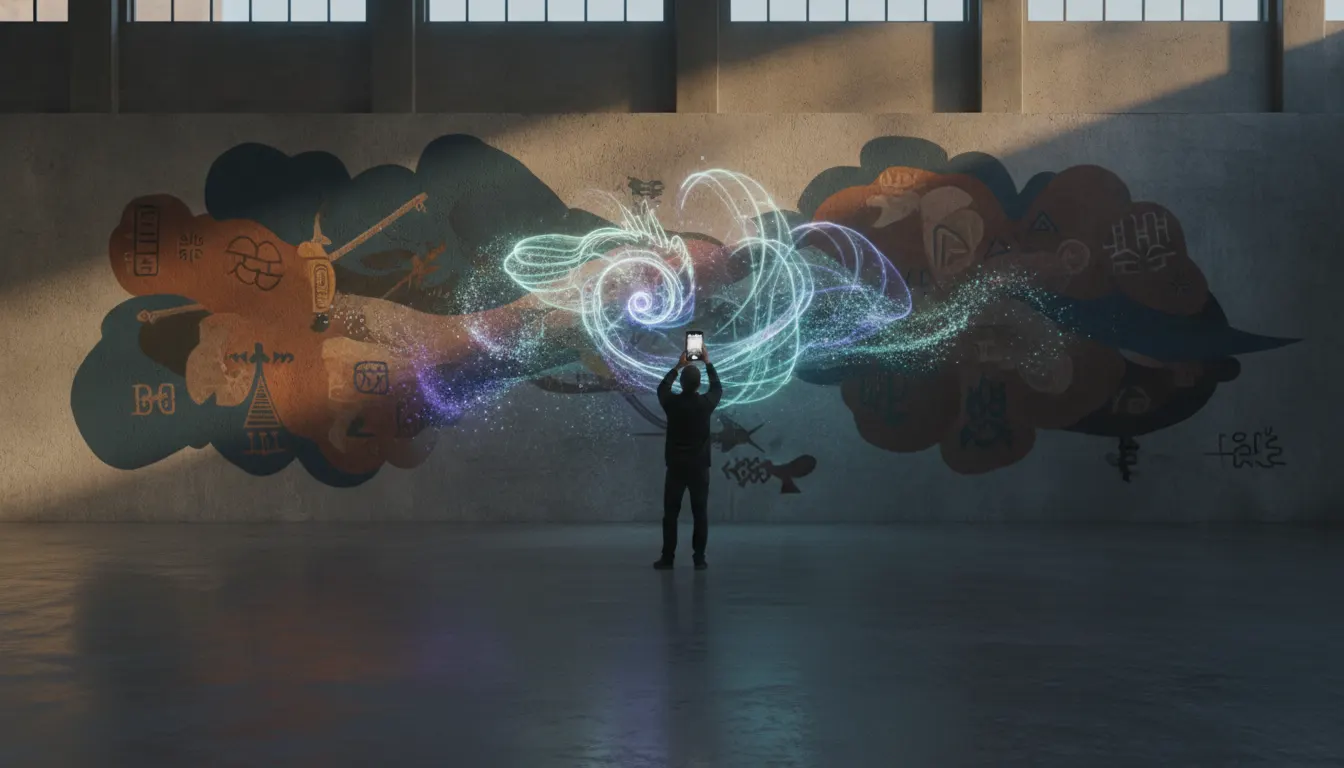
Augmented-reality overlay on physical artwork. Phone camera reveals hidden digital layer above painted canvas, sculpture, or street mural, mixed-reality installation aesthetic.

arphysical-mixinstallationhybrid

Samples

Samples pending

Visual reference frames for this look are being generated.

When to use
  • Art history, museum, and gallery content bringing static artworks to life through animation
  • Cultural institution marketing demonstrating how AR tools enhance visitor engagement
  • Documentary segments where historical paintings, maps, or illustrations need animated contextual layers
  • Educational content treating paintings as primary source documents with annotated overlays
  • Creative portfolio content for digital artists exploring analog-digital hybrid aesthetics
  • Travel content visiting museums, cathedrals, or galleries with AR-enhanced collections
When not to use
  • Pure digital content contexts where no physical artwork anchor exists to motivate the overlay
  • High-speed editing formats where the subtlety of overlay-on-texture reads as visual noise
  • Commercial advertising where museum-art associations may feel culturally incongruous
  • Contexts where an original artwork's integrity should remain visually undisturbed
  • Content for audiences with no prior exposure to museum AR tools or mixed-media art

Signature techniques

  • 01
    Marker — based overlay registration: digital elements locked to physical artwork edges so they track with camera motion
  • 02
    Palette — matched digital layers drawn from the original artwork's color family to blend rather than clash
  • 03
    Animated emergence — digital elements appearing to grow out of painted surfaces, brushstrokes becoming moving figures
  • 04
    Data annotation floating in negative space around canvas edges showing price, provenance, or artist information
  • 05
    X-ray or underdrawing reveal overlays simulating infrared imaging to expose hidden sketch layers beneath paint
  • 06
    Temporal animation within painted frames showing depicted scenes begin to move
  • 07
    Portal compositions where artwork frames become windows into animated 3D environments extending beyond canvas edges

History & context

AR Overlay on Physical Art

AR overlay on physical art is a distinct sub-category of augmented reality aesthetics: here the physical artwork is the anchor point, and digital animation, information, or narrative is layered onto or around it. The juxtaposition of handmade art object and computational overlay creates a deliberate tension between analog origin and digital extension.

Museum and Gallery Pioneering

The Smithsonian National Museum of Natural History's Skin & Bones app (2015) was among the first major institutional AR overlay experiences: visitors pointed phones at mounted skeletal specimens and watched animated muscle, skin, and behavioral simulations overlay the bones. It demonstrated that AR could restore context stripped by preservation - making museum objects 'live' again.

The Magnus app (founded 2014 by Bendik Romstad, launched broadly 2016) took a different approach: point a smartphone at any artwork in a gallery or auction house and receive instant provenance, price history, artist biography, and related works. Magnus turned every wall into a data-enriched surface, essentially creating an AR layer over the global art market.

Heroic Games and various cultural institutions have since used marker-based AR to animate historical paintings - battles that unfold within their frames, portraits whose subjects speak. The Google Arts & Culture app (2019+) deployed AR features allowing users to scale artworks to their own walls, extending the overlay concept into domestic collection curation.

Aesthetic Character

When used as a visual style rather than a functional tool, AR-on-physical-art creates a layered hybrid: the grain, texture, and material presence of the original artwork remains visible while digital elements float above or animate from within. Unlike pure AR overlays on neutral environments, this aesthetic preserves the 'handmade beneath' quality. Successful executions use the original artwork's color palette and compositional logic to blend digital additions, making the extension feel authored rather than imposed.

In Video Production

Creators simulate this aesthetic by filming physical artwork or printed reproductions, then compositing digital layers above using motion tracking to ensure the overlays maintain alignment as the camera moves. The resulting footage has a dual-temporal quality: the stillness of a completed artwork beneath the motion of computational annotation.

When to Use

  • Art history, museum, and gallery content bringing static works to life
  • Cultural institution marketing showing how AR tools enhance visitor experience
  • Documentary segments where historical paintings or maps need animated contextual layers
  • Educational content where paintings are primary source documents
  • Creative portfolio content for digital artists exploring analog-digital hybrid work
  • Travel content visiting museums, cathedrals, or galleries with AR-enhanced collections

When Not to Use

  • Pure digital or 3D content contexts where no physical artwork anchor exists
  • Contexts where the original artwork's integrity should be respected undisturbed
  • Commercial advertising contexts where the cultural association of 'museum art' may feel inappropriate
  • High-speed editing contexts where the subtlety of overlay-on-texture reads as noise
  • Content for audiences without prior exposure to museum AR tools

Signature Techniques

  • Marker-based overlay registration: digital elements precisely locked to physical artwork edges so they move with camera motion
  • Palette-matched digital layers: overlay graphics drawn from the original artwork's color family to blend rather than clash
  • Animated emergence: digital elements appearing to emerge from painted surfaces - brushstrokes becoming moving figures
  • Data annotation around artwork edges: price, provenance, or artist information floating in the negative space surrounding the canvas
  • X-ray or underdrawing reveal: overlays simulating infrared or X-ray imaging to reveal hidden sketch layers beneath paint
  • Temporal animation within frame: static painted scenes animated to show movement within their depicted moment
  • Portal compositions: artwork frames functioning as windows into animated 3D environments extending beyond canvas edges

Notable Works

  • Smithsonian Skin & Bones app (2015) - institutional AR overlay pioneer for natural history specimens
  • Magnus app (founded Bendik Romstad, 2014; broad launch 2016) - AR data overlay for global art market
  • Google Arts & Culture AR features (2019+) - wall-scaling and Street View gallery extensions
  • Acute Art platform (2017+) - AR artworks by Kaws, Olafur Eliasson, Jeff Koons overlaid on real environments
  • Various Oculus/Meta art experiences including Tilt Brush gallery integrations
  • National Gallery London 'Take One Picture' AR educational extensions (2020+)
  • The Night Cafe VR/AR (2019) - Van Gogh paintings as navigable 3D spaces
  • Gohar Dashti photographic works layering historical imagery over contemporary scenes

Related Look Slugs

  • ar-augmented-reality-overlay-aesthetic
  • ar-aesthetic-overlay-digital
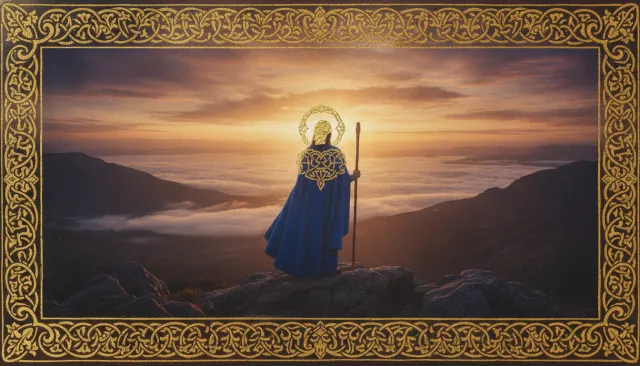
  • gilded-mixed-illuminated-photo
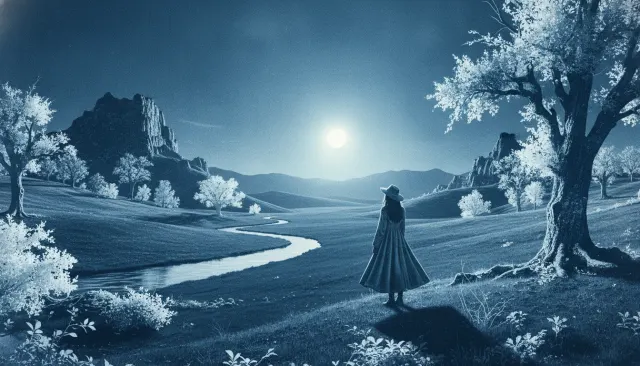
  • blueprint-cyanotype-mix-with-photo
  • infographic-callouts-on-live
  • altered-book-art-collage

Notable works

Smithsonian Natural History Museum Skin & Bones app

(2015)

institutional AR overlay pioneer

Magnus app (founded Bendik Romstad, 2014)

AR provenance and pricing data layer over gallery walls

Google Arts & Culture AR features (2019+)

wall-scaling and virtual gallery navigation

Acute Art platform (2017+)

AR artworks by Kaws, Olafur Eliasson, and Jeff Koons

National Gallery London educational AR extensions (2020+)

The Night Cafe VR experience

(2019)

Van Gogh paintings as navigable 3D environments

Gohar Dashti photographic works layering historical imagery over contemporary scenes

Tilt Brush gallery integration experiments (Google, 2016-2021)

Aesthetic recipe

The exact knobs the renderer turns to produce this look.

Palette
Primary
#00F0FF
Secondary
#1A1A1A
Accent
#FF00AA
Text/Light
#0A0A0A
Text/Dark
#E0F0FF
BG 900
#08141F
BG 800
#0F2438
Typography
Display
IBM Plex Mono
Body
Inter
Mono
IBM Plex Mono
Music moods
ui-glitch-techgallery-ambient
Transition

hard cuts at 160ms, linear

Ken Burns

Static frames

Grade LUT

ar-physical-overlay

Generate a video in the AR Overlay on Physical Art look

Augmented-reality overlay on physical artwork. Phone camera reveals hidden digital layer above painted canvas, sculpture, or street mural, mixed-reality installation aesthetic.