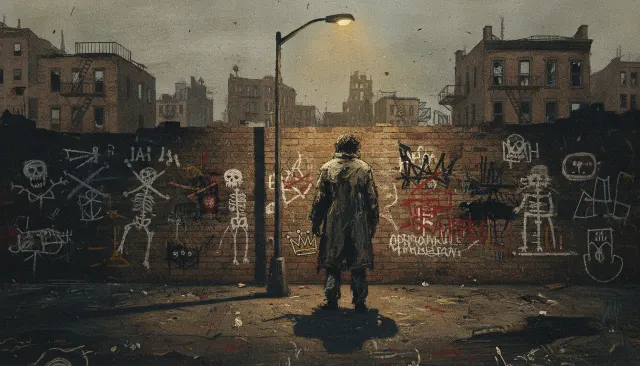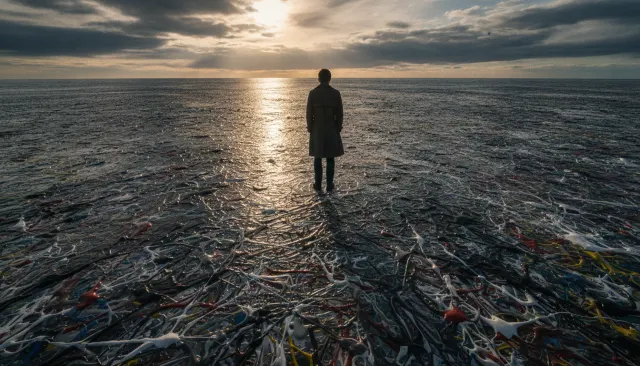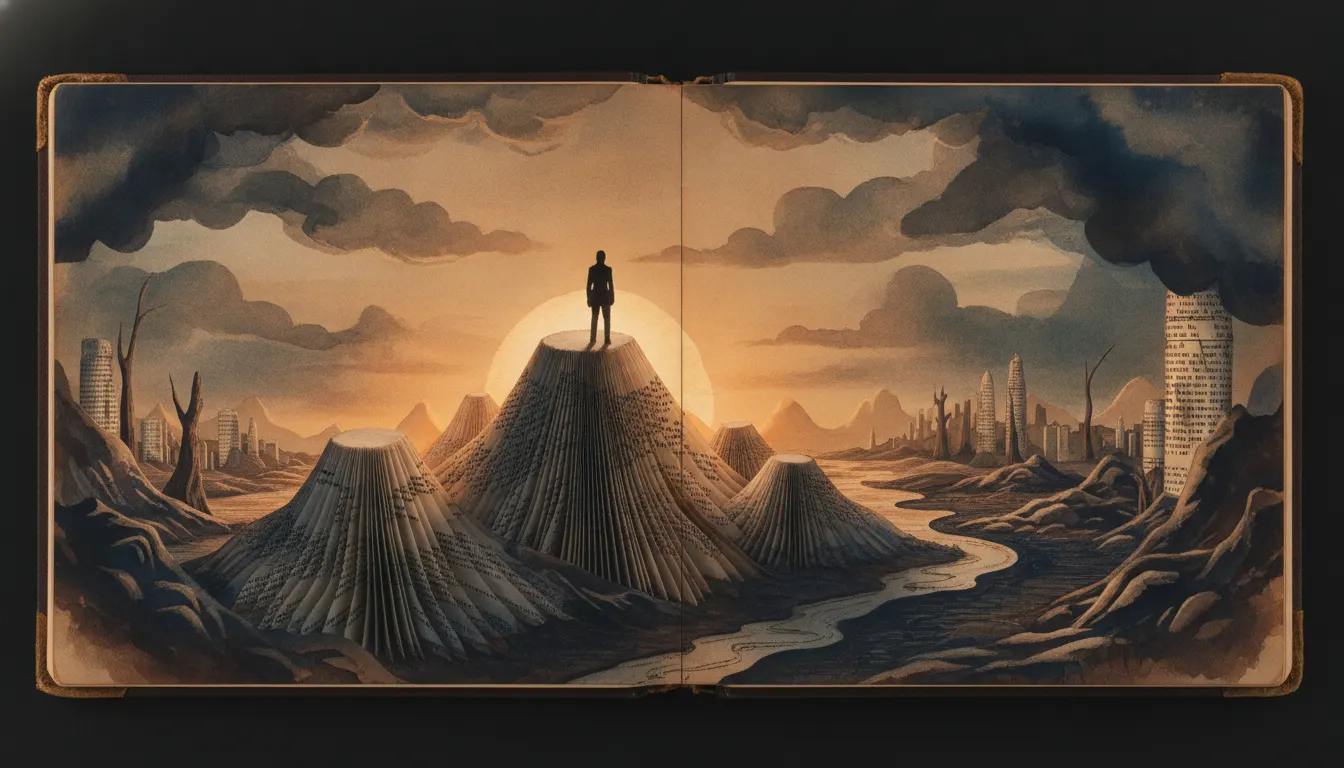
Tom Phillips, A Humument (1966-2016)
the definitive altered book artwork across five revised editions
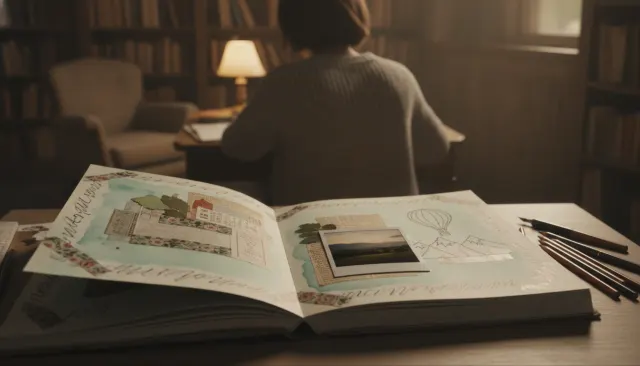
Altered-book art aesthetic. Vintage hardcover with pages cut, folded, painted, and collaged into sculptural narrative spread, ink wash bleeding through printed text.
The moves a human crew would use to get here. Cue applies them for you, and knowing their names is how you ask for a change.
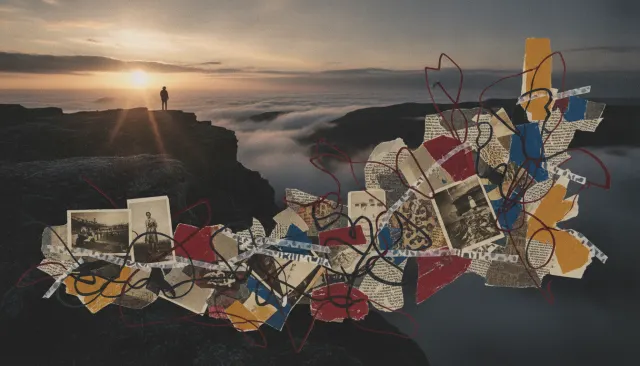
painting over a page and leaving only selected words connected by a flowing visual path, as Tom Phillips pioneered in A Humument
semi-transparent washes that partially obscure underlying text while keeping ghost legibility
vintage stamps, receipts, botanical prints, and map fragments adhered over page surfaces
physical or digital cutouts revealing underlying page content in shaped apertures
small photographs or period illustrations collaged into painted backgrounds at unexpected scales
Altered book art treats the printed book as raw material rather than finished object. Pages are painted over, cut, folded, stitched, collaged, and drawn upon until the original text becomes substrate for an entirely new visual statement. The tension between legible words and obscuring gesture is central to the form's power.
The definitive practitioner is British artist Tom Phillips, whose A Humument (begun 1966, first edition 1973) transformed W.H. Mallock's obscure 1892 novel A Human Document into a 367-page visual poem. Phillips painted over every page, leaving only isolated words connected by flowing 'rivers' of text - creating narrative from erasure. Phillips revised and reprinted the work across five editions through 2016, making it one of the most sustained altered-book projects in art history.
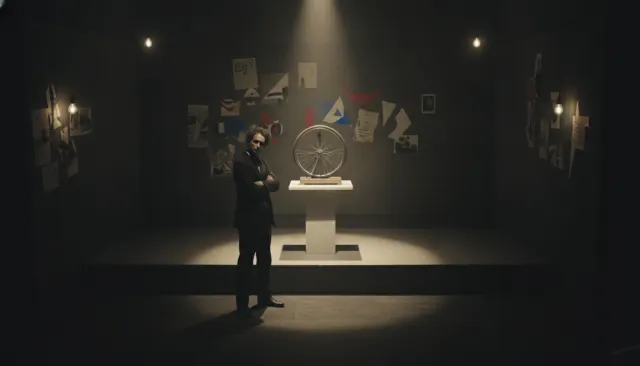
The Dadaists prefigured the form: Hannah Höch's photomontages (1919+) and Max Ernst's collage novels (Une Semaine de Bonté, 1934) established the principle of transforming existing printed matter. Blackout poetry pioneer Austin Kleon popularized a newspaper-based variant in Newspaper Blackout (2010), showing how selective redaction creates meaning from commercial text. Jonathan Safran Foer's Tree of Codes (2010) used die-cut pages to create a new novel from Bruno Schulz's Street of Crocodiles.
The altered book aesthetic is defined by visible layering: you can see what lies beneath. Acrylic washes leave ghost text readable through color. Cut windows reveal pages below. Hand-lettered additions sit beside typeset originals. The tactile quality - visible brush strokes, torn edges, collaged ephemera - is non-negotiable. Digital simulations typically flatten this depth, losing the material authenticity that gives the form its charge.
The form found a massive second life on Instagram and Pinterest in the 2010s as book artists documented their process. Mixed-media journaling communities (Smash Books, junk journals) adopted altered book techniques widely. In video, the aesthetic translates to scanned page reveals, layered text animations with paint-wash transitions, and typography treated as collage material rather than clean overlay.
the definitive altered book artwork across five revised editions
1934
collage novel assembled from Victorian engravings
2010
die-cut novel from Bruno Schulz's Street of Crocodiles
2010
blackout poetry popularizing the redaction approach
Dada precursor establishing altered-print principles
surgical carvings through stacked hardback volumes
books transformed into organic forms then documented
A Look is not a filter. It is a set of stored decisions the pipeline reads before it makes a single frame, so two videos in the same Look actually match.