POP AND STREET ART · 1980S · USA
Basquiat Graffiti Neo-Expressionism
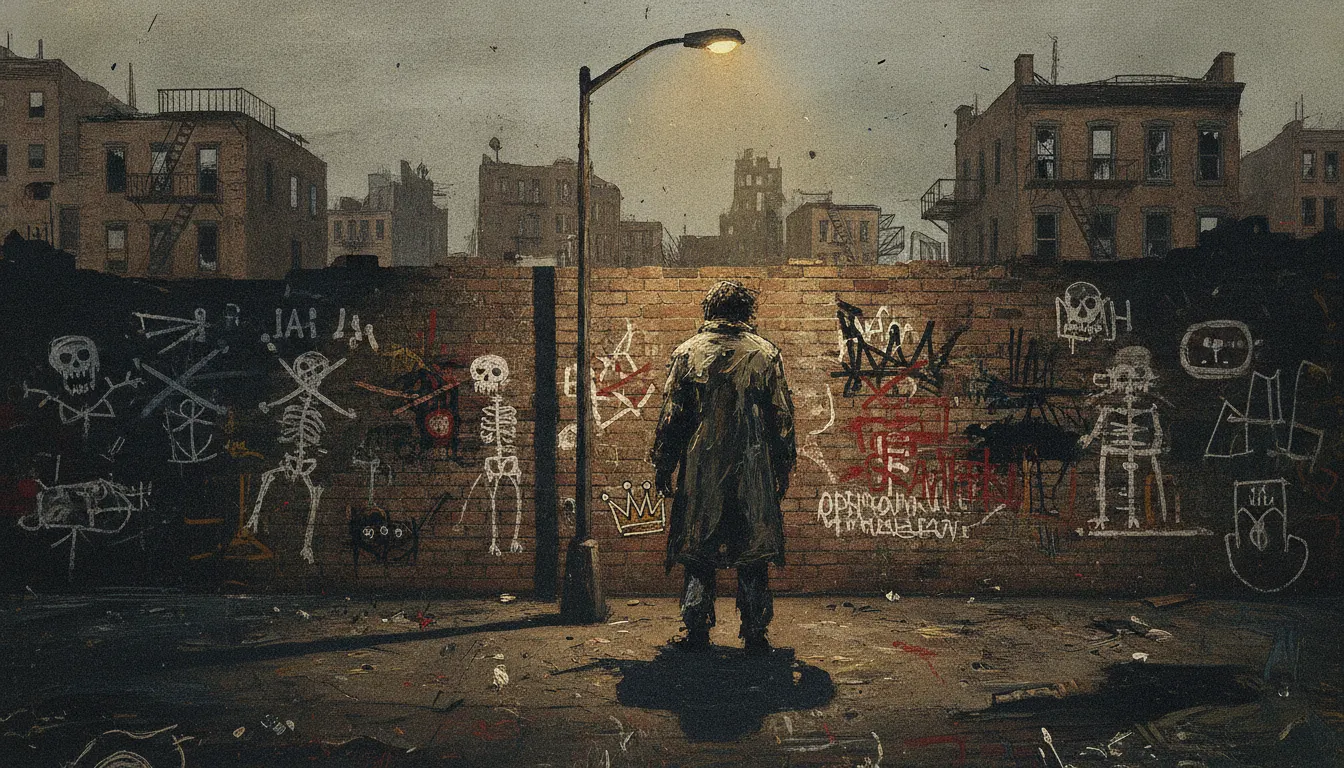
Jean-Michel Basquiat Neo-Expressionism. Crown motif, scrawled text crossed-out, oilstick figure, raw downtown New York urgency.
basquiatgraffitirawurgent
WHEN TO USE
- Art, culture, and music content that wants raw authenticity and urban energy
- Hip-hop, R&B, or jazz music videos
- Brand content for streetwear, art, or youth culture companies
- Social commentary, activism, or content about race, identity, and power
- Title sequences for art documentaries or culturally ambitious projects
- Content celebrating Black artists, musicians, or cultural icons
WHEN NOT TO USE
- Clean, corporate, or institutional content where the rawness conflicts with the message
- Luxury brands that want polish rather than urgency
- Children's or family content where the dense layering and fragmented text are inaccessible
- Minimalist aesthetics where blank space is the point
- Historical content predating the 20th century
SIGNATURE TECHNIQUES
How the look is made.
The moves a human crew would use to get here. Cue applies them for you, and knowing their names is how you ask for a change.
- 01Gestural mark
making with acrylic and oil stick - fast, physical, unrepeated strokes
- 02Crown motif
three-pointed crown as tag, halo, or reclaimed symbol of dignity
- 03Text and lists crossed out but legible
the deletion is the message
- 04Skull and skeletal anatomy rendered as diagram crossed with graffiti tag
- 05Layered surfaces
previous marks show through, paintings are archaeological
- 06Black cultural references embedded in visual noise
jazz names, boxing records, historical figures
- 07Composition without traditional hierarchy
no center, no ground, no background
HISTORY & CONTEXT
Where it comes from.
Jean-Michel Basquiat: SAMO and the Canvas
Jean-Michel Basquiat (1960-1988) was an American artist of Haitian and Puerto Rican descent who began his public art career as a teenager tagging walls in lower Manhattan under the pseudonym SAMO© (same old shit) with collaborator Al Diaz, starting around 1977-1979. His cryptic phrases appeared throughout SoHo and the East Village, mixing aphorism, social critique, and invented philosophy. By 1980 he had transitioned from the street to canvas and was participating in the Times Square Show, a pivotal downtown NYC group exhibition.
Rise in the Art Market
Basquiat's entry into the gallery system was meteoric. His work was exhibited at PS1 in 1981, and by 1982 he had a solo show at gallerist Annina Nosei's gallery and had been profiled in The New York Times Magazine. Art dealer Bruno Bischofberger connected him with Andy Warhol, and their friendship (1983-1987) and collaborative paintings represent one of the most discussed artistic partnerships of the 1980s. Basquiat died of a heroin overdose in August 1988, aged 27.
In 2017, his 1982 painting Untitled (skull head) sold at Sotheby's New York for $110.5 million - the highest price ever achieved for an American artist at auction at the time, paid by Japanese billionaire Yusaku Maezawa.
Visual Language
Basquiat's paintings are layered, dense, and deliberately raw. He worked on unstretched canvas, wood, and found surfaces, applying acrylic and oil stick in rapid, gestural strokes. Key recurring elements include:
- Skull and skeleton figures: inspired by the medical anatomy book Gray's Anatomy his mother gave him while he recovered from a childhood car accident, and by his engagement with death, Black masculinity, and the body's vulnerability
- Crown motif: a three-pointed crown appearing as tag, halo, or symbol of royalty/worth, reclaiming dignity for Black subjects
- Fragmented text: words crossed out (but still legible), lists, partial sentences, brand names, historical references to slavery, civil rights, and Black figures in history
- Raw anatomy: exposed hearts, lungs, bones rendered as diagram-meets-graffiti
- Black cultural heroes: the paintings reference Charlie Parker, Miles Davis, Sugar Ray Robinson, Dizzy Gillespie, boxing, jazz, and figures whose contributions were erased or undervalued by white culture
NOTABLE WORKS
Where you have seen it.
Hollywood Africans, 1983 (Whitney Museum of American Art)
Horn Players, 1983 (Broad Collection, Los Angeles)
depicting Charlie Parker and Dizzy Gillespie
Tobacco, 1984 (Bilbao Fine Arts Museum)
Riding with Death, 1988 (private collection)
SAMO© graffiti tags, Lower Manhattan (c. 1977-1979)
Collaboration with Andy Warhol
Toxic series and joint canvases (1984-1985)
THE RECIPE
The exact knobs
the renderer turns.
A Look is not a filter. It is a set of stored decisions the pipeline reads before it makes a single frame, so two videos in the same Look actually match.
SettingValue
TransitionHow one shot becomes the next
hard cuts · 160ms · linearKen BurnsCamera move applied to stills
Slow push · 0.02 · centerTypographyDisplay / body / mono pairing
Permanent Marker · Inter · CourierMusic moodWhat the bed under the voice sounds like
no-wave-noise · hip-hop-old-schoolPrompt suffixAppended to every shot prompt in this Look
Jean-Michel Basquiat Neo-Expressionism, crown motif, scrawled crossed-out text, oilstick figure, raw 1980s downtown New YorkPALETTE
Primary
#FFD60A
Secondary
#1A3A8E
Accent
#D62828
Text/Light
#0A0A0A
Text/Dark
#FFFFFF
BG 900
#0A0A0A
BG 800
#1A1A1A
RELATED LOOKS
Next to it on the shelf.




Your first cut
is on us.
+ New videoFree plan · no card · 1080p export