Romare Bearden, Prevalence of Ritual series
1964
defining American collage tradition
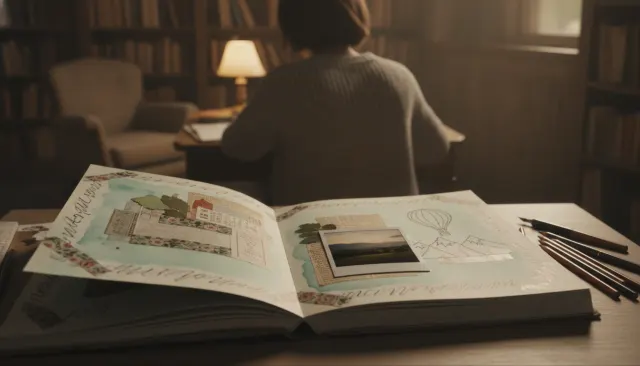
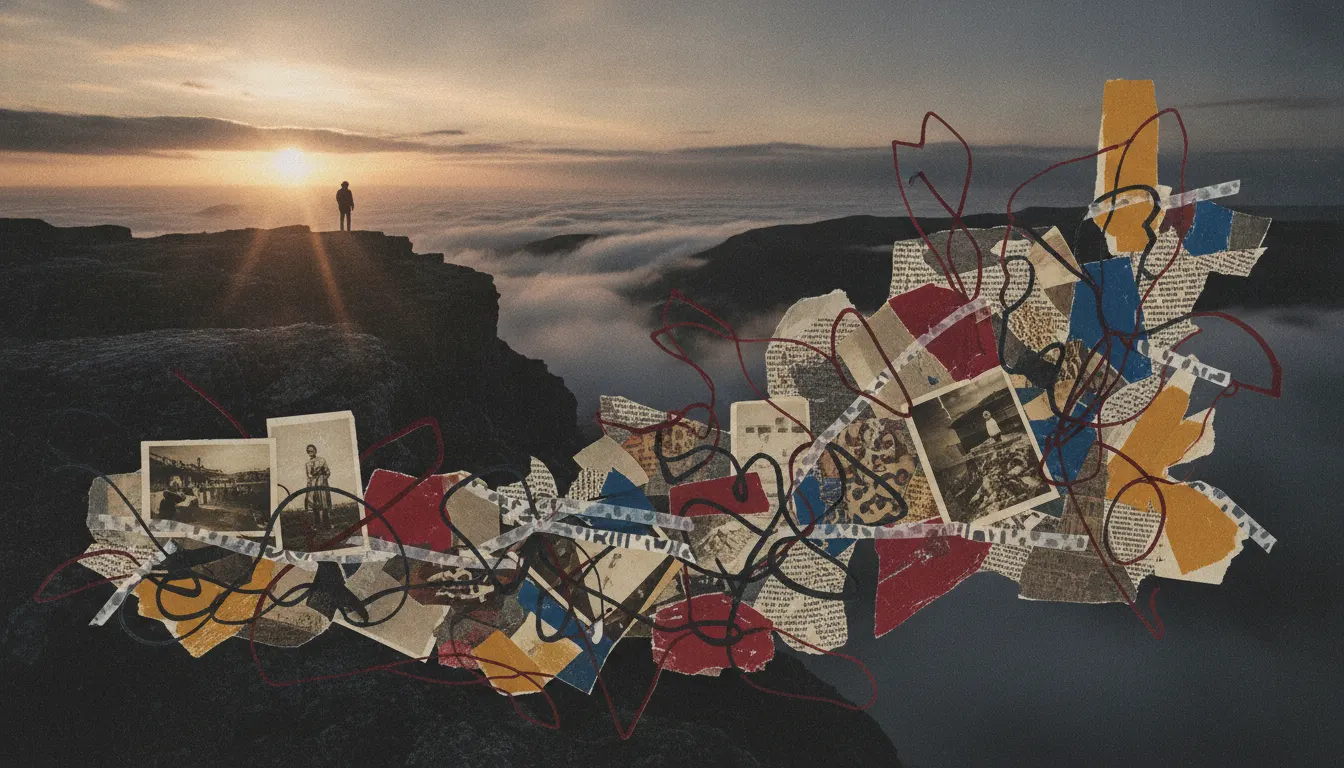
Mixed media collage spread with prominent handwritten annotation. Scanned photos, torn paper, washi tape, painted shapes, and handwritten ink notes laid across one composition.
The moves a human crew would use to get here. Cue applies them for you, and knowing their names is how you ask for a change.
each layer partially obscuring and revealing the layer beneath, creating archaeological depth
inscription: personal marks resisting or annotating found commercial language
elements from different source materials placed at physically impossible relative sizes
surface abrasion revealing previous layers as a deliberate compositional tool
bodies disassembled and reassembled from different source publication pages
as-connector: hand-applied paint bridging collaged elements from different material sources
as-texture: handwriting applied densely enough to function as visual surface rather than readable language
to-personal translation: found advertising or commercial ephemera re-contextualized through hand additions
Mixed media collage with handwriting layers found commercial imagery, painted surfaces, printed ephemera, photographs, and handwritten text into compositions where each element speaks to and against the others. The handwriting component is critical: it is the artist's or subject's direct mark - unmediated by typography - that asserts personal presence within an otherwise assembled world of found material. The resulting works are simultaneously historical documents (using real found material), personal statements (the handwriting), and formal experiments (the compositional logic of collage).
Romare Bearden (1911-1988) is the essential American mixed-media collage ancestor. Beginning with his Projections series (1964, Cordier & Ekstrom Gallery, New York) and continuing through his Prevalence of Ritual series (1964) and major works like The Conjure Woman (1964), Bearden assembled magazine photographs, colored paper, and painted fragments into scenes of African American life - jazz clubs, city streets, rural Southern rituals. His collages use scale disruption (a large eye in a small face), material juxtaposition (glossy magazine against matte paint), and fragmentary figure construction to suggest that Black American identity in the 1960s was itself a constructed, assembled thing - made from fragments of African tradition, Southern rural life, and Northern urban modernity.
Bearden's handwriting appeared in some works as annotation, as title information integrated into the image, and as a mark distinguishing artist's hand from found material.
Kenyan-American artist Wangechi Mutu (b. 1972) creates collage works using fashion magazine pages, scientific diagrams, and handmade marks - watercolor washes, ink lines, painted passages - to construct hybrid figures that are simultaneously human, animal, and alien. Works in her My Dirty Little Heaven and The End of Eating Everything series use hand-painted extensions of collaged magazine figures, text integrated as texture rather than legible language. Mutu's practice positions collage as a feminist and post-colonial form: the magazine body, already surveilled and commercially constructed, is de- and re-constructed.
Mark Bradford (b. 1961, Los Angeles) builds paintings from layers of commercial signage paper, merchant posters, and billboard fragments found in South Los Angeles, sanded, bleached, and built up to reveal and obscure urban text. His works like Mississippi Gottdam (2007) and Map of the World's Known Shores use the layering of commercial language (advertisements, prices, phone numbers) as the pictorial surface. Handwriting appears in Bradford's work as counter-inscription - artist's hand against commercial print.
1964
defining American collage tradition
fashion magazine and hand-painted figure collages
2007
billboard paper and commercial signage layering
1919
foundational political photomontage
A Look is not a filter. It is a set of stored decisions the pipeline reads before it makes a single frame, so two videos in the same Look actually match.