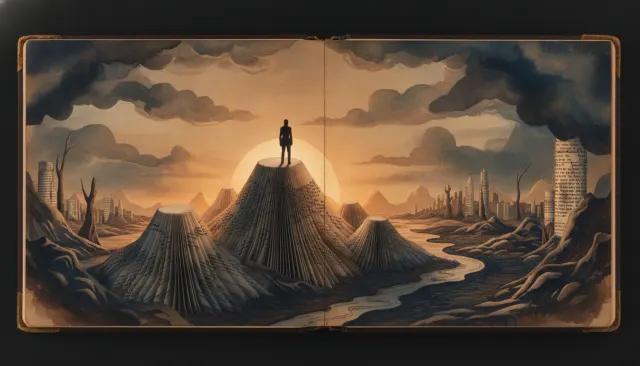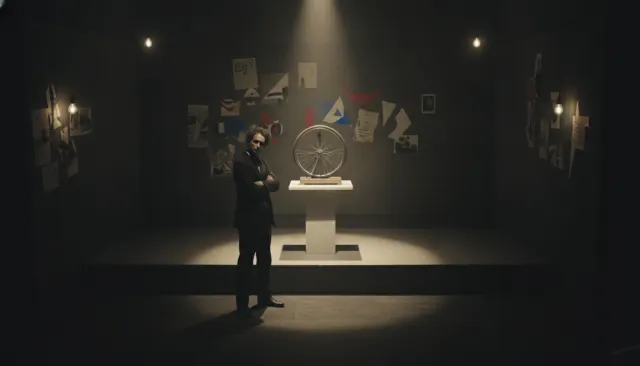
Terry Gilliam, Monty Python's Flying Circus animated sequences (BBC, 1969-1974)
definitive cutout animation
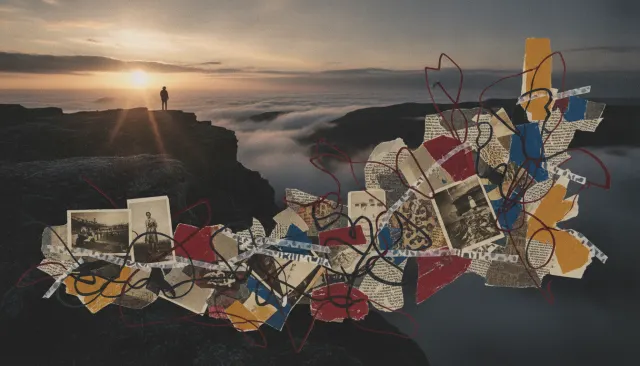
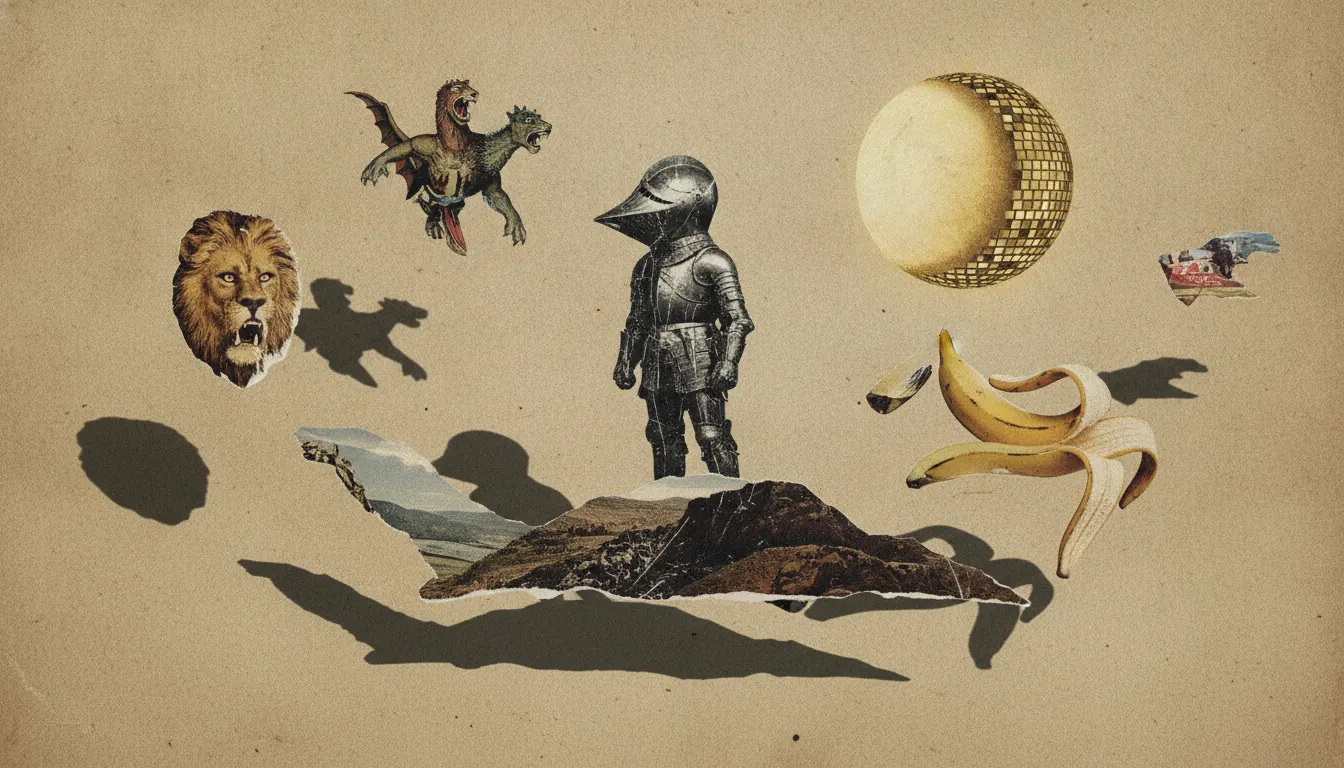
Magazine-style photo cutout collage. Live-action photographs cut from glossy magazines, arranged on textured paper, drop shadows, scissor edges, Terry Gilliam Monty Python energy.
The moves a human crew would use to get here. Cue applies them for you, and knowing their names is how you ask for a change.
deliberately imprecise or jagged subject edges signaling hand-cut rather than digital precision
cutout subjects placed at physically impossible sizes relative to new backgrounds
subjects on flat-color, patterned paper, or illustrated backgrounds with no depth cues
source element mixing: Victorian engravings, magazine photographs, and drawn elements combined in one frame
Gilliam-style limited animation adding only essential movement to otherwise static elements
as-collage element: cut letterforms and type blocks pasted alongside photographic cutouts
on-body annexation: hands, feet, or heads from different photographic sources attached to existing bodies
Live action photo cutout magazine style places photographed or filmed subjects as cut-out elements within collaged compositions - isolating figures from their backgrounds, placing them on new surfaces, scaling them incongruously, combining them with illustration, pattern, or text. The cut-and-paste gesture is deliberately visible: edges may be rough, scale may be absurd, the subject's relationship to their new environment is constructed rather than naturalistic.
Terry Gilliam's animated sequences for Monty Python's Flying Circus (BBC, 1969-1974) are the defining cultural reference. Working with Victorian and Edwardian engravings, newspaper photographs, pre-Raphaelite paintings, and period illustrations, Gilliam cut, pinned, and photographed on a multi-plane animation stand, adding minimal but precisely timed movement to otherwise flat cutout elements. Feet appeared under Victorian portraits, figures grew unexpected body parts, heads detached and pursued their owners.
Gilliam's technique was economically driven - animation for the BBC required speed and low cost - but aesthetically revolutionary: the incongruity of recognizable photographic or engraved faces in motion created comedy from medium violation. The authority of the Victorian engraving was undercut by movement and absurd context. This technique continued in the Monty Python films (And Now for Something Completely Different, 1971; The Holy Grail, 1975) and influenced a generation of animators and motion graphic artists.
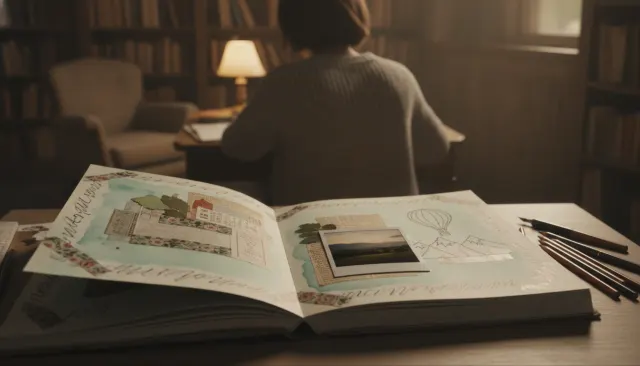
The 'pillow book mix' reference extends to Peter Greenaway's The Pillow Book (1996), which layered text and photographic imagery as collage elements within a single frame - calligraphic writing appearing on human skin, photographic inserts nested within painted papers. This represents a more elegant, literary use of the photo-cutout logic.
Laika Studio's Coraline (dir. Henry Selick, 2009) uses a physical stop-motion analogue: articulated puppet figures against practical environments, with deliberate 'seam' visibility at object-background interfaces. While not technically photo cutout, its aesthetic of pasted-in figures against constructed environments shares the same visual logic of subject-plus-constructed-ground.
The magazine cutout aesthetic flourished on social media via CapCut, Adobe Express, and Canva templates that remove backgrounds and place subjects on styled backgrounds. Hip-hop music video directors (A$AP Rocky, Tyler the Creator) have used cutout compositions for their maximalist collage visual identities. The aesthetic is pervasive in meme culture, where cutout subjects are repositioned in absurd contexts as a basic unit of internet humor.
definitive cutout animation
1975
Gilliam cutout animation in feature context
1996
calligraphic and photographic layering as collage
1919
Dada photomontage precursor
1995
A Look is not a filter. It is a set of stored decisions the pipeline reads before it makes a single frame, so two videos in the same Look actually match.