K&Company Smash Books product line
2011
formalized accessible imperfect-journaling aesthetic
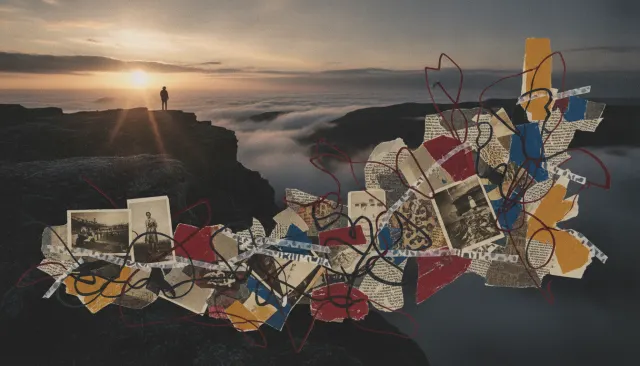
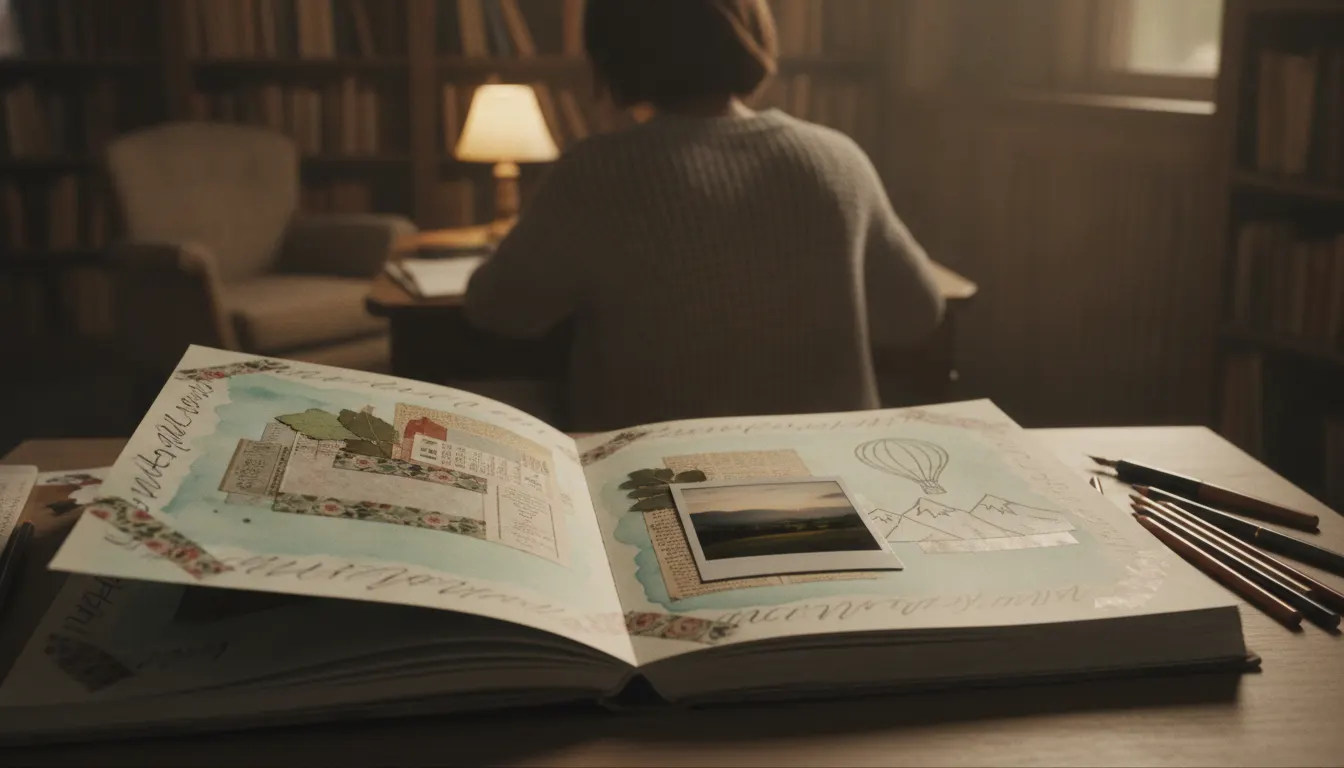
Art journal scrapbook spread aesthetic. Handwritten margin notes, washi tape, taped Polaroid, hand-drawn doodle, layered ephemera over watercolor wash.
The moves a human crew would use to get here. Cue applies them for you, and knowing their names is how you ask for a change.
decorative tape strips used as borders, framing devices, or to visually 'affix' photographs
brown or gray ink on paper edges to simulate age and material wear
simple hand-drawn illustrations connecting photographic elements
folded envelopes and tags containing additional foldable content
Art journal scrapbook doodle is the most accessible branch of mixed media: a layered composition built from printed photographs, found ephemera, handwritten annotations, rubber stamps, washi tape, stickers, ink sketches, and decorative paper. It prioritizes emotional authenticity and personal mark-making over technical perfection. The visible evidence of hand and time - smeared ink, tape that overlaps, sketches with erased lines still showing - is its primary quality signal.
Scrapbooking as a preservation practice dates to the Victorian era, when memory books preserved cut-and-pasted letters, pressed flowers, and news clippings alongside photographs. The craft scrapbooking industry formalized in the 1980s-90s (Creative Memories, founded 1987) around acid-free archival materials. By the 2000s, digital scrapbooking (designing pages in Photoshop or dedicated software) brought the aesthetic to screens.
The decisive contemporary shift came with Smash Books, a product line launched by K&Company in 2011 that explicitly rejected the perfectionism of traditional scrapbooking. Smash Books were deliberately imperfect: pre-printed pages with pockets, adhesive notes, and graphic textures encouraging users to jam in receipts, postcards, and doodles quickly and without preservation anxiety. The format became a major YouTube tutorial genre (2011-2015), documenting the 'smash' process in real time.
Junk journaling extended this further: entirely handmade books assembled from cereal boxes, brown paper bags, used envelopes, and recycled ephemera, with no commercial materials required. By 2018-2022, junk journal content dominated a significant segment of YouTube crafting (channels like KerryAnneBennett reaching millions of views per video).
The hallmarks are layering and texture contrast: a glossy photograph against matte kraft paper, a washi tape strip over a handwritten paragraph, a rubber stamp impression in the margin. Color palettes tend toward warm earth tones (cream, brown, rust, sage) or pastel pastels, with the occasional pop of bright washi tape. The composition deliberately avoids perfect alignment - slight rotations, overlapping elements, torn edges - to signal human making rather than digital generation.
2011
formalized accessible imperfect-journaling aesthetic
established craft scrapbook tradition
2007
mass-market book inviting deliberate creative destruction
defining junk journal tutorial content
collaborative art journal community
narrative-first approach
curated mixed-media materials
minimalist leather journal system spawning global decoration community
A Look is not a filter. It is a set of stored decisions the pipeline reads before it makes a single frame, so two videos in the same Look actually match.