Bisa Butler, The Warmth of Other Suns
2019
72 x 110 inches, Art Institute of Chicago collection
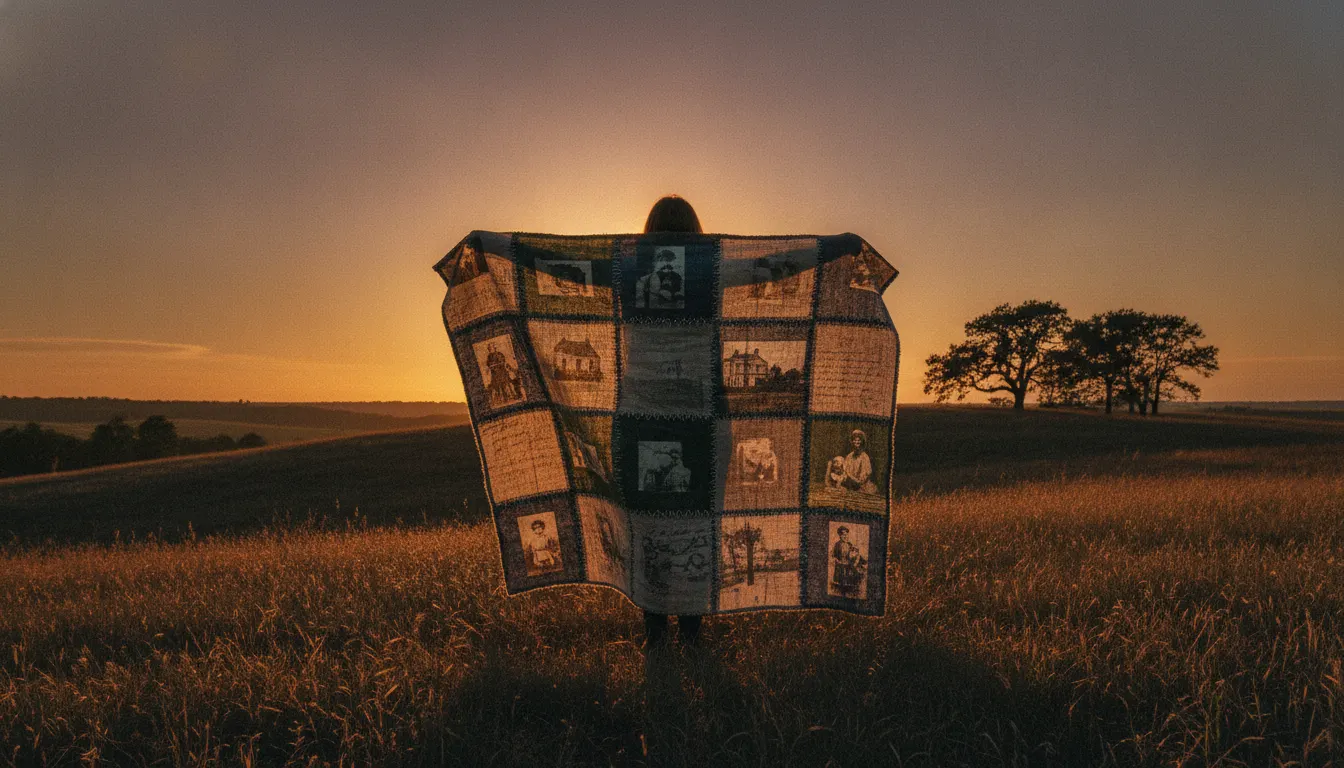
Fabric quilt with printed photo panels. Pieced cotton blocks alternating with photo transfers onto linen, hand-stitched borders, mixed textile and image surface.
The moves a human crew would use to get here. Cue applies them for you, and knowing their names is how you ask for a change.
transfer block integration: photographic prints transferred to fabric then pieced into quilted blocks alongside patterned fabrics
portrait translation replacing photographic tones with fabric pattern families: skin as warm earth-tone prints, sky as blue cotton
quilting lines following the contours of faces or landscape elements
kente, ankara, and mud cloth patterns representing skin and clothing tones
vertical and horizontal dividing strips mimicking quilt block assembly
family palette: warm domestic hues of traditional quilts (reds, oranges, indigos, creams) applied to photographic subjects
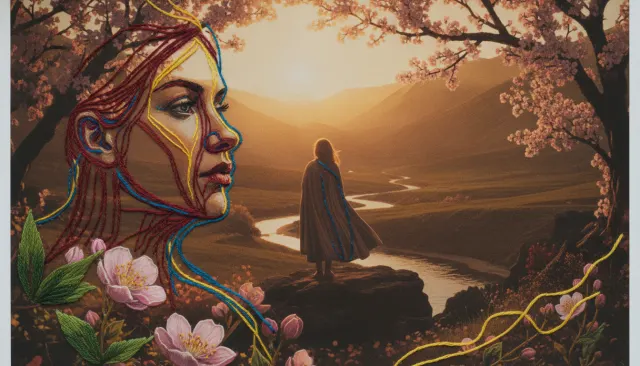
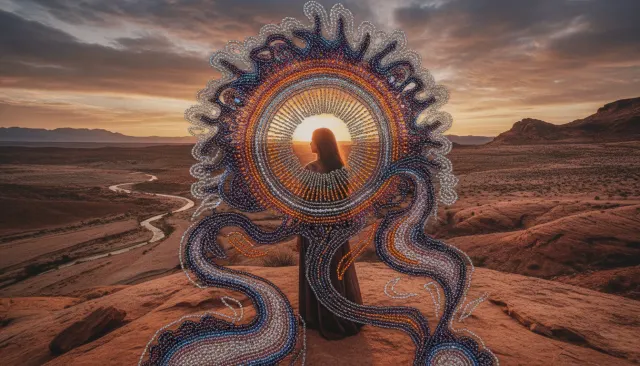
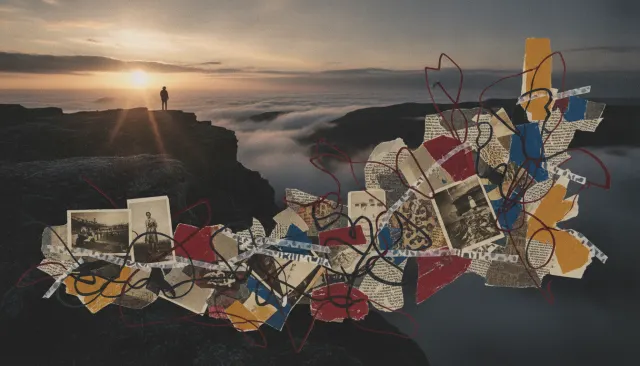
Fabric quilt photo mix brings together two distinct image-making traditions: the quilter's mastery of color, geometry, and fabric composition, and the photographer's capture of light and lived moment. Quilted surfaces may incorporate photo-transfer prints embedded within fabric blocks, appliqued photographic elements, or quilting patterns applied digitally to photographic imagery to create the textile illusion. The result carries warmth, materiality, and community memory in ways photography alone cannot.
The quilts of Gee's Bend, Alabama - made by generations of African American women in an isolated rural community - were 'discovered' by the broader art world through a 2002 Whitney Museum exhibition and became one of the most significant reframings of American art history of the 2000s. Gee's Bend quilters including Loretta Pettway, Annie Mae Young, and Jessie T. Pettway made improvisational, geometrically bold works from work clothes, flour sacks, and domestic fabric. The Whitney show positioned them alongside Mondrian and Malevich. Their tradition is the essential context for understanding quilt-as-fine-art.
Filade-born artist Bisa Butler (b. 1973) is the defining contemporary figure for fabric-quilt-photo hybridity. Butler creates large-scale portrait quilts - works like The Warmth of Other Suns (2019, 72 x 110 inches, Art Institute of Chicago) and I Am Here (2019) - by translating photographic portraits of Black Americans into quilted fabric compositions. She works from found historical photographs, enlarging them to quilt scale and then re-rendering every element in carefully selected fabric patterns. A face becomes hundreds of fabric fragments; a dress becomes interlocking geometric prints; skin becomes warm oranges, purples, and pinks in African textile patterns.
Butler's work is both technically extraordinary (she works from paper cartoons scaled up via projector, then cuts and stitches thousands of fabric pieces) and culturally specific: the quilted portrait format reclaims and honors Black subjects whose photographic images were made in contexts of limited agency.
Digitally, the quilt aesthetic translates through patchwork grid effects, fabric texture overlays, hand-stitch simulation (running stitch, cross-stitch, blanket stitch edges), and the warm, slightly saturated color palette associated with domestic textile traditions. Photo-transfer quilting (printing photographs on fabric then incorporating them into quilted blocks) has been practiced by fiber artists since the 1990s.
2019
72 x 110 inches, Art Institute of Chicago collection
2019
contemporary portrait quilt series
2002
career-defining cultural reframing
Gee's Bend geometric classic
narrative text and painted portrait elements on fabric
A Look is not a filter. It is a set of stored decisions the pipeline reads before it makes a single frame, so two videos in the same Look actually match.