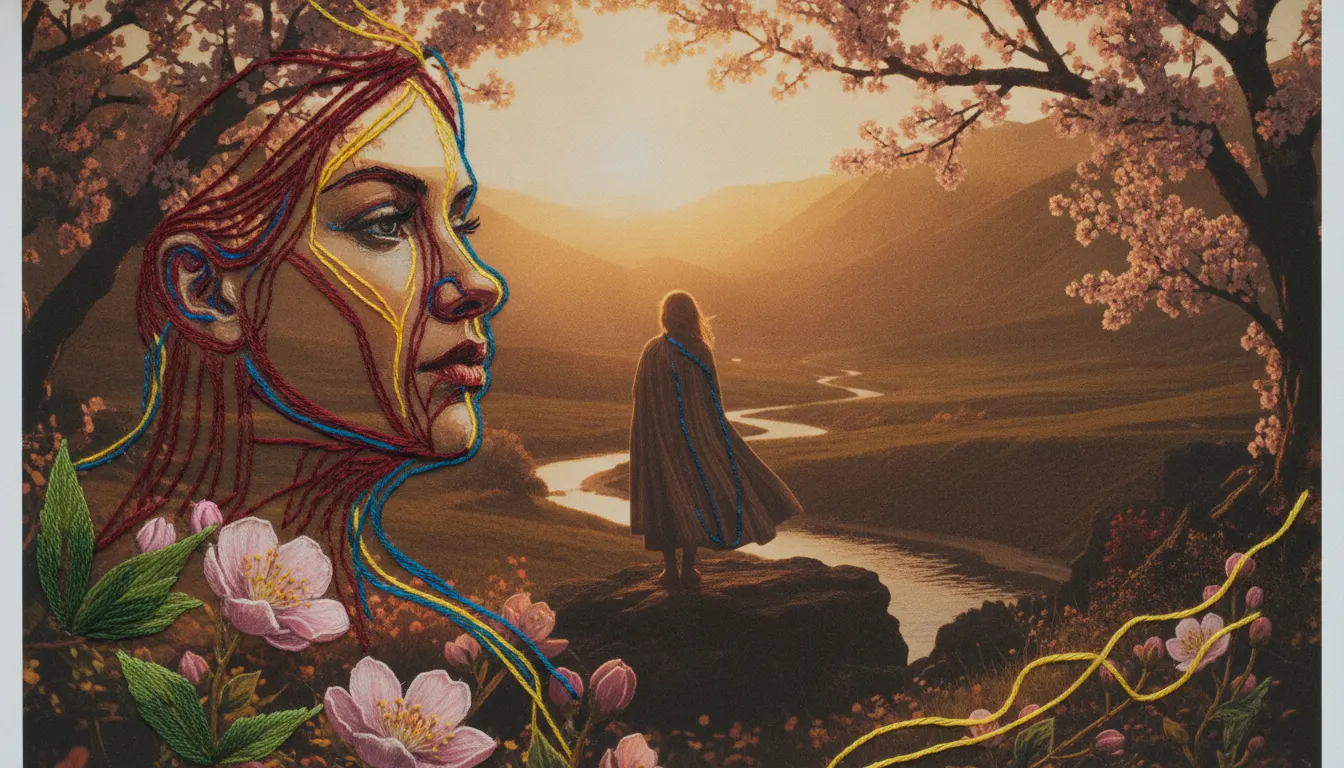
Maurizio Anzeri, Rosa and Emy series (circa 2010-2012)
thread masks over vintage found portraits
Embroidery thread stitched directly onto photograph. Colored cotton floss pierces printed photo, accentuating faces, flowers, or landscape contour with tactile thread relief.
The moves a human crew would use to get here. Cue applies them for you, and knowing their names is how you ask for a change.
stitched lines emanating from eyes, mouth, or hair to create geometric halos
stitch pattern overlay: traditional counted embroidery patterns mapped onto photographic surfaces
needle holes in the photographic print visible at close viewing range as part of the texture
highlighting or emphasizing specific photographic elements with colored stitching
precisely stitched angular patterns that partially or completely obscure portions of the face
as-hair extension: stitched threads extending from photographed hair into frame margins
photograph mounted in traditional embroidery hoop as part of the finished composition
dark backing fabric visible through dense stitch areas adding depth beneath the print
Embroidery thread stitched photo places needle, thread, and textile process directly onto or over photographic images. Colored stitches puncture printed photographs, run across faces and landscapes, create geometric masks or organic halos, and introduce the time-intensive mark of hand labor onto the machine-made image. The juxtaposition is philosophically charged: the slowest, most bodily craft medium interrupting the instant-capture technology.
British-Italian artist Maurizio Anzeri is the most internationally recognized practitioner. Working primarily from found vintage portrait photographs (sourced from flea markets), Anzeri stitches colored thread directly through the photographic surface, creating elaborate geometric masks, veils, and radiating patterns that partially or completely obscure the sitter's face. Works like Rosa and Emy (both circa 2010-2012) use the thread to simultaneously honor and erase identity - the sitter is acknowledged but re-authored.
Anzeri's technique is materially specific: he pins the photograph to a backing, draws the pattern lightly in pencil, then stitches through both photograph and backing. The thread emerges from the photographic surface, creating slight dimensional relief. At close range the puncture holes in the print are visible; at distance the thread pattern dominates. This scale-dependent reading (thread pattern vs. photograph beneath) is a consistent feature of the most successful work in this aesthetic.
Dutch artist Hinke Schreuders takes a different approach: she stitches through magazine photographs and found images, adding embroidered text, figures, and decorative borders. Her works often comment on the images beneath - domestic scenes, women in advertising - by adding embroidered additions that reframe the original context. Schreuders represents the critical or feminist reading of the technique, using thread as a tool of re-annotation.
The practice of adding embroidery to photographs has roots in Central and Eastern European folk traditions of decorating devotional images, and in Victorian-era needlework that incorporated photographs into samplers. Contemporary practitioners including Ana Teresa Barboza (Peru) extend the technique to large-scale installations where embroidered elements appear to burst out of landscape photographs.
thread masks over vintage found portraits
A Look is not a filter. It is a set of stored decisions the pipeline reads before it makes a single frame, so two videos in the same Look actually match.