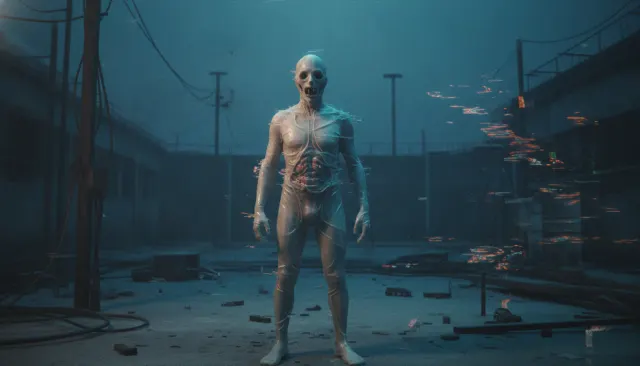
Keiichi Matsuda 'Hyper-Reality'
2016
defining critical vision of AR overlay density
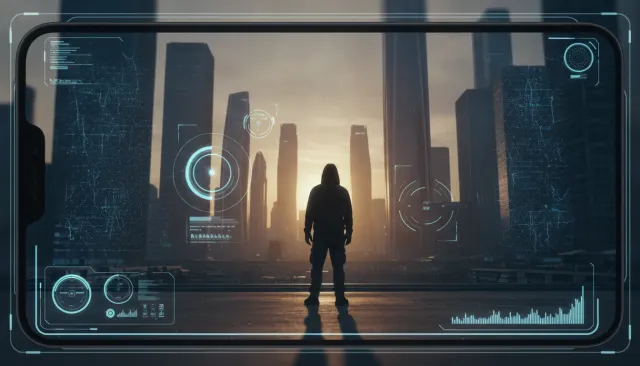
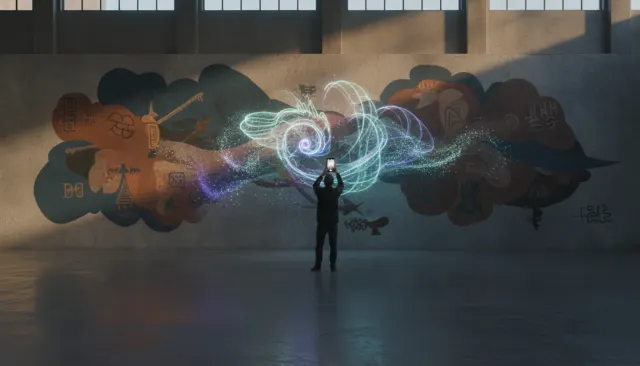
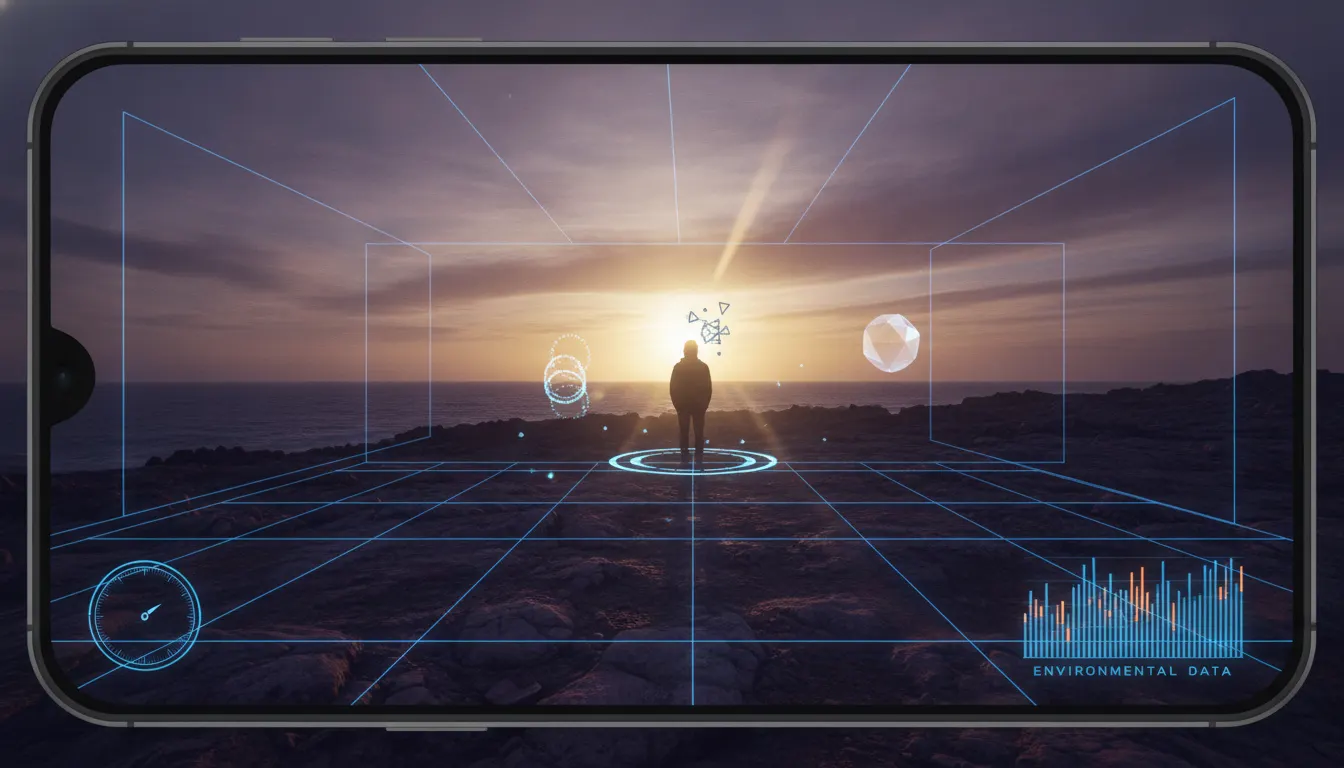
Augmented-reality phone overlay aesthetic. Real-world camera feed with floating digital UI markers, depth-tracked 3D widgets, ARKit grid plane visualization.
The moves a human crew would use to get here. Cue applies them for you, and knowing their names is how you ask for a change.
stroke sans-serif type at small scale with wide tracking, anchored to scene geometry
lock animations that track moving subjects
GPS coordinates, timestamps, biometric values, altitude
panels unfold from a point, text writes in with tracking widening
The AR overlay aesthetic translates the visual grammar of heads-up display (HUD) interfaces, spatial computing environments, and mixed-reality UI into styled video production. The look draws from a lineage beginning with military fighter jet HUD displays (F-16 VHUD, 1970s), running through early AR research at Boeing (Tom Caudell coined 'augmented reality' in 1990), and arriving in consumer consciousness through Pokémon GO (2016), Snapchat AR lenses (2015), and the spatial OS designs of Apple Vision Pro (2024) and Meta Quest 3 (2023).
The core grammar is diegetic interface design: UI elements that appear to exist within three-dimensional space rather than as flat overlays. Floating information panels with frosted glass 'visionOS' translucency, anchored to real-world surfaces. Thin-stroke sans-serif type - SF Pro, Inter, or custom geometric cuts - rendered at small sizes with fine tracking. Scanning reticle animations, parallax depth as the camera moves, and glanceable data readouts (distance, biometric, GPS coordinates, timestamps) establish the functional context. Color palette gravitates toward cool whites and light blues with occasional accent glows in cyan or amber, referencing both iOS and industrial AR standards.
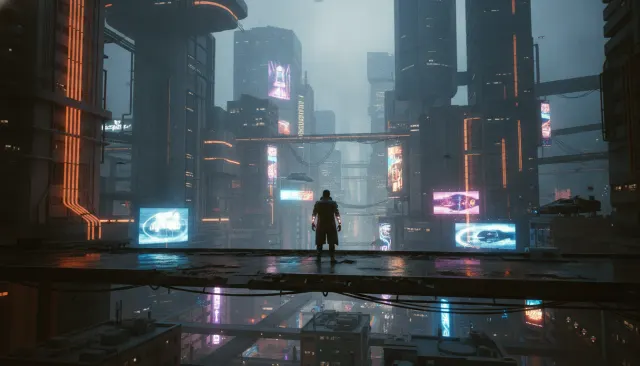
Apple's visionOS (2024) introduced a new design language - translucent frosted panels, shadows cast onto real surfaces, and UI elements that breathe with the user's gaze - that has already propagated into video motion design, title sequences, and brand content. Precedents include Keiichi Matsuda's 'Hyper-Reality' short film (2016), which depicted AR dystopia with dense overlay pollution, and the UI design work of Territory Studio for Marvel's 'Iron Man 3' (2013), which established the fictional Stark HUD aesthetic widely imitated in branded content.
The visual vocabulary of the AR aesthetic descends from functional HUD design. The General Electric HUD system for the F-104 Starfighter (1956) was among the first flight HUDs; by the 1980s, fighter jet HUDs standardized the thin-line, reticle, and alphanumeric readout vocabulary that Territory Studio, Cantina Creative, and other Hollywood UI design shops have translated into fictional screens. The 1980s sci-fi film tradition - 'Aliens' (1986, designer) mothership displays, 'RoboCop' (1987) point-of-view HUD overlays - established civilian audiences' vocabulary for the style decades before smartphones.
Content creators use AR overlay aesthetics to convey technical sophistication, futurism, or data-rich environments. Product launches, fintech explainers, health-tech branding, and gaming channel intros commonly employ floating callouts, animated scan-line reveals, and spatial text placements. Motion graphics tools like Adobe After Effects with Element 3D, Cavalry, and HiDef's AR templates make this style accessible without actual AR capture. The aesthetic has also been adopted in live-event broadcast graphics - particularly in esports and sports coverage - where player statistics, positional data, and live metrics appear as spatial overlays on broadcast footage, blurring the line between functional data display and aesthetic choice.
2016
defining critical vision of AR overlay density
2013
Stark HUD aesthetic widely referenced
2024
visionOS visual language
2017
first mass-market 3D AR aesthetic
2016
AR overlay on real-world environments at consumer scale
2015
holographic workspace aesthetic
2023
see-through mixed reality consumer framing
2019
product AR overlay in lifestyle context
A Look is not a filter. It is a set of stored decisions the pipeline reads before it makes a single frame, so two videos in the same Look actually match.