Jackson Pollock
*Lavender Mist* (Number 1, 1950, National Gallery Washington)
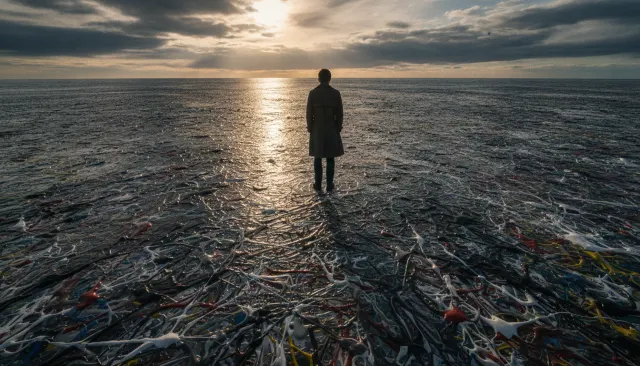
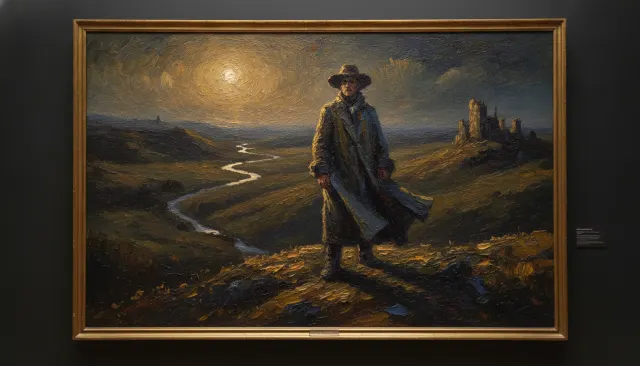
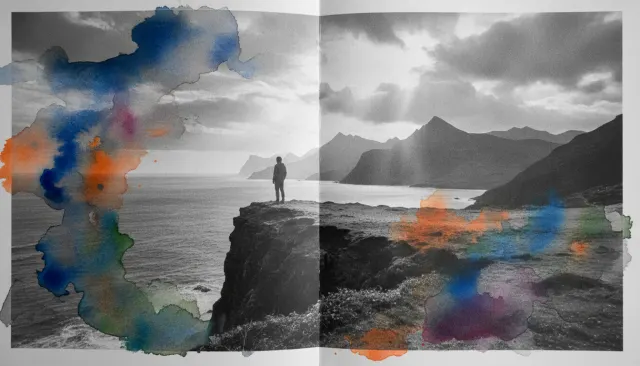
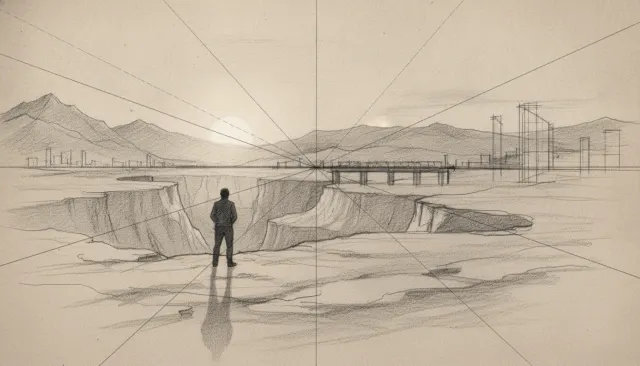
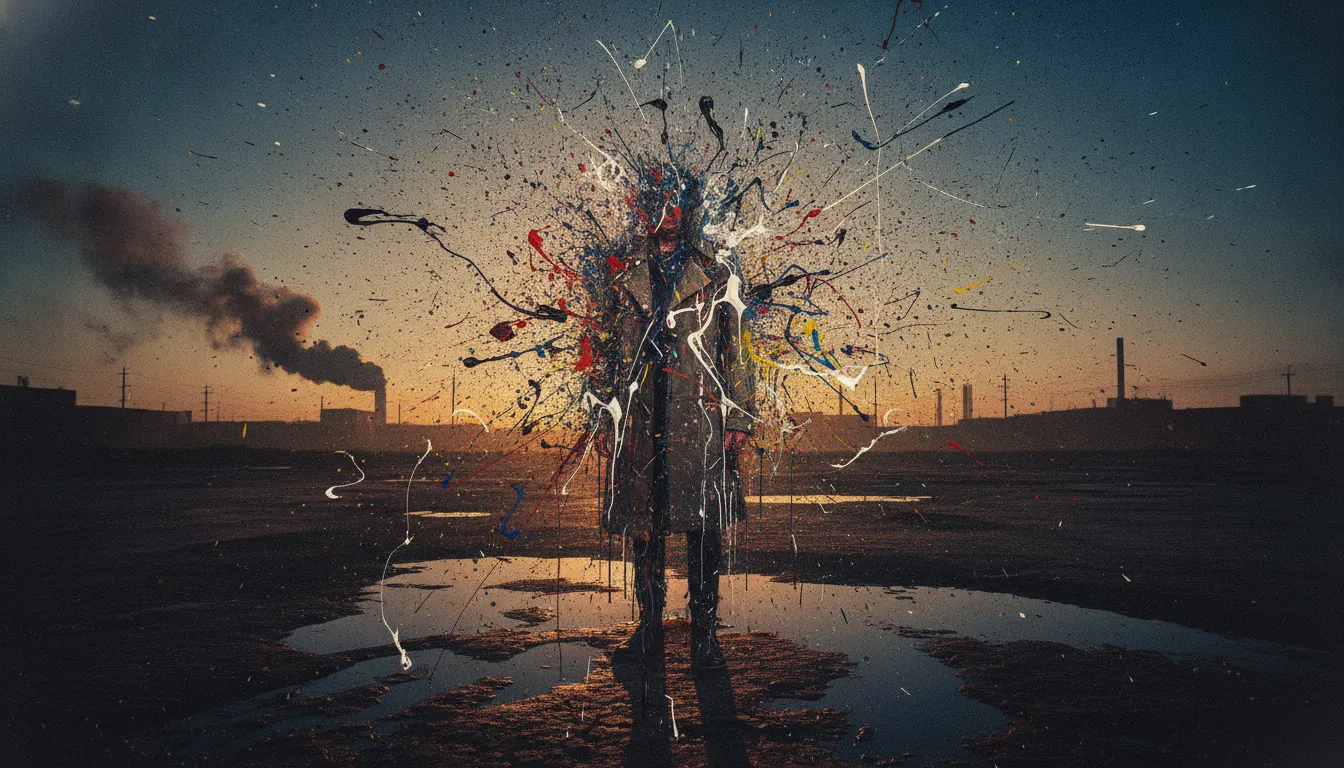
Jackson Pollock splatter paint over photographic portrait. Dripped and flicked enamel paint obscuring parts of a clear photograph, gestural chaos, abstract-expressionist photo-defacement.
The moves a human crew would use to get here. Cue applies them for you, and knowing their names is how you ask for a change.
paint spatter following ballistic trajectories that imply the arm gesture that threw them
bright saturated paint over desaturated photo
paint allowed to hit background and clothing but masked off face for legibility
first drips, then splatter, then drip lines, building depth of physical gesture
paint edges that still read as wet and three-dimensional
large pour events and tiny satellite droplets coexisting in the same composition
The splatter paint on photo abstract technique overlays gestural paint marks – flung drips, spattered drops, poured streams – onto photographic imagery. The photograph provides figuration or documentary specificity; the paint asserts emotion, energy, and the physical body of the artist. The collision of these two registers – one mechanical and precise, one bodily and accidental – is the image's generative tension.
The decisive reference point is Jackson Pollock's drip paintings (1947–1950), executed at his studio at 830 Springs-Fireplace Road, East Hampton, New York. Pollock worked with the canvas laid on the floor, moving around and above it, using sticks, basting syringes, and hardened brushes to fling and pour enamel and oil paint from cans. The resulting works – Full Fathom Five (1947), Lavender Mist (1950), Blue Poles (1952) – were photographed in process by Hans Namuth, and Namuth's 1950 photographs and film became as famous as the paintings themselves, cementing the drip gesture as an image of creative liberation.
Clement Greenberg and Harold Rosenberg identified Pollock and his peers as Action Painters – the painting as record of a physical performance rather than a composed representation. This framing made the gestural mark inseparable from the idea of authentic creative expression.
The tradition of combining paint and photography is distinct from straight abstract painting: it insists on photography's continued presence as a ground or layer. David Hockney's investigations of photography and representation, Jean-Michel Basquiat's painted canvases incorporating photographic source material (1980s), and contemporary photographers who work with actual paint on photographic prints – Mathieu Bernard-Reymond, Mario Sorrenti, and commercial advertising photographers working in the 2010s glossy-expressive mode – all sit within this hybrid territory.
John Paul Pietrus and Ryan McGinley have photographed paint-splattered subjects in ways that blur the line between painting action and photography. Rankin's portrait photography often incorporates wet media applied directly to prints.
The splatter paint on photo aesthetic entered mainstream commercial photography through the fashion and music industries in the 2010s. Campaigns for Nike, Adidas, and major athletic brands used paint-splatter composites to communicate explosive energy without requiring stunt work or complex CGI. The key commercial requirement is that the splatter look energetic and accidental while being entirely controlled: every droplet's trajectory, every drip's landing point must be placed to serve the composition without obscuring the product or the face.
The most effective commercial applications use contrast of scale: a single large drip event (pour or splash) as the dominant graphic element, surrounded by the fine mist of secondary droplets that a large impact creates. The physics of real paint splatter follow predictable ballistic patterns – larger drops travel further, fine mist settles nearer the impact point – and compositions that follow this logic read as physically real rather than digitally arbitrary.
*Lavender Mist* (Number 1, 1950, National Gallery Washington)
*Blue Poles* (Number 11, 1952, National Gallery Australia)
1950
photographs and film of Jackson Pollock painting at Springs studio
oil-stick and acrylic over photographic source material canvases (1980–1988)
gestural mark paintings referencing graphic and photographic languages (1950s–2011)
paint-damaged typography and photographic distortion in *Ray Gun* magazine (1992–1995)
portrait photography with wet media applied to printed surface (2000s–present)
A Look is not a filter. It is a set of stored decisions the pipeline reads before it makes a single frame, so two videos in the same Look actually match.