Sherlock Holmes
Guy Ritchie · 2009
Philippe Rousselot cinematography; amber-saturated Victorian London interiors and atmospheric fog exterior work
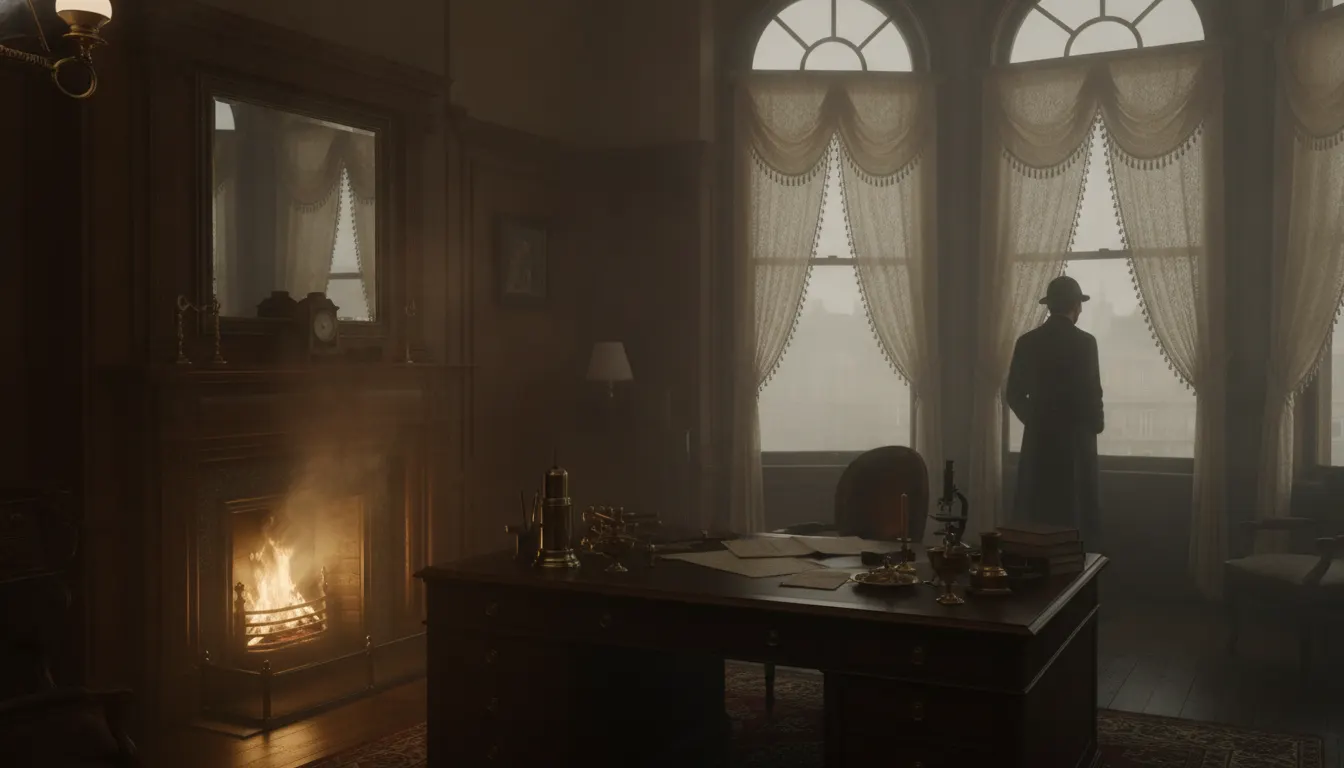
Victorian 1890s gaslight parlor. Sherlock Holmes London fog, brass-and-mahogany interior, fireplace and gas-lamp key, heavy-draped lace bustle.
The moves a human crew would use to get here. Cue applies them for you, and knowing their names is how you ask for a change.
All interior light sources pushed to 1800-2000K color temperature simulation, creating deep amber skin tones and dark, warm shadow pools.
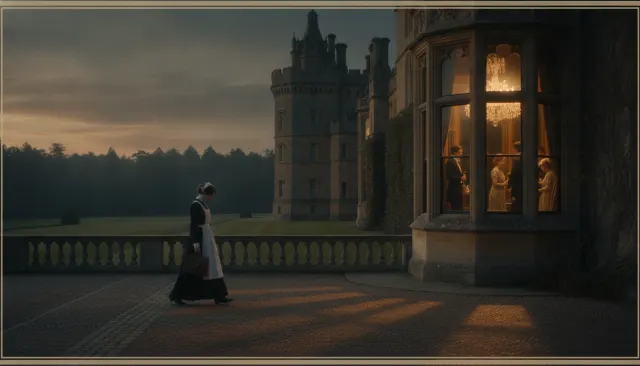
Interior scenes lit from several warm point sources simultaneously, creating soft shadows in multiple directions as actual gas mantles would.
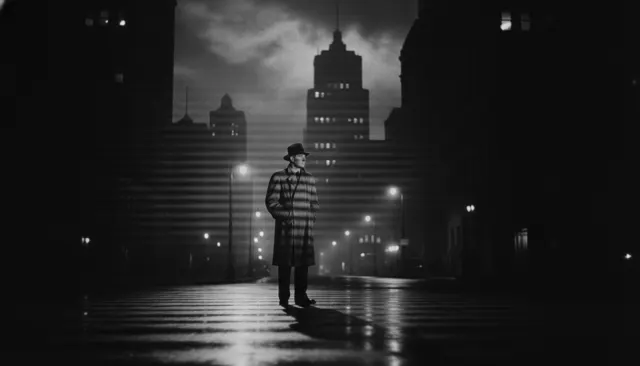
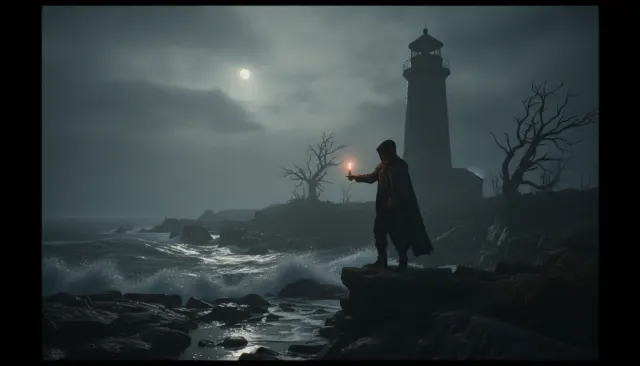
Exterior night sequences with practical or simulated London fog, sodium-lamp-equivalent orange street illumination, and wet cobblestone reflections.
Peripheral areas of the frame allowed to fall to near-black, with key illumination reserved for faces and significant objects.
Deep burgundy, forest green, mahogany brown, and brass gold as the period-accurate decorative palette supporting the lighting grammar.
Fireplace or hearth used as the primary key light source in parlor and study scenes, with warm flicker simulation for period authenticity.
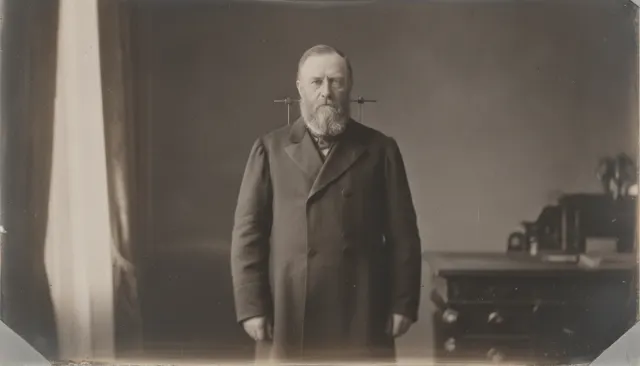
The Victorian gaslight aesthetic reconstructs the visual world of London and other Western cities between roughly 1880 and 1901 - the late Victorian period defined by gaslit streets, interior parlors, heavy drapery, and the atmospheric fog that London's coal-burning economy produced. It is a look of enclosed warmth within exterior darkness: the hot amber glow of an oil lamp or gas mantle illuminating mahogany furniture, silk damask wallpaper, and the faces of characters who exist before electricity transformed the relationship between light and night.
Gas mantles and oil lamps produce a warm, flickering, omnidirectional light in the 1800-2200K color temperature range - warmer than any artificial light commonly in use today. This quality of light creates particular visual properties: shadows fall in multiple directions (multiple nearby flame sources), skin tones are deeply amber-gold, and the ambient light level drops precipitously beyond the immediate circle of illumination. Cinematographers reproducing this era work primarily with tungsten or heavily-gelled LED sources to simulate gas mantle warmth.
Young Victoria (2009, cinematographer Hagen Bogdanski), Sherlock Holmes (2009, Philippe Rousselot), and Enola Holmes (2020, Giles Nuttgens) each approached the Victorian interior differently. Guy Ritchie's Sherlock Holmes leaned into amber-saturated contrast and fog-filled exteriors; Emily Blunt's Victoria and Abdul (2017) used more natural light but maintained the warm amber interior grammar.
The Sherlock Holmes London - whether from the 2009-2011 Guy Ritchie films with Robert Downey Jr., the BBC Sherlock (2010-2017), or Granada Television's Jeremy Brett series (1984-1994) - constitutes the most recognizable contemporary iteration of the Victorian gaslight look. 221B Baker Street as domestic interior: Persian-patterned wallpaper, amber fireplace key light, violin props and chemistry sets, dark wood furniture. Exterior sequences favor Whitechapel cobblestones, fog machines, and sodium-orange lamp glow.
The Victorian gaslight look is especially dependent on production design - the visual grammar requires authentic period detail in furnishings, costumes (Victorian bustle, frock coats, waistcoats), and architectural elements. Warm amber grading alone on a modern set will not produce the Victorian register; the physical world needs to support the lighting approach.
The aesthetic is used in period drama, steampunk-adjacent brand content, Halloween and horror content, and any narrative invoking the paradox of Victorian modernity: a world of extraordinary intellectual and industrial progress coexisting with gas-lit darkness and persistent fog.
Guy Ritchie · 2009
Philippe Rousselot cinematography; amber-saturated Victorian London interiors and atmospheric fog exterior work
Mark Gatiss & Steven Moffat · 2010
Contemporary Sherlock transposed to modern London while maintaining Victorian gaslight warmth in Baker Street interiors
Jean-Marc Vallee · 2009
Hagen Bogdanski; restrained natural-light approach to Victorian interiors with authenticated period warmth
Stephen Frears · 2017
Remi Adefarasin; warm amber interiors and Victorian institutional settings across Indian and Scottish locations
John Logan · 2014
Horror series using Victorian gaslight grammar at its darkest and most atmospheric
Harry Bradbeer · 2020
Giles Nuttgens; Victorian gaslight grammar modernized for YA audiences with higher key and more saturated palette
Juan Carlos Medina · 2016
Victorian music hall and gas-lit murder mystery with extreme amber shadow grammar
A Look is not a filter. It is a set of stored decisions the pipeline reads before it makes a single frame, so two videos in the same Look actually match.