Julia Margaret Cameron
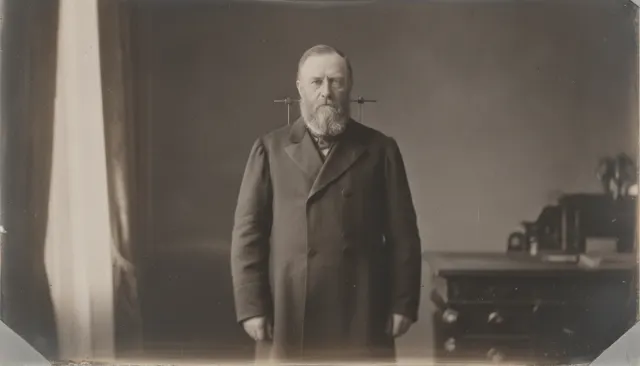
*Alfred Lord Tennyson* (1865-1867), soft-focus portrait series
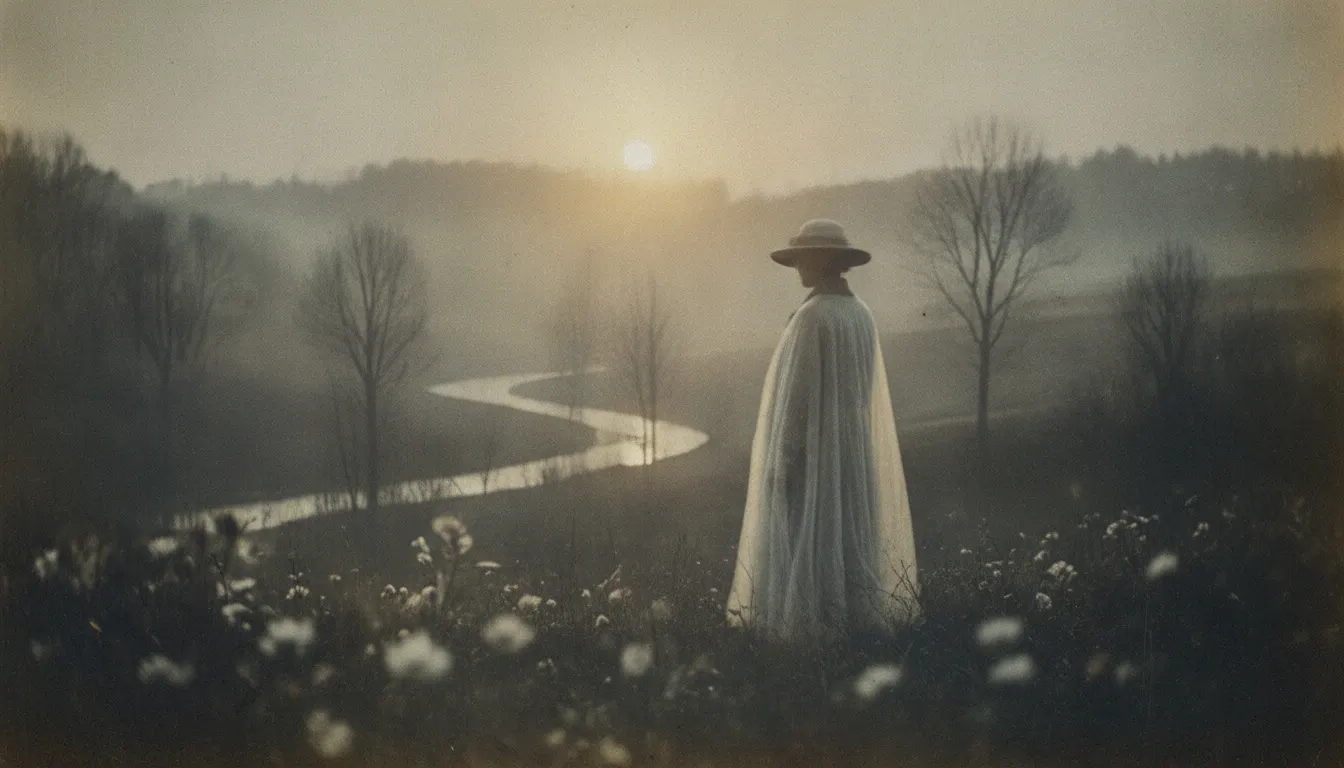
Edwardian pictorialism. Soft-focus painterly portrait, Steichen and Stieglitz Photo-Secession aesthetic, gum bichromate warmth, gauzy diffusion.
The moves a human crew would use to get here. Cue applies them for you, and knowing their names is how you ask for a change.
focus via Petzval portrait lenses, gauze, petroleum jelly, or deliberate slight defocus
contrast tonal range without paper-white highlights
5 seconds) with natural window light for soft, luminous facial modeling
formal costume, simple dark background, three-quarter or full-length format
retouching or brushwork on the negative or print to soften blemishes or enhance tonality
key or low-key tonal management to eliminate harsh mid-tones
The Edwardian era (1901-1910, broadly 1900-1914) coincided with the height of the Pictorialist movement in photography - an international campaign by serious photographers to establish their medium as a fine art equal to painting. Pictorialists deliberately introduced soft focus, painterly tonal effects, and hand-manipulation into their prints to counter the accusation that photography was merely mechanical record-making.
In America, Alfred Stieglitz founded the Photo-Secession in New York in 1902, gathering photographers including Edward Steichen, Gertrude Kasebier, and Clarence White who pursued the Pictorialist aesthetic at the highest level. Stieglitz's journal Camera Work (1903-1917) published platinum prints, gum bichromate prints, and Autochrome color work that defined the movement's visual standards. In Britain, the Linked Ring Brotherhood (founded 1892) served a parallel function.
The Edwardian soft-focus aesthetic draws direct lineage from Julia Margaret Cameron (1815-1879), who deliberately used long exposures, close framing, and soft-focus lenses to create heroic portraiture of Victorian literary and intellectual figures. Her portraits of Alfred Lord Tennyson, Charles Darwin, and Sir John Herschel are foundational precursors to Edwardian Pictorialism.
Soft focus was achieved through purpose-built portrait lenses with uncorrected spherical aberration (Petzval designs), gauze or petroleum jelly over the lens, or slight defocusing of a sharp lens. Printing processes - platinum, palladium, gum bichromate, carbon - gave images warm tonal ranges and surface textures unavailable in gelatin silver. Many Pictorialists treated their prints with brushwork, scratching, or chemical manipulation after development.
Pictorialism's dominance lasted roughly from 1885 to 1915, when it was challenged by the 'straight photography' movement championed by Paul Strand and the later work of Alfred Stieglitz himself, who reversed his earlier Pictorialist sympathies. Strand's 1916 photographs - sharp, unflinching, formally precise - marked the shift. Edward Weston and Ansel Adams formalized the break in 1932 with the founding of Group f/64, which explicitly rejected soft focus and manipulation in favor of optical sharpness. The Edwardian soft-focus aesthetic then became a deliberate period reference rather than a current practice.
*Alfred Lord Tennyson* (1865-1867), soft-focus portrait series
1893
*Winter on Fifth Avenue* , Pictorialist street scene
1905
*The Flatiron Building* , gum bichromate over platinum, MOMA collection
1899
*Blessed Art Thou Among Women* , Pictorialist domestic portrait
1908
*Morning* , soft-focus platinum print
A Look is not a filter. It is a set of stored decisions the pipeline reads before it makes a single frame, so two videos in the same Look actually match.