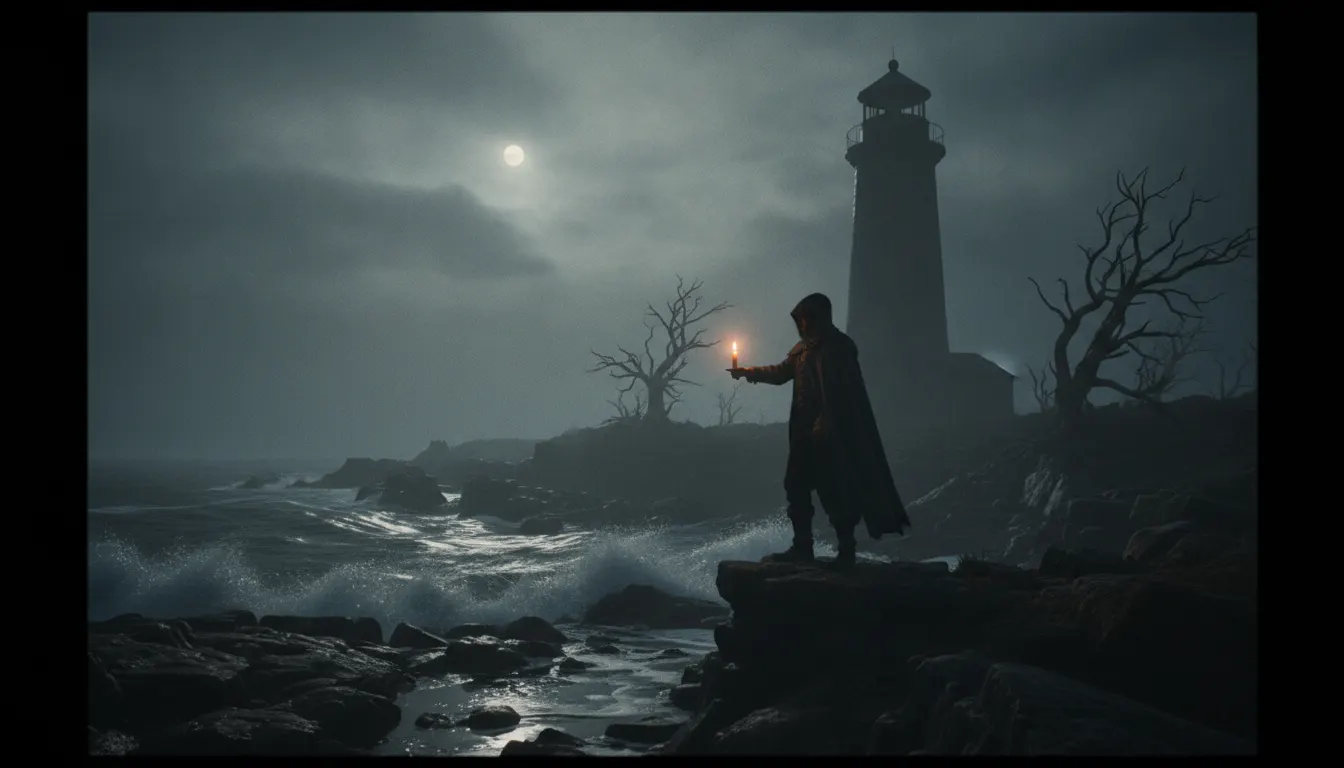
The Witch
Robert Eggers / Jarin Blaschke · 2015
1630s New England folk horror - natural light only, period accurate, pure environmental dread
Robert Eggers folk horror. The Witch and The Lighthouse aesthetic, candlelit period dread, 1.19:1 frame, natural-only lighting.
The moves a human crew would use to get here. Cue applies them for you, and knowing their names is how you ask for a change.
Practical candle and firelight as sole interior source, requiring maximum aperture lenses and high ISO to expose correctly.
Compressed silent-era frame ratio creates physical claustrophobia and prevents wide environmental breathing room.
Overcast winter daylight as the only exterior source creates permanent low-contrast gloom without directional energy.
Every prop, garment, and architectural element sourced from historical documentation of the specific era and region.
Period optics create center-sharp images with soft peripheral glow that resists modern clinical sharpness.
An imperceptible push-in during dialogue builds dread through proximity without announcing itself as a camera move.
Robert Eggers is the most rigorous practitioner of historical horror in contemporary cinema. His three major American features - The Witch (2015), The Lighthouse (2019), and The Northman (2022) - plus his 2024 remake of Nosferatu, apply the same obsessive research methodology: period-accurate language, historically sourced production design, and an unwavering commitment to shooting entirely on available light from historical sources.
The Witch is set in 1630s New England, and every visual element was sourced from period documentation. Cinematographer Jarin Blaschke shot in natural daylight and candle light only, with a 1.78:1 aspect ratio opened to 1.66:1 in some prints. The forest environment - shot in Ontario, Canada, in late autumn - provided the relentlessly gray and brown palette of a pre-modern North American winter. The film's horror does not rely on jump scares or supernatural visualization; it relies on the oppressive visual grammar of a world where darkness literally occupies half the frame and where every lit object has to justify its own luminosity with a practical source.
The Lighthouse used a 1.19:1 aspect ratio - the early silent-era Academy ratio - to create a boxy, oppressive frame that physically compresses the two lighthouse keepers. Blaschke shot on ARRI Alexa Mini with Baltar vintage lenses, achieving a visual quality that Eggers describes as emulating the soft ortho-chromatic panchromatic transition of 1890s-1910s photography. The film was shot in Nova Scotia in the dead of winter and processed through a monochrome conversion that maximized tonal range in skin and sea spray. Robert Pattinson and Willem Dafoe were photographed in such harsh weather that water spray appears in unexpected frames as genuine weather artifact.
Blaschke and Eggers share a commitment to period lighting grammar as a moral position: if a 17th-century New England family could not have had an artificial light source, the film will not have one. This means working with candle light at intensities that require extraordinarily fast lenses and high ISO settings. Modern cinema lenses allow f/0.95 apertures; Blaschke frequently works at maximum aperture at ISO 3200-6400 to capture true candle light levels. The resulting images have a luminous, intimate quality that studio lighting can approximate but not duplicate.
Eggers's influence on contemporary horror is visible in Ari Aster's Hereditary (2018) and Midsommar (2019), both of which apply a similar research discipline to recent period horror. The folk horror revival - which also includes Ben Wheatley's Kill List (2011) and A Field in England (2013) - shares the Eggers commitment to environment as psychological space. His Nosferatu (2024) closed a circle: the man whose entire career is an act of historical cinema archaeology returned to the original 1922 Murnau film to shoot his own version.
Robert Eggers / Jarin Blaschke · 2015
1630s New England folk horror - natural light only, period accurate, pure environmental dread
Robert Eggers / Jarin Blaschke · 2019
1.19:1 boxy ratio, Baltar lenses, monochrome conversion, Nova Scotia winter as oppressive physical reality
Robert Eggers / Jarin Blaschke · 2022
Viking-era epic extending the research methodology to large-format action sequences
Robert Eggers / Jarin Blaschke · 2024
1922 Murnau remake with period-accurate orthochromatic emulation and available-light horror
Ari Aster / Pawel Pogorzelski · 2018
Direct descendant of Eggers's methodological horror, applying research discipline to contemporary suburban setting
Ari Aster / Pawel Pogorzelski · 2019
High-key folk horror inverted from Eggers's darkness but sharing the research and environmental rigor
Robert Eggers / Jarin Blaschke · 2015
Director's cut material demonstrating the full extent of candle-only interior photography in extreme darkness
A Look is not a filter. It is a set of stored decisions the pipeline reads before it makes a single frame, so two videos in the same Look actually match.
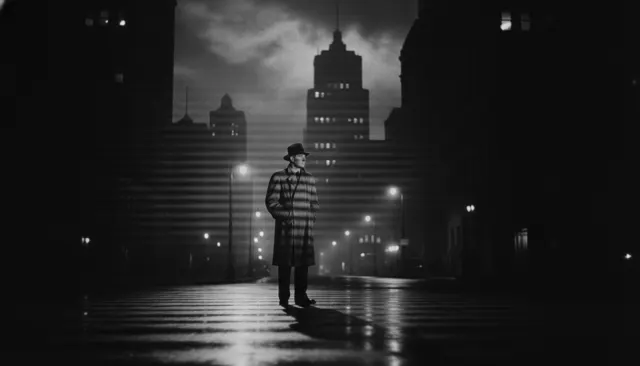 Cinema GenreFilm Noir 1940s
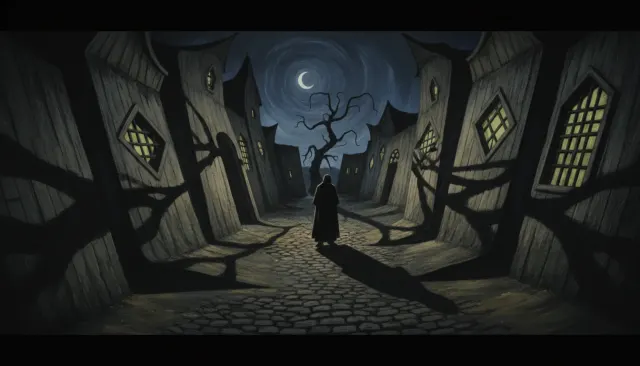 Cinema Era VintageGerman Expressionism Caligari 1920
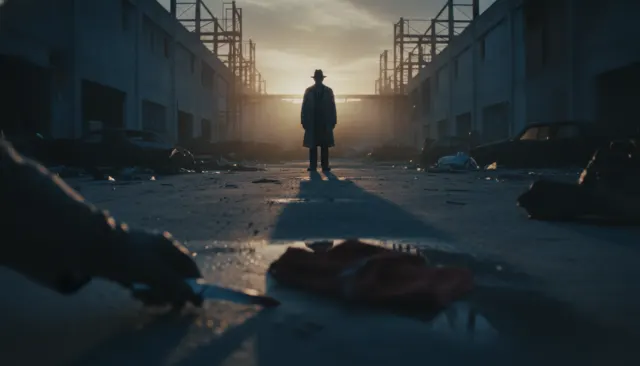 Documentary ModernErrol Morris Thin Blue Line Reenactment
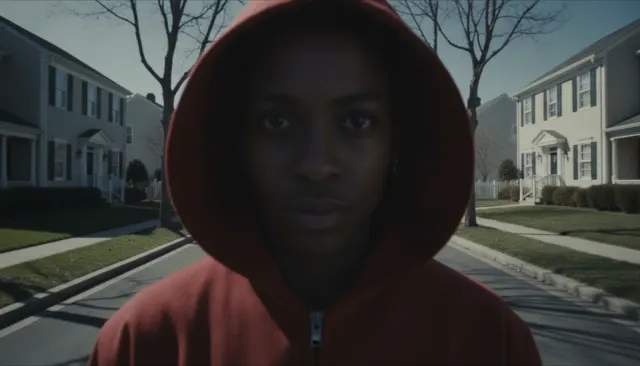 Director Aesthetic ModernJordan Peele Horror Symmetry
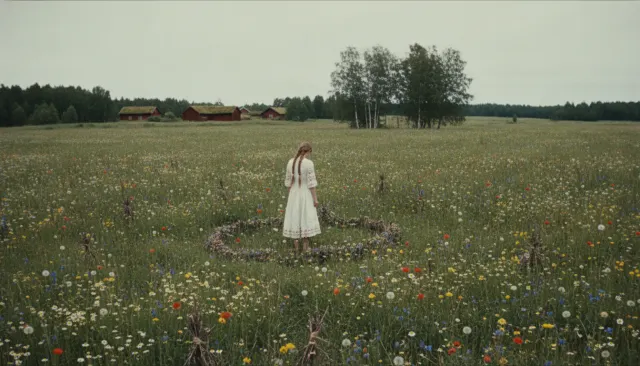 Director Aesthetic ModernAri Aster Folk Horror Eggshell
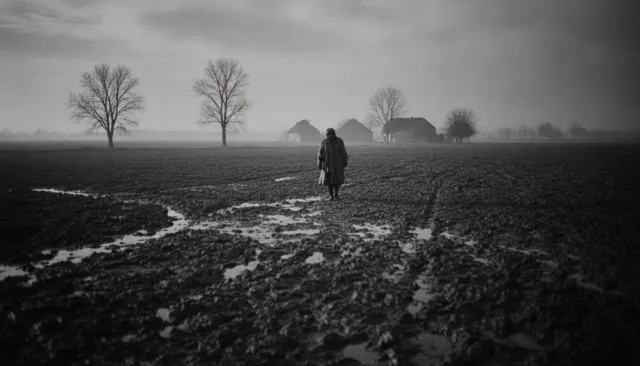 Cinema Era VintageSlow Cinema Bela Tarr
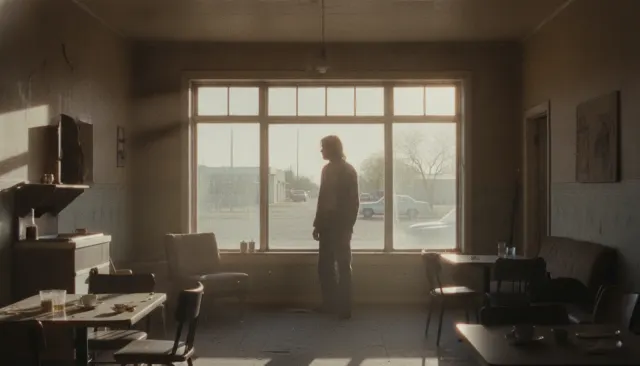 Cinema EraIndie 90s Sundance