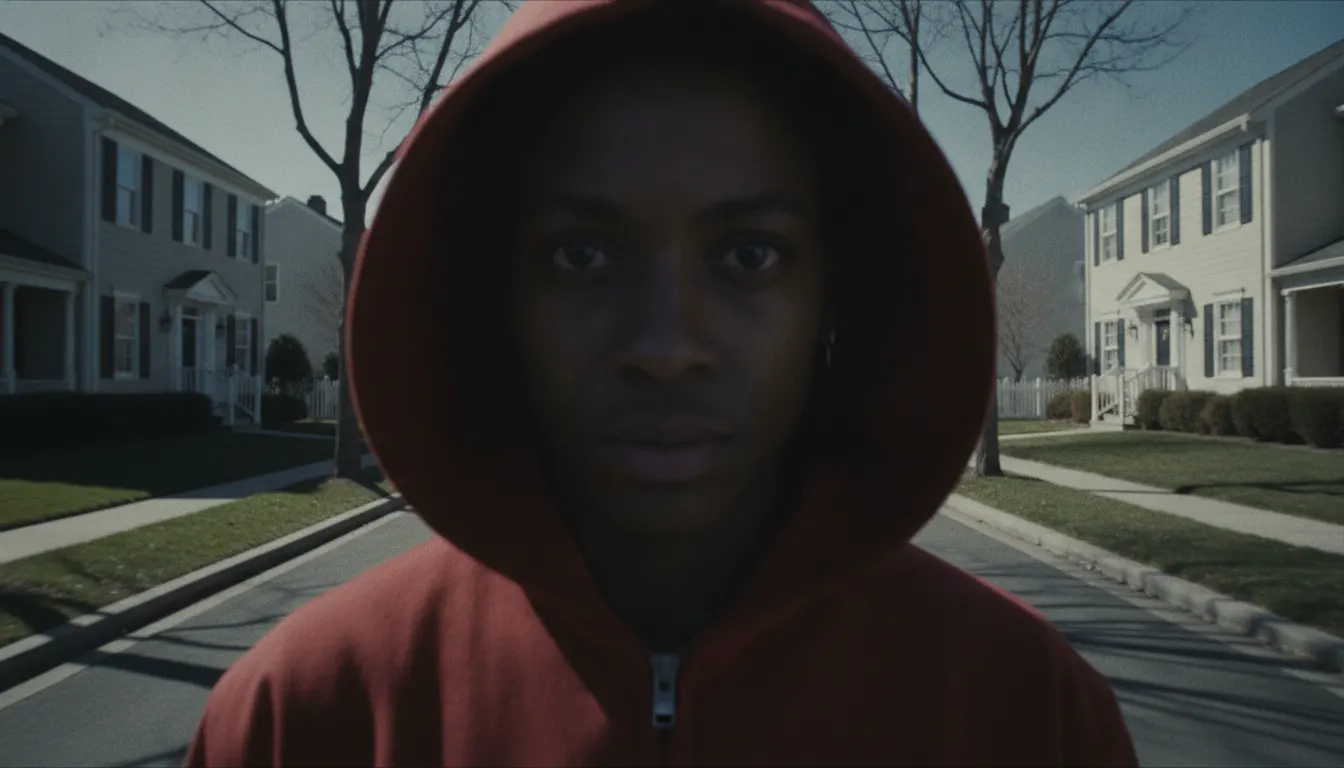
Get Out
Jordan Peele / Toby Oliver · 2017
Breakthrough social horror - symmetrical barbecue compositions, sunken place portal, daylight dread
Jordan Peele social horror. Get Out and Us symmetrical centered staring, suburban daylight dread, Toby Oliver clinical lensing, slow zoom.
The moves a human crew would use to get here. Cue applies them for you, and knowing their names is how you ask for a change.
Subject placed precisely on the central axis of the frame, flanked by equal visual weight on both sides, creating a trapped stillness.
Imperceptibly slow dolly or optical zoom into a static face over 30-60 seconds, building dread through proximity alone.
Dread generated in full daylight, manicured yards, and modernist interiors - the horror of legibility rather than darkness.
Characters or creatures maintain camera-facing eye contact for uncomfortably long durations, holding the viewer in a staring contest.
Palette of lawn-green, warm beige, and muted tan emphasizes the normality of the environment against which horror intrudes.
A domestic object in extreme close-up - a spoon, a cup, scissors - serves as a transitional beat and a signal of inverted domesticity.
Jordan Peele has established the most distinctive directorial visual signature in contemporary American horror. His three features - Get Out (2017), Us (2019), and Nope (2022) - share a consistent visual grammar built around symmetry, slow deliberate movement, suburban naturalism, and the precise use of the gaze as a horror instrument. Where most horror cinema manufactures dread through darkness, speed, and disorientation, Peele achieves it in open daylight with locked cameras and symmetrical compositions that make the viewer intensely conscious of what is being withheld.
Get Out was shot by Toby Oliver on ARRI Alexa, and the foundational visual decision was to make the horror visible in the ordinary. The film is set almost entirely in daylight or well-lit interiors. The Armitage family home is clean, modernist, and tasteful - the kind of environment that reads as aspirationally normal. Oliver and Peele used symmetrical compositions to make this normality feel off: Chris is centered in the frame at family gatherings, surrounded by white faces in geometrically even arrangements. The family's backyard barbecue has the formal composition of a Rockwell painting - which is precisely what makes it disturbing. The famous "sunken place" sequence uses a black void beneath an open portal of light, centering Daniel Kaluuya's face in the frame as he falls.
Us expanded the symmetry grammar into explicit mirror logic. The film's central conceit - doppelgangers who are literal reflections of their originals - required a visual language in which reflection and symmetry were constant environment. DP Mike Gioulakis (who replaced Oliver) shot the Santa Cruz beach house interiors and the beach itself with obsessive horizontal balance: objects placed at equal distances from center, two-shots divided precisely in the middle. The tunnel sequences - where the Tethered live in exact physical mirror of the surface world - used red-lit corridors of punishing bilateral symmetry.
Nope (2022) - again with Hoyte van Hoytema as cinematographer - shifted the visual grammar toward horizontal: the San Fernando Valley sky is the frame's dominant element, with characters and ranch structures occupying only the lower third. The alien creature Jean Jacket reveals itself through atmospheric distortion and a single-cloud permanence that violates natural sky grammar. Van Hoytema used large-format IMAX to capture the sky at maximum resolution, and the film's central horror is visible in broad daylight - a sky that watches back.
Across all three films, the primary horror technique is the return of the gaze. Characters stare directly into the camera - or into the eyes of another character in extreme close-up - and the stillness of that stare, held longer than conventional grammar allows, is where the horror lives. Daniel Kaluuya's tear-streaming face in Get Out, Lupita Nyong'o's dead-smile in Us, the horses refusing to look at Jean Jacket in Nope - these are all variations on the same instrument: the gaze as threat.
Jordan Peele / Toby Oliver · 2017
Breakthrough social horror - symmetrical barbecue compositions, sunken place portal, daylight dread
Jordan Peele / Mike Gioulakis · 2019
Mirror-logic symmetry, red-corridor Tethered tunnels, Lupita Nyong'o dual-performance horror
Jordan Peele / Hoyte van Hoytema · 2022
Sky-as-subject IMAX horror, San Fernando Valley horizontal frame, alien creature in open daylight
Stanley Kubrick / John Alcott · 1980
Precursor symmetry-horror: Kubrick's central-axis compositions and slow tracking shots that Peele directly cites
Ari Aster / Pawel Pogorzelski · 2018
Contemporary peer work using dollhouse symmetry and daylight horror in the same post-Get Out moment
Bong Joon-ho / Kyung-pyo Hong · 2019
Class-horror symmetry across architectural space sharing thematic and compositional grammar with Peele's work
Nia DaCosta / John Guleserian · 2021
Peele produced - direct extension of Get Out's social horror grammar into Chicago urban space
A Look is not a filter. It is a set of stored decisions the pipeline reads before it makes a single frame, so two videos in the same Look actually match.
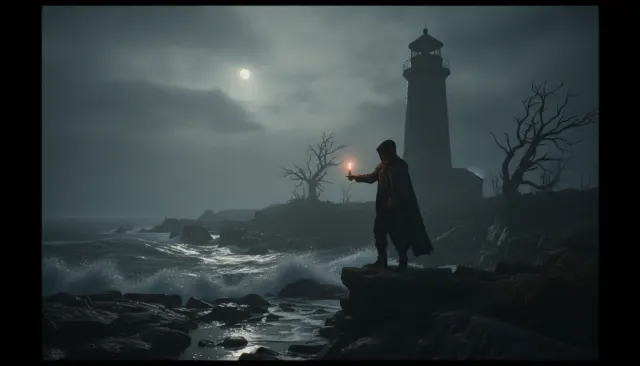 Cinema GenreHorror Folk Eggers
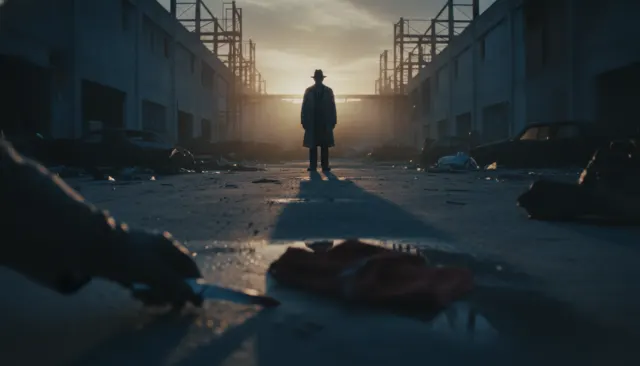 Documentary ModernErrol Morris Thin Blue Line Reenactment
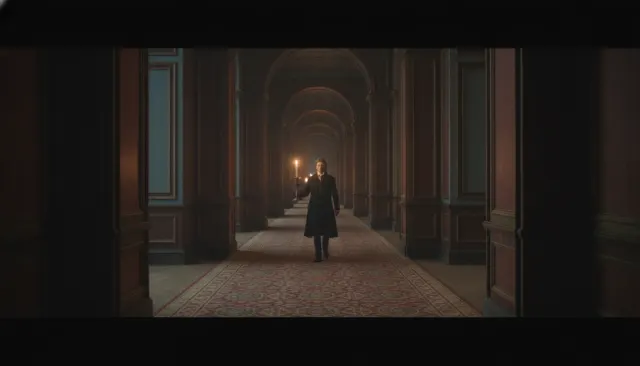 Director AestheticKubrick Symmetrical
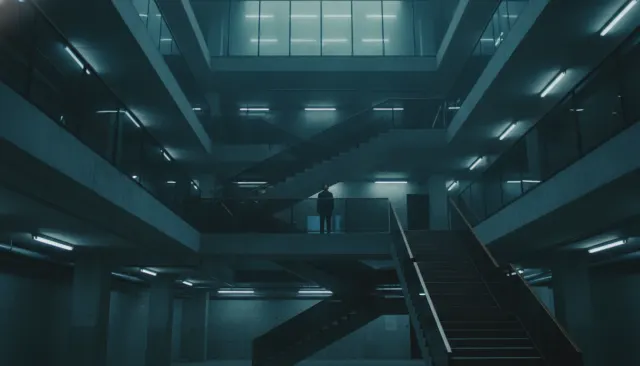 Director Aesthetic ModernBong Joon-ho Parasite Vertical
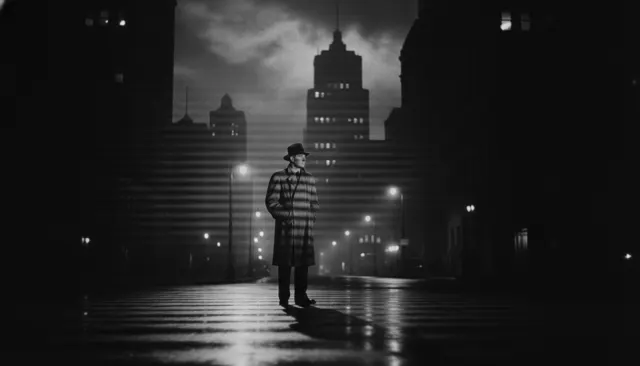 Cinema GenreFilm Noir 1940s
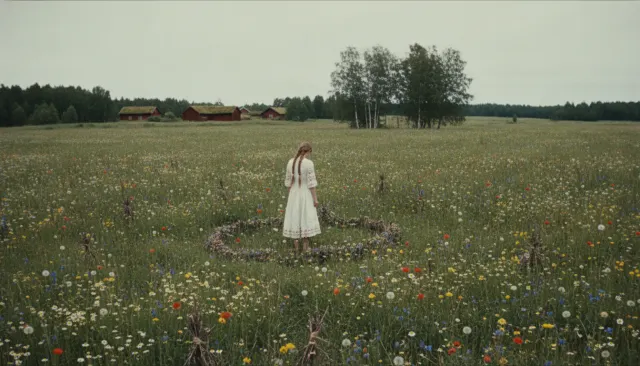 Director Aesthetic ModernAri Aster Folk Horror Eggshell
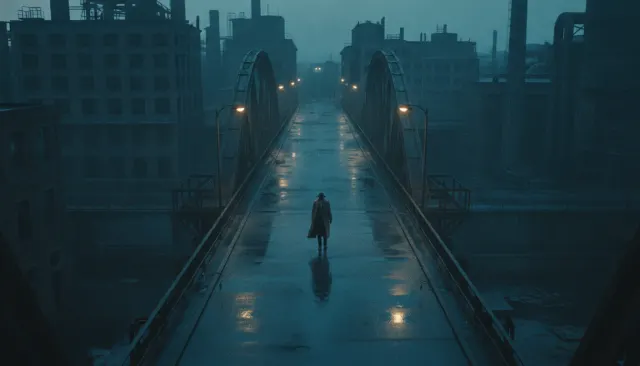 Cinema GenreThriller Fincher Procedural