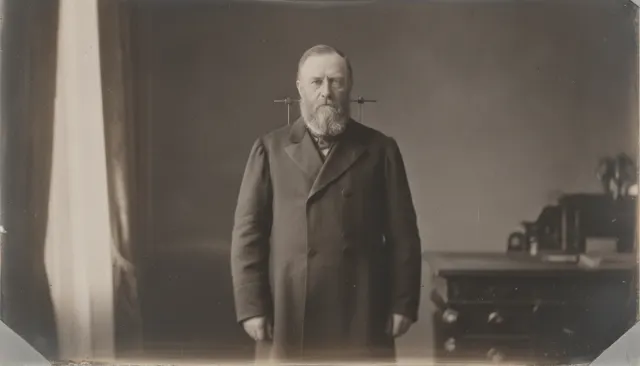
Carlo Pellegrini (Ape)
Benjamin Disraeli / Lord Beaconsfield (Vanity Fair, 1869, inaugural cover caricature)
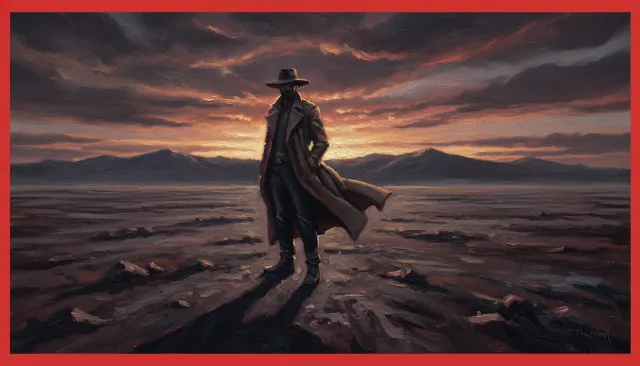
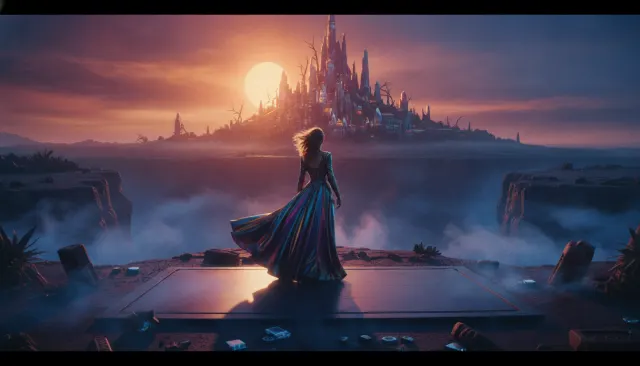
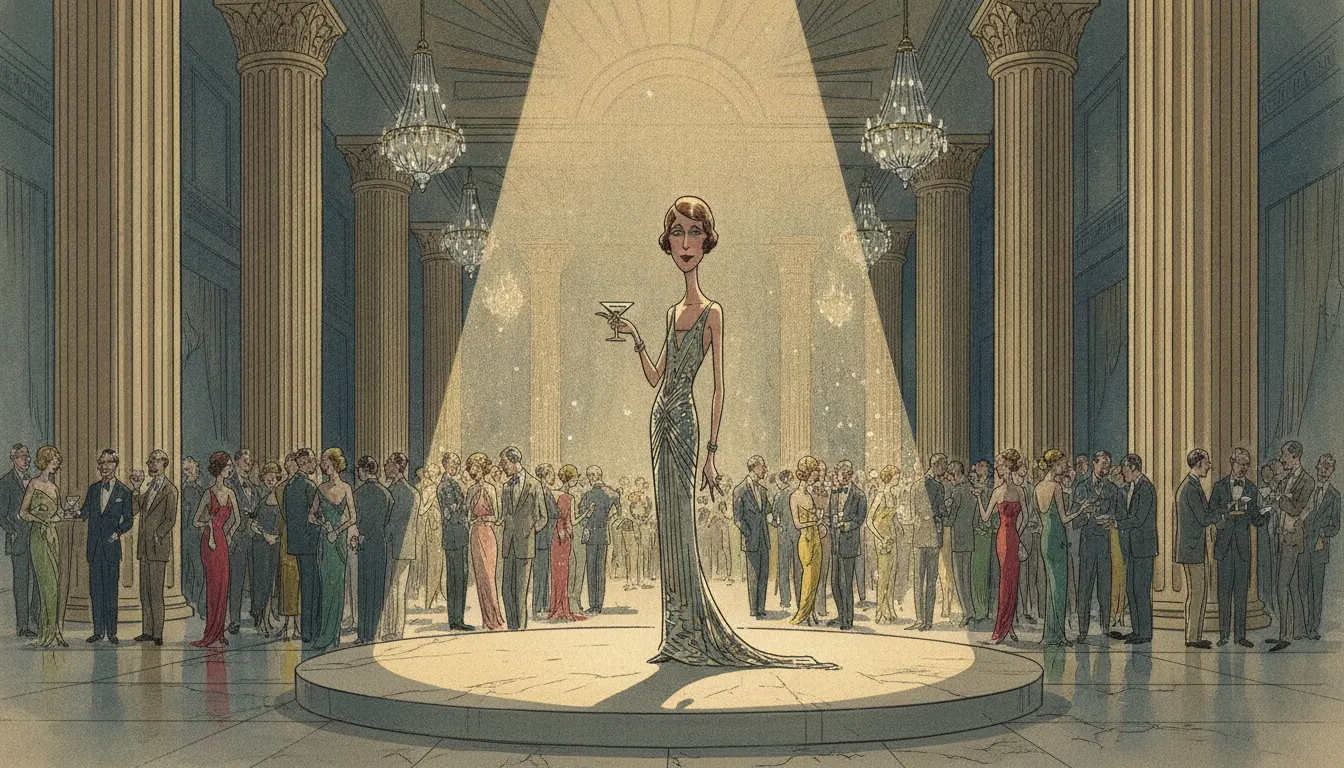
Vanity Fair golden-age society illustration. Sleek figure caricature, deco column type, urbane cocktail-party scene, satirical glamour.
The moves a human crew would use to get here. Cue applies them for you, and knowing their names is how you ask for a change.
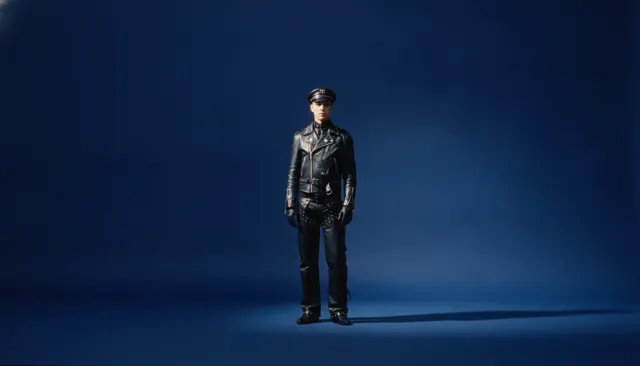
a signature chiaroscuro that separates subject from a smooth tonal ground
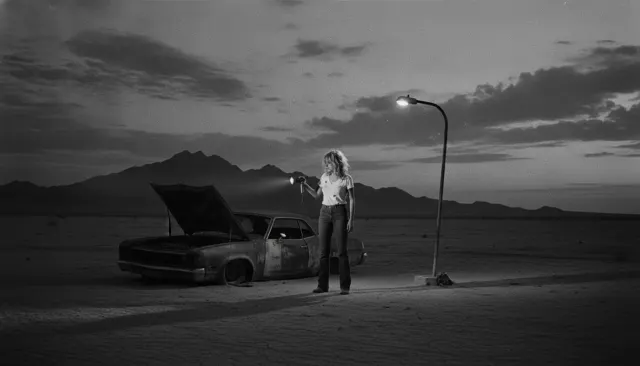
wardrobe, hair, and location chosen to tell the subject's story, not flatten it
full-length standing figure, plain ground, gently exaggerated proportions that reveal character
the subject owns the frame and the viewer is the audience, not the judge
format production values: scale, lighting crew, elaborate styling visible as intentional effort
color illustration style for caricature variants - precise facial likeness, costume as social identifier
Vanity Fair as a visual brand has two distinct but related identities separated by roughly 50 years. The original Vanity Fair (1868–1914), a British society weekly, became famous for its full-page chromolithograph caricature portraits of political and social figures - 2,369 over the magazine's 46-year run. The American Vanity Fair (founded 1913, revived 1983 by Condé Nast) developed a glossy celebrity portrait tradition that remains the defining aesthetic of aspirational American cultural journalism.
The original Vanity Fair's portraits - produced primarily by Carlo Pellegrini under the pseudonym "Ape" and Leslie Ward as "Spy" - depicted British politicians, lawyers, aristocrats, and artists in a specific mode: full-length standing figures, recognizably caricatured but genteel, wearing the dress of their station, against a plain ground. The signature technique was understatement: the caricature was precise enough to identify the subject and pointed enough to reveal character, but never so harsh as to be offensive to a gentleman's sensibility. Pellegrini's Lord Beaconsfield (Benjamin Disraeli, 1869, the first issue's cover) established the format. Ward's work over 40 years extended it into a comprehensive visual record of Victorian and Edwardian society.
When Condé Nast revived Vanity Fair in 1983 under editor Leo Lerman (later Tina Brown, then Graydon Carter, Anna Wintour post-2021), it established a celebrity portrait aesthetic that fused the gravitas of the Victorian tradition with the production values of modern fashion photography. The signature Vanity Fair photograph is: a major cultural figure, lit dramatically by a master photographer, in a studio or controlled environment, with styling that amplifies their persona rather than disguising it.
Annie Leibovitz defined the look through three decades of Vanity Fair covers and spreads. Her portraits - Demi Moore nude and pregnant (1991), the Caitlyn Jenner coming-out cover (2015), the Hollywood issue annual group portraits (1995–present) - combine the authority of art photography with the scale and production value of advertising. Mark Seliger, Herb Ritts, and Mario Testino have all contributed to the aesthetic vocabulary.
The annual Hollywood Issue (debuting 1995) features a fold-out group portrait of that year's major film industry names, typically shot by Leibovitz in a large studio with elaborate coordinated styling. As a recurring project, it functions as a year-by-year index of cultural power - who is on the wall, and who has been left out.
Vanity Fair's visual register signals that a subject has arrived at a level of cultural significance that justifies celebration, critical attention, and archiving. It is simultaneously aspirational (you have made it) and appraising (we are assessing whether you deserve to be here). The glamour is real, but so is the scrutiny.
Benjamin Disraeli / Lord Beaconsfield (Vanity Fair, 1869, inaugural cover caricature)
numerous Victorian political and social figures (Vanity Fair, 1873–1911)
Demi Moore pregnant nude cover (Vanity Fair, August 1991)
Hollywood Issue group portraits (annual, 1995–present)
Caitlyn Jenner coming-out cover (Vanity Fair, July 2015)
Nirvana, Kurt Cobain portrait (Rolling Stone, later Vanity Fair)
The Women of Hollywood (various annual issues)
A Look is not a filter. It is a set of stored decisions the pipeline reads before it makes a single frame, so two videos in the same Look actually match.