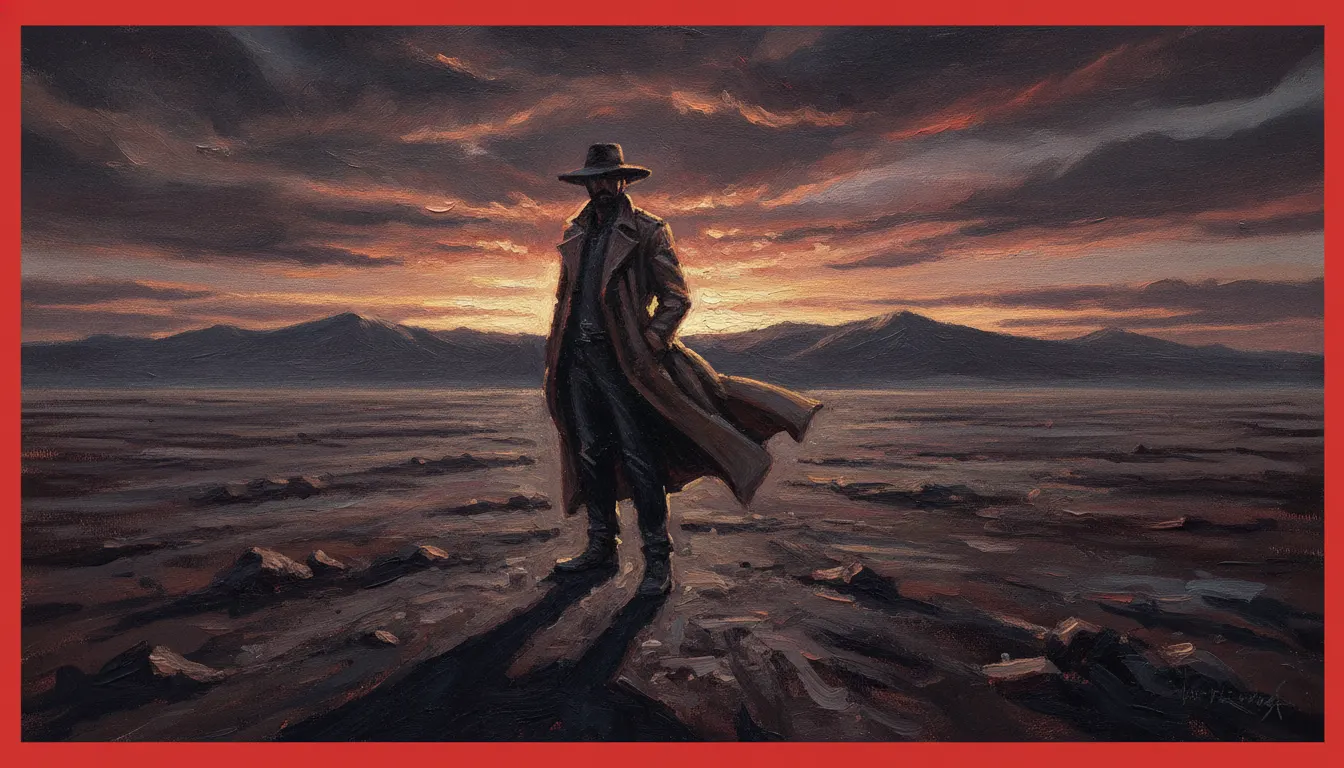
Boris Chaliapin
Time covers 1942–1970 (over 450 painted portraits)
Time Magazine red-border portrait cover. Painted or photo-illustrated newsmaker portrait, dramatic shadow, person-of-the-year framing.
The moves a human crew would use to get here. Cue applies them for you, and knowing their names is how you ask for a change.
the invariant structural element
quarter or slight frontal pose with raking dramatic sidelight sculpting the features
academic three-dimensional modeling, heightened color saturation in flesh tones
the red TIME logo reads as part of the portrait composition, not a label on it
the subject is serious, present, and undeniably significant
Time magazine (founded 1923 by Henry Luce and Briton Hadden) developed the most recognizable editorial cover format in the history of print media: a person of consequence, photographed or painted against a clean neutral or context background, framed by the bold red border that has appeared on virtually every cover since 1927. The "Person of the Year" franchise, inaugurated in 1927 (Charles Lindbergh was the first), turned the cover portrait into an annual cultural event.
Time's earliest covers were painted portraits, often by staff illustrators or commissioned artists working in a precise academic style. The most prolific was Boris Chaliapin (1904–1979), who painted over 450 Time covers between 1942 and 1970. His style combined photographic reference with a slightly heightened, sculpted treatment of form and color - subjects rendered in three-quarter view with dramatic raking light that gave ordinary faces a monumental quality. Ernest Hamlin Baker also contributed numerous covers in a similar vein.
The painted cover's signature move was idealization through clarity: every subject rendered at their most decisively themselves, with personality encoded in posture, expression, and the treatment of light on the face.
From the 1960s onward, photography gradually replaced painting, with key photographers including Philippe Halsman (who shot Albert Einstein, Winston Churchill, and Marilyn Monroe for Time), Alfred Eisenstaedt, and later Annie Leibovitz, whose Time portraits extended her celebrity-portraiture vocabulary into the journalistic context. The photographic covers maintained the painted era's grammar: single figure, clean background, expression carrying narrative weight.
Modern Time covers have become increasingly graphic and conceptual, particularly in the Person of the Year issues - computer-generated composites, typographic interventions, and symbolic staging have supplemented the straight portrait. But the red border remains invariant, and the composition logic - single dominant figure, direct gaze or clear three-quarter pose, background subordinate to the subject - persists as the DNA of the format.
The Time cover portrait has been so consistently associated with historical consequence that its visual grammar now reads as an immediate code for cultural importance. To apply the Time look to any subject is to argue, visually, that this person or idea matters at the level of recorded history.
Time covers 1942–1970 (over 450 painted portraits)
1946
Albert Einstein, Time cover
numerous Time covers, 1940s–1970s
Time Person of the Year portraits, 2000s–2010s
Person of the Year: Charles Lindbergh (1927, inaugural issue)
Person of the Year: Adolf Hitler (1938, controversial selection)
Person of the Year: Greta Thunberg (2019, Hana Knauer photograph)
"You" Person of the Year (2006, mirrored cover, Richard Stengel)
A Look is not a filter. It is a set of stored decisions the pipeline reads before it makes a single frame, so two videos in the same Look actually match.