Kitagawa Utamaro
Ten Studies in Female Physiognomy (Fujin sōgaku juttai, 1792–93)
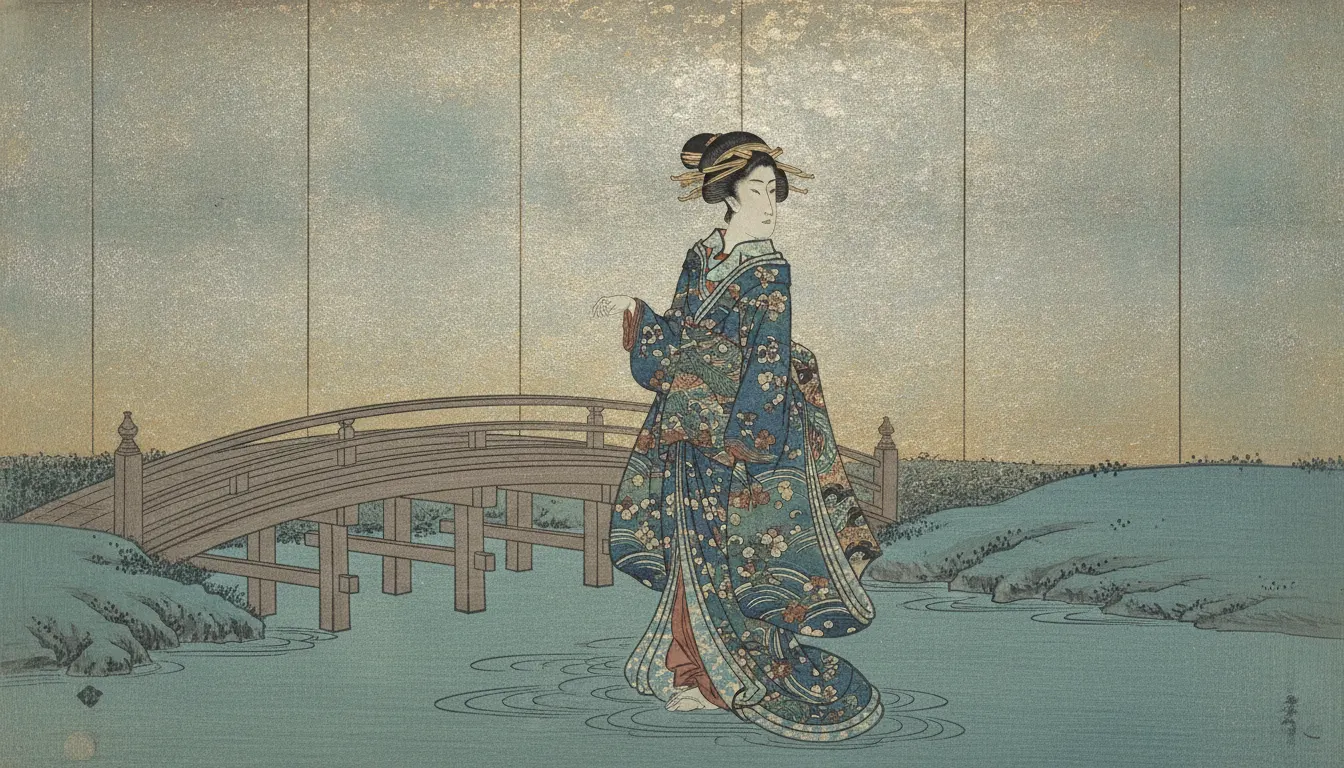
Kitagawa Utamaro bijinga beauty portrait. Elongated graceful female face, flowing patterned kimono, mica background, Edo-period courtesan.
The moves a human crew would use to get here. Cue applies them for you, and knowing their names is how you ask for a change.
e close-crop format: bust or face-only framing that eliminates narrative context
ground (kirazuri) silver-shimmer backgrounds that elevate figures against an abstract luminous field
pale flesh, black hair, single intense accent in kimono or lip color
block hair detail: individual strands pulled into complex architectural arrangements
downward glance, slight lip part, head tilt as complete emotional statement
a single chromatic accent in an otherwise subdued tonal field
Kitagawa Utamaro (喜多川歌麿, c. 1753–1806) transformed ukiyo-e portraiture by bringing the frame in close. Where previous ukiyo-e masters depicted courtesans and actresses at full length or in narrative scenes, Utamaro pioneered the ōkubi-e - the "large head picture" - a format that cropped the composition to the bust or even the face alone, treating a single figure with the psychological attention previously reserved for Western portraiture.
Utamaro's Fujin sōgaku juttai (Ten Studies in Female Physiognomy) series, published 1792–93 by Tsutaya Jūzaburō, is the definitive statement of his approach. Each print depicts a different female type - the "fickle type," the "faithful lover," the "light-hearted type" - identified by expression and pose rather than costume or setting. The faces in this series are among the most psychologically subtle in all of ukiyo-e: slight downward glances, barely parted lips, the tilt of a head carrying an entire emotional world. The mica backgrounds (kirazuri) that Tsutaya introduced - produced by mixing mica dust into the ink - give these prints a silvery, shimmering ground that elevates the figures into near-sacred presence.
Utamaro's color palette is refined and restrained compared to the intensity of Hokusai's landscapes. Flesh tones are pale, subtle pinks and creams. Hair is glossy black, painstakingly detailed with fine key-block lines. Kimono patterns - which Utamaro rendered with extraordinary decorative specificity - provide the only intense color in many compositions. The mica-ground kirazuri technique, the beni (safflower red) pigment for lips, and the careful gradation of the figure against the background mark these prints as premium luxury objects in their own time.
Utamaro also produced multi-figure prints: The Twelve Hours of the Green Houses (c. 1794–95) shows geisha through a full day, each hour a separate compositional study. His Utamaro's Masterpiece: Five Beautiful Women and the Matchmaking Insects series use natural history framing devices to structure elegant figure compositions. In 1804, he was arrested and jailed for 50 days after producing a print depicting the warlord Toyotomi Hideyoshi's concubines - demonstrating that his imagery was perceived as culturally dangerous even in its own time.
Utamaro's work reached Europe in the 1860s–1880s through Japonisme, directly influencing Edgar Degas's pastel figuration, Mary Cassatt's compositional cropping, and Toulouse-Lautrec's flat-color poster portraits. His close-frame approach to the female face remains the foundational grammar of beauty and fashion illustration.
Ten Studies in Female Physiognomy (Fujin sōgaku juttai, 1792–93)
Lovers from the series Poem of the Pillow (1788, British Museum)
The Twelve Hours of the Green Houses (c. 1794–95)
Kitagawa Utamaro's Masterpiece: Five Beautiful Women (c. 1795)
1788
Matchmaking Insects series
Portrait of a Beauty Arranging Her Hair (c. 1795, multiple collections)
A Look is not a filter. It is a set of stored decisions the pipeline reads before it makes a single frame, so two videos in the same Look actually match.