Odilon Redon
Cyclops (1914, Kröller-Müller Museum)
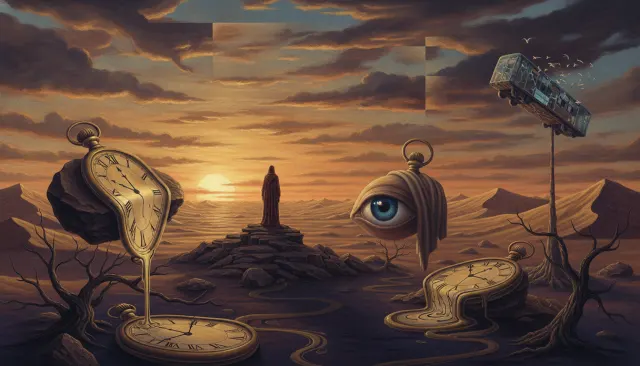
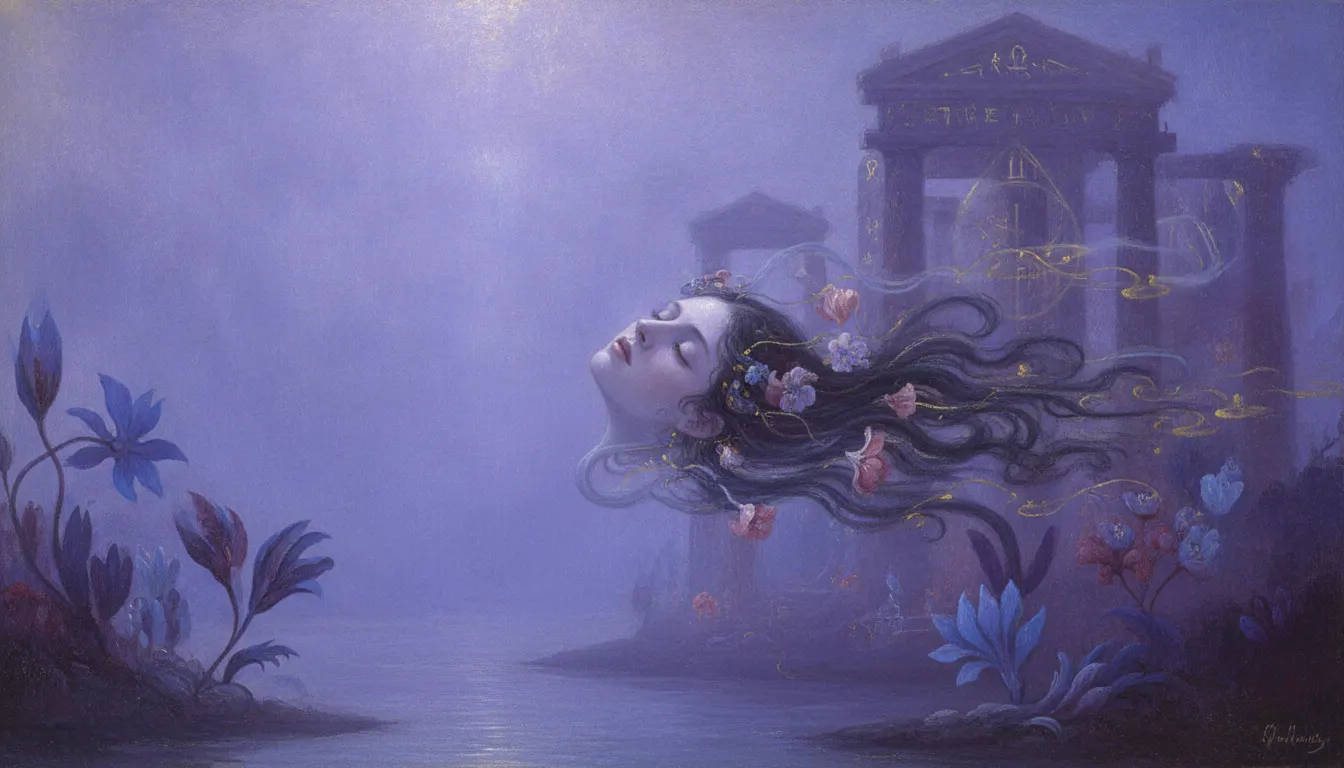
Odilon Redon and Gustave Moreau French Symbolism. Dreamy mythic vision, floating disembodied head, lavender mist, occult mystical reverie.
The moves a human crew would use to get here. Cue applies them for you, and knowing their names is how you ask for a change.
bodies that suggest consciousness turned inward
tone palette: midnight blue, emerald, gold, burgundy, phosphorescent white
Symbolism emerged in France and Belgium in the 1880s as a direct rejection of Realism and Impressionism. Where Monet painted what light does to a haystack at 7 a.m., the Symbolists were interested in what dreams do to the soul. The movement's 1886 manifesto by Jean Moréas declared that art should clothe ideas in sensory form - not represent nature but express the inexpressible.
Redon spent the first half of his career making charcoal noirs - dense black-and-white lithograph series with titles like In the Dream (1879) and To Edgar Poe (1882). Enormous single eyes float in darkness; skeletal figures float upward; a spider bears a human face. Then, beginning in the 1890s, Redon pivoted to color - and the result was explosive. His pastels and oils of flower bouquets (Ophelia Among the Flowers, c. 1905–08; Vase of Flowers with Butterflies, c. 1910) are among the most extraordinary colorist works of the 19th century, the blooms literally glowing as if lit from inside. His Cyclops (1914) - a single enormous eye peering tenderly over a hillside at a sleeping nymph - combines menace and innocence in a single image. Redon described his method as putting "the logic of the visible at the service of the invisible."
Moreau was a scholar-painter who treated mythology and scripture as occasions for maximal visual density. Salome Dancing Before Herod (1876, Hammer Museum) loaded a single figure with so much jewelry, mosaic, and architectural ornament that the painting's surface resembles a reliquary. The Apparition (1876, Musée d'Orsay) shows the severed, haloed head of John the Baptist hovering in midair before Salome - one of the most hallucinatory images in Western painting. Moreau's studio became the Symbolist classroom: Matisse and Rouault were his students at the École des Beaux-Arts.
Beyond France, Belgian Khnopff painted eerily still women who seem to exist between worlds (I Lock My Door Upon Myself, 1891). Von Stuck's Sin (1893) and The Wild Chase (1889) brought Germanic mythology into the Symbolist orbit. Together they formed an international network of artists whose subject was the psyche itself.
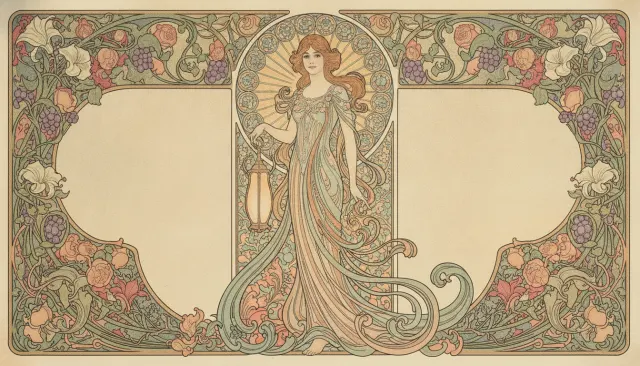
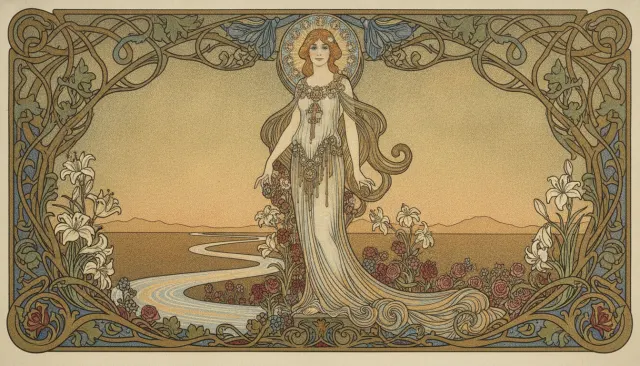
Symbolist imagery communicates mystery, interiority, and spiritual depth. The palette tends toward deep jewel tones punctuated by luminous, almost phosphorescent highlights. Figures are stylized and elongated; backgrounds dissolve into atmosphere or are encrusted with decorative pattern. Nothing is merely documented - everything is felt.
Cyclops (1914, Kröller-Müller Museum)
Ophelia Among the Flowers (c. 1905–08, National Gallery London)
1879
In the Dream lithograph series
Vase of Flowers with Butterflies (c. 1910, private)
Salome Dancing Before Herod (1876, Hammer Museum)
The Apparition (1876, Musée d'Orsay)
I Lock My Door Upon Myself (1891, Neue Pinakothek)
Sin (1893, Neue Pinakothek)
Jupiter and Semele (1895, Musée Gustave Moreau)
A Look is not a filter. It is a set of stored decisions the pipeline reads before it makes a single frame, so two videos in the same Look actually match.