ILLUSTRATORS NAMED · 1890S · FRANCE
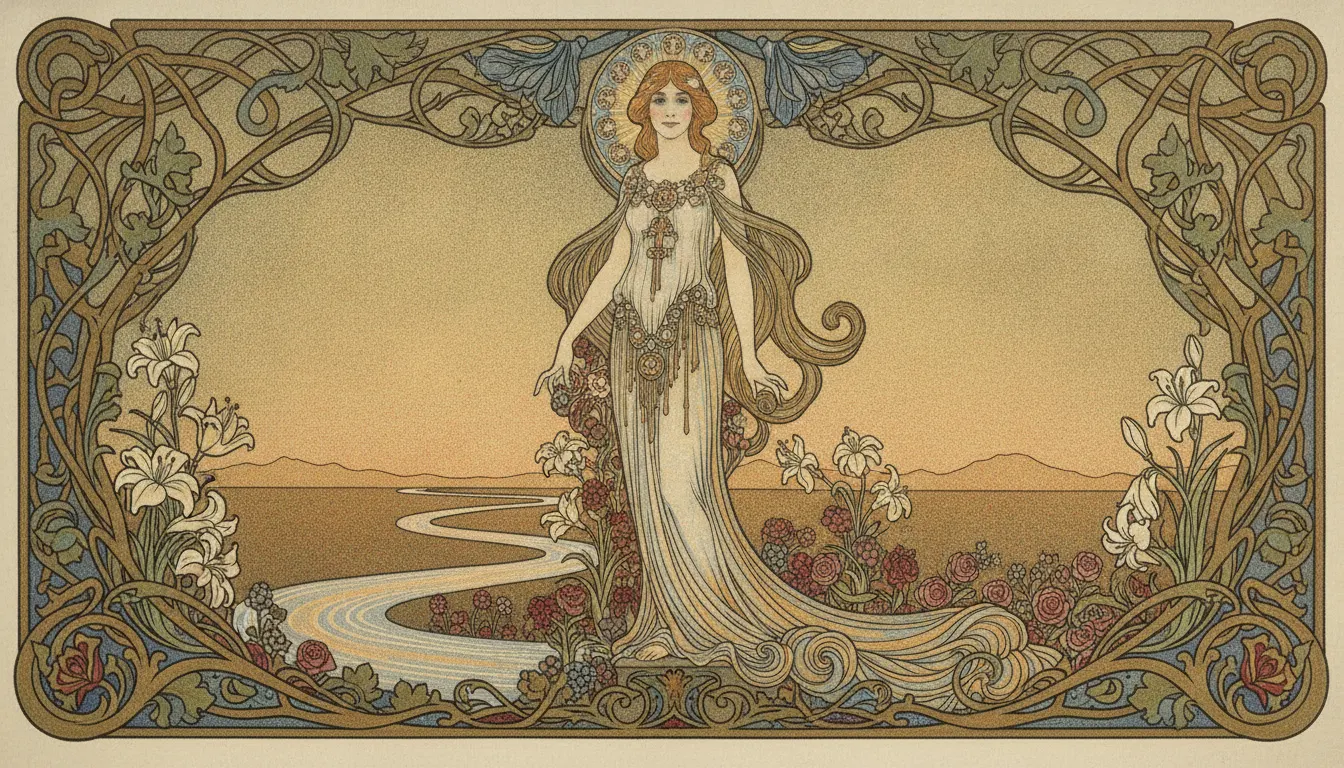
Alphonse Mucha Art Nouveau Poster
Alphonse Mucha Sarah Bernhardt theatre poster. Whiplash curve frame, haloed maiden, floral panel, ornate Belle Epoque master.
muchaart-nouveauposterornate
WHEN TO USE
- Beauty, wellness, or botanical brand content that wants a romantic, luxurious feel
- Event promotion or theater/arts institution posters and social assets
- Vintage-style title cards for fashion, lifestyle, or cultural videos
- Content celebrating femininity, nature, or seasonal themes
- Historical or cultural documentary segments covering the Belle Époque period
- Luxury product reveals where ornamental elegance is the tone
- Wedding or celebration content seeking timeless decorative beauty
WHEN NOT TO USE
- Tech, SaaS, or startup content where the aesthetic reads as dated or irrelevant
- Minimalist brand identities that depend on clean, unornamented design
- Sports, action, or content requiring visual energy and dynamism
- Children's or youth content where the mature elegance may feel inaccessible
- Dark, moody, or horror-adjacent aesthetics
SIGNATURE TECHNIQUES
How the look is made.
The moves a human crew would use to get here. Cue applies them for you, and knowing their names is how you ask for a change.
- 01Sinuous, flowing line that mimics plant growth, hair, and natural curves
- 02Circular or arched compositional frames evoking Byzantine halos or Gothic windows
- 03Warm muted palette
champagne gold, sage green, soft lilac, dusty rose, ivory
- 04Integrated typography
letterforms curve and weave with the illustration rather than sitting above it
- 05Ornamental borders composed of stylized flowers, foliage, and geometric repeats
- 06Female figures rendered with idealized, ethereal beauty
skin luminous, hair elaborately coiffed
- 07Flat color fills with subtle tonal gradation
more decorative than illusionistic
HISTORY & CONTEXT
Where it comes from.
Alphonse Mucha and the Art Nouveau Poster
Alphonse Mucha (1860-1939) was a Czech painter and decorative artist who defined the visual language of the Art Nouveau movement through his commercial poster work in Paris in the 1890s and 1900s. Born in Ivančice, Moravia, he studied in Vienna, Munich, and Paris, achieving overnight fame in January 1895 when actress Sarah Bernhardt, impressed by a last-minute poster he designed for her play Gismonda, hired him exclusively for six years.
The Sarah Bernhardt Posters
Mucha's posters for Bernhardt - Gismonda (1894), La Dame aux Camélias (1896), Lorenzaccio (1896), Médée (1898), La Tosca (1899), Hamlet (1899), La Samaritaine (1897) - established the template that made him famous: a full-length female figure surrounded by elaborate floral borders, often within a circular or Byzantine-influenced halo, rendered in luminous muted golds, sage greens, and warm lilacs. The typography was integral to the composition, often curved and organically lettered.
Commercial Work and the Mucha Style
Mucha's style extended into advertising: his poster for Job cigarette papers (1896) - a woman with swirling hair lit by a cigarette - became one of the most reproduced images of the era. He designed posters for Moët & Chandon champagne, Nestlé cocoa, Cycles Perfecta bicycles, and the Parisian department store Au Quartier Latin. These works brought decorative illustration into everyday commercial life and proved that fine art craft could coexist with commerce.
His decorative panels - The Seasons (1896), The Times of Day (1899), The Arts (1898-1899) - removed the advertising component entirely and showed women as allegorical embodiments of nature and time.
Late Career and the Slav Epic
After achieving wealth from American lecture tours and design commissions, Mucha devoted his later career to The Slav Epic (Slovanská epopej), a cycle of twenty monumental paintings (1910-1928) depicting the spiritual history of the Slavic peoples, donated to the city of Prague. This nationalist project, now housed at the Prague National Gallery, represents a dramatic departure from his poster style into historical realism.
Visual Characteristics
Mucha's signature includes: sinuous organic line derived from plant growth and hair; circular or semicircular compositional frames suggesting Byzantine halos or Gothic rose windows; a warm, muted palette (champagne golds, sage, lilac, rose, ivory); decorative borders of stylized flowers, leaves, and geometric ornament; and the integration of text and image as a unified design.
NOTABLE WORKS
Where you have seen it.
La Dame aux Camélias (Sarah Bernhardt, 1896)
Médée (Sarah Bernhardt, 1898)
Job cigarette papers poster
1896
The Seasons decorative panels
1896
The Times of Day decorative panels
1899
Moët & Chandon: White Star champagne poster
1899
The Slav Epic (20-canvas cycle, 1910-1928, Prague National Gallery)
THE RECIPE
The exact knobs
the renderer turns.
A Look is not a filter. It is a set of stored decisions the pipeline reads before it makes a single frame, so two videos in the same Look actually match.
SettingValue
TransitionHow one shot becomes the next
hard cuts · 160ms · linearKen BurnsCamera move applied to stills
Slow push · 0.02 · centerTypographyDisplay / body / mono pairing
Marcellus · Lora · JetBrains MonoMusic moodWhat the bed under the voice sounds like
debussy-impressionist · harp-pastoralPrompt suffixAppended to every shot prompt in this Look
Alphonse Mucha Sarah Bernhardt theatre poster, whiplash curve frame, haloed maiden, ornate Belle Epoque Art Nouveau lithographPALETTE
Primary
#7A2030
Secondary
#A8C9A0
Accent
#D4A574
Text/Light
#1A0808
Text/Dark
#F5E0C8
BG 900
#1A0808
BG 800
#2A1812
RELATED LOOKS
Next to it on the shelf.
Your first cut
is on us.
+ New videoFree plan · no card · 1080p export