Émile Bernard
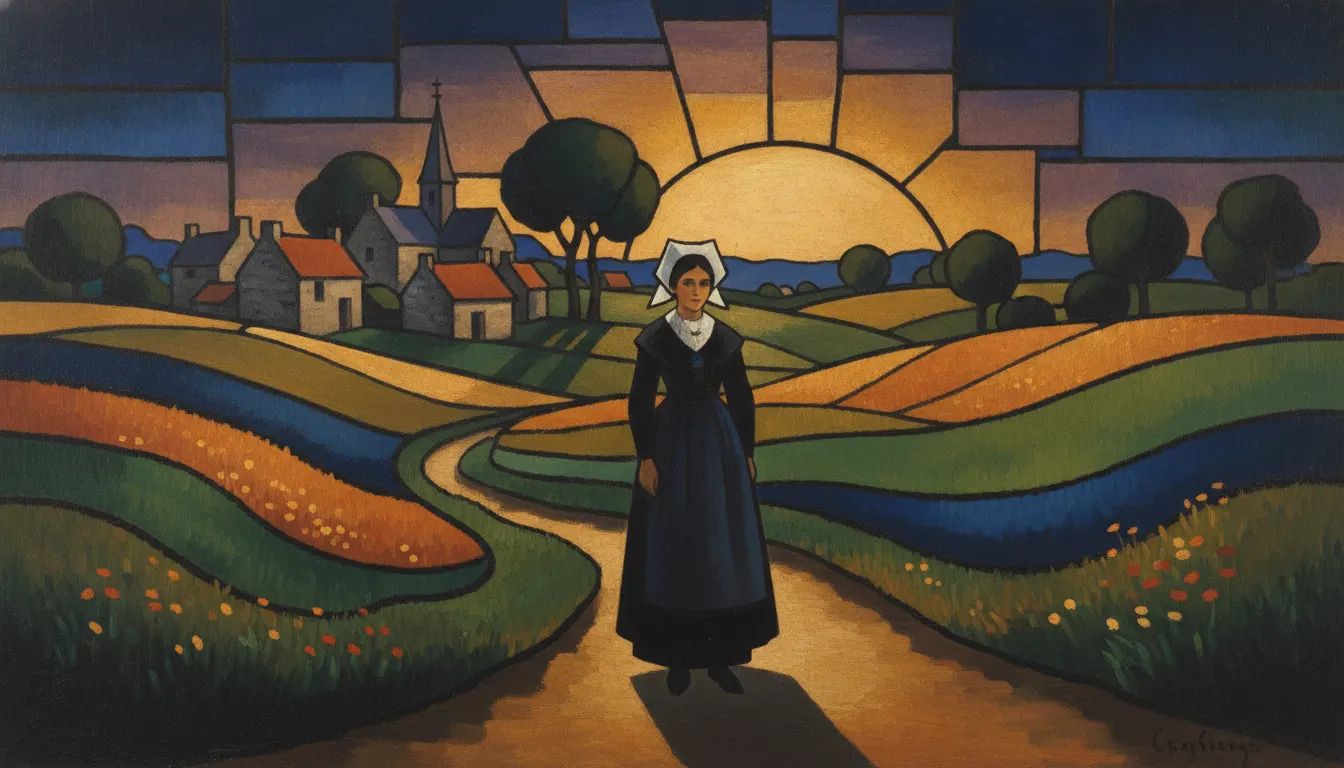
Breton Women in the Meadow (1888, private collection)
Emile Bernard Cloisonnism. Thick dark contour line enclosing flat color cells, stained-glass-inspired Brittany scene, Pont-Aven sister movement.
The moves a human crew would use to get here. Cue applies them for you, and knowing their names is how you ask for a change.
the defining technique
no gradation, no shadow, no atmospheric perspective
red, yellow, blue, green chosen for emotional resonance rather than accuracy
forms are flat like stained glass or enamel
abstract landscape or interior fields
Cloisonnism is a Post-Impressionist painting style developed primarily by Émile Bernard (1868-1941) and adopted and extended by Paul Gauguin (1848-1903) at Pont-Aven, Brittany, in 1888. The term - from the French cloisonné (partitioned), referring to the enamelwork technique in which metal wire cells are filled with colored glass paste - was applied by critic Édouard Dujardin in 1888 to describe paintings that used thick black or dark outlines to enclose flat, unmodulated areas of pure color.
The origin of Cloisonnism is contested. Émile Bernard, who was nineteen in 1888, claims priority for the style, pointing to works like Breton Women in the Meadow (1888, private collection) as his invention. Paul Gauguin, thirteen years older and already an established artist, encountered Bernard at Pont-Aven and produced The Vision After the Sermon (Jacob Wrestling with the Angel, 1888, National Galleries of Scotland) in the same technique almost simultaneously. The two maintained an acrimonious dispute over credit for the rest of their lives.
Gauguin's The Vision After the Sermon is the movement's most famous work: Breton peasant women in white-capped headdresses watch a vision of Jacob wrestling an angel on a flat red ground. The red field is unmodulated - no shading, no spatial illusionism - divided from the white coifs and dark figures by heavy outlines. It is a radical rejection of Impressionism's feathered touch and commitment to visual sensation.
Cloisonnism is closely related to Synthetism - Gauguin's broader theoretical framework for combining memory, observation, and imagination into a unified image. Both are influenced by Japonisme: the enthusiasm for Japanese ukiyo-e woodblock prints (Hiroshige, Hokusai, Utamaro) among French artists after they became widely available in Paris from the 1860s. Japanese prints use precisely this technique: strong black outlines containing flat, ungraduated color, with no cast shadow or atmospheric perspective.
Other artists influenced by or associated with the approach include Paul Sérusier (whose painting The Talisman, 1888, under Gauguin's direction, sparked the formation of the Nabis group: Maurice Denis, Pierre Bonnard, Édouard Vuillard), and Louis Anquetin (1861-1932), who Bernard and Dujardin also credited with early cloisonnist experiments.
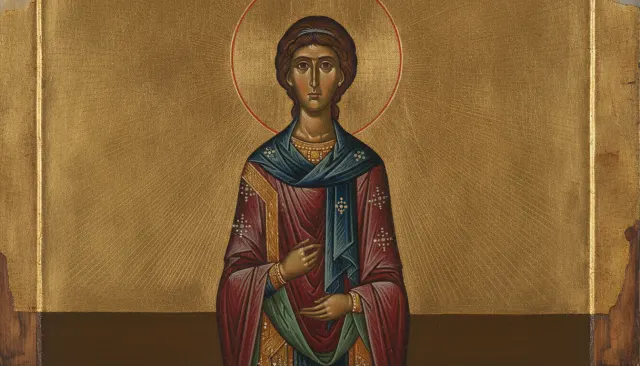
Thick black or dark outlines creating enclosed compartments; flat, unmodulated color fills without shading or atmospheric perspective; simplified, flattened forms; emotional or symbolic rather than observational color; high contrast between outline and fill.
Breton Women in the Meadow (1888, private collection)
The Vision After the Sermon / Jacob Wrestling with the Angel (1888, National Galleries of Scotland)
The Yellow Christ (1889, Albright-Knox Art Gallery, Buffalo)
The Talisman (1888, Musée d'Orsay, Paris)
Where Do We Come From? What Are We? Where Are We Going? (1897-98, Museum of Fine Arts, Boston)
A Look is not a filter. It is a set of stored decisions the pipeline reads before it makes a single frame, so two videos in the same Look actually match.