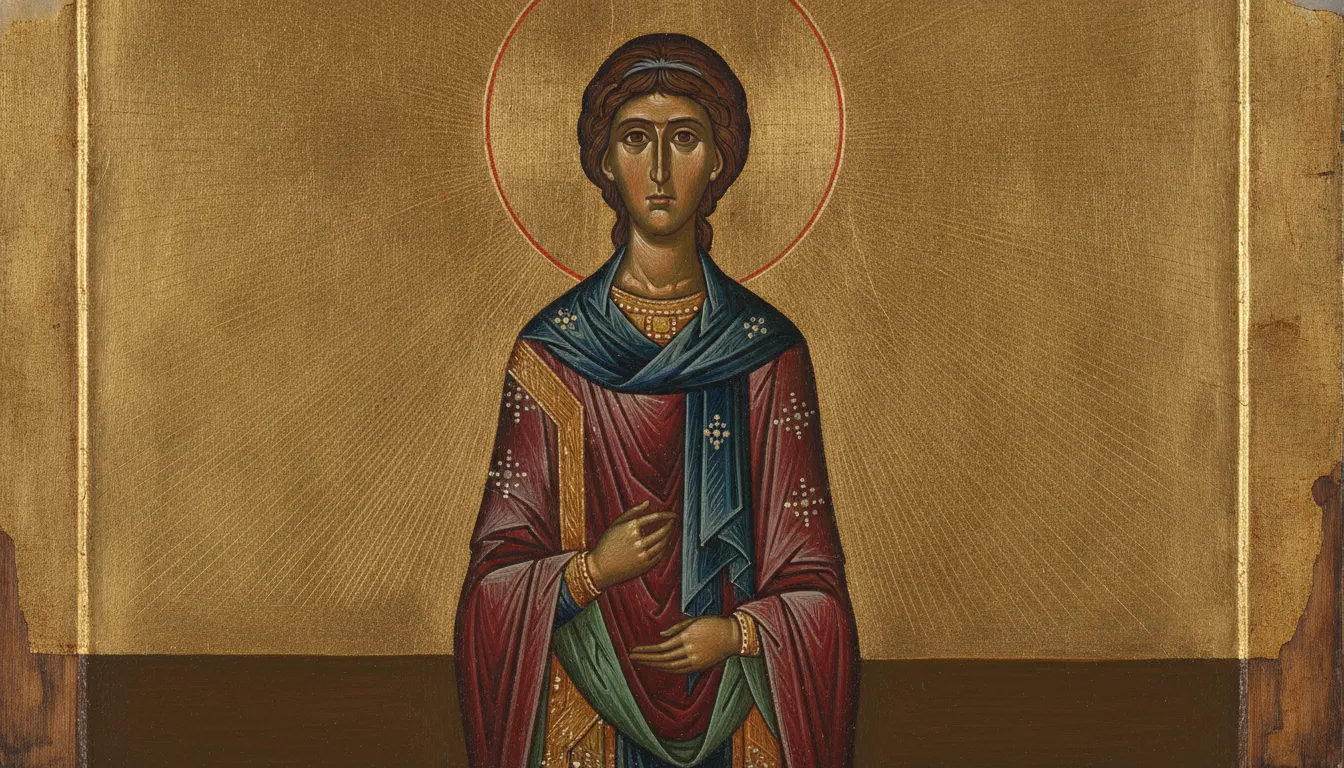
EASTERN HISTORICAL · 1100S · BYZANTIUM
Byzantine Icon Gold Leaf
Byzantine icon panel painting. Gold-leaf halo background, elongated saintly figure, frontal hieratic gaze, egg-tempera saturated robes.
byzantineicongold-leafsacred
WHEN TO USE
- Religious, spiritual, or sacred content in the Eastern Christian tradition
- Fantasy or world-building content drawing on Byzantine or medieval Christian aesthetics
- Luxury or prestige brand content where gold and sacred gravitas are appropriate
- Art history or museum content covering Byzantine, Orthodox, or medieval Christian art
- Title sequences for historical or religious dramas set in the medieval period
- Content celebrating Greek, Russian, Ethiopian, or Eastern European cultural heritage
WHEN NOT TO USE
- Secular content where religious connotations are inappropriate or distracting
- Contemporary or minimalist aesthetics
- Humor or satirical content where the sacred register creates tonal clash
- Children's content where the formal conventions are inaccessible
- Action or dynamic content where the static frontal convention conflicts
SIGNATURE TECHNIQUES
How the look is made.
The moves a human crew would use to get here. Cue applies them for you, and knowing their names is how you ask for a change.
- 01Gold leaf ground
real or simulated gold representing uncreated divine light
- 02Frontal hieratic pose
figures face the viewer directly from a non-earthly perspective
- 03Inverse perspective
architectural elements diverge toward the viewer rather than receding
- 04Elongated proportions
narrow faces, large almond eyes, long fingers
- 05Symbolic color coding
established color language for garments of sacred figures
- 06Jewel
like layered glazes in egg tempera over gesso on wood panel
- 07Inscribed halos and name abbreviations
IC XC for Christ, MP ΘΥ for Theotokos
HISTORY & CONTEXT
Where it comes from.
Byzantine Icons: Gold Ground and Sacred Vision
Byzantine art flourished from the founding of Constantinople in 330 CE through the fall of that city to the Ottoman Turks in 1453, continuing in related forms in Russian Orthodox, Greek Orthodox, and Coptic Christian traditions to the present day. The icon - from the Greek eikon, meaning image - is not merely a picture of a sacred subject but a visual theology: a window into the divine realm, not a representation of earthly appearance.
Theological Foundations
The Byzantine understanding of the icon was worked out through centuries of controversy. The Iconoclasm controversy (726-843 CE) - in which Byzantine emperors twice banned religious images, commanding their destruction - forced the church to articulate why images were legitimate. The Second Council of Nicaea (787 CE) restored icon veneration, ruling that honor rendered to the icon passes to its prototype. The Triumph of Orthodoxy (843 CE) re-established icons permanently.
This theological history explains the icon's unique visual conventions: they are not designed to look like people. They are designed to look like holy people, which is an entirely different project.
Visual Conventions
Byzantine icon painting follows strict conventions (established through centuries of monastic podlinnik instruction manuals):
- Gold ground: the background is pure gold leaf on gesso, representing uncreated divine light - not sky or space, but the light that precedes creation. The Nativity of Christ icon (Hagia Sophia, 6th century) and the Theotokos of Vladimir (Our Lady of Vladimir, c. 1131, Tretyakov Gallery, Moscow) exemplify this tradition.
- Frontal hieratic pose: figures face the viewer directly. Their gaze is not naturalistic but communicative - they look at you from eternity. The elongated proportions (long fingers, narrow faces, large eyes) are deliberate inversions of earthly attractiveness.
- Inverse perspective: rather than converging to a vanishing point behind the picture plane, architectural elements in Byzantine images diverge toward the viewer - implying the icon radiates outward into our world rather than receding into pictorial space.
- Symbolic color: garments are color-coded - Christ wears a red inner garment (humanity) with a blue outer garment (divinity); the Virgin Mary wears blue (humanity) covered by a deep red/purple maphorion (divine queenship).
- Egg tempera on wood panel: the traditional medium, with mineral pigments bound in egg yolk. The technique allows for jewel-like translucency in successive thin glazes.
Major Works and Traditions
The Pantocrator (Christ as Lord of All) mosaic, Hagia Sophia, Istanbul (c. 6th century, restored 9th century). The Theotokos of Vladimir (c. 1131, Tretyakov Gallery) is considered Russia's holiest icon. The mosaics of Ravenna (5th-6th century, Basilica di San Vitale and Sant'Apollinare Nuovo) represent the tradition in its Italian form. Andrei Rublev (c. 1360-1430), the supreme Russian icon painter, produced the Trinity icon (c. 1411, Tretyakov Gallery) - three angels at Abraham's table, considered the highest achievement of Russian iconography.
NOTABLE WORKS
Where you have seen it.
Theotokos of Vladimir (c. 1131, Tretyakov Gallery, Moscow)
Andrei Rublev
Trinity icon (c. 1411, Tretyakov Gallery, Moscow)
Justinian and Theodora mosaics, Basilica di San Vitale, Ravenna (c. 547 CE)
Christ Pantocrator, Monastery of Saint Catherine, Sinai (c. 6th century)
Deësis mosaic, Hagia Sophia (c. 1261, finest Byzantine mosaic surviving)
THE RECIPE
The exact knobs
the renderer turns.
A Look is not a filter. It is a set of stored decisions the pipeline reads before it makes a single frame, so two videos in the same Look actually match.
SettingValue
TransitionHow one shot becomes the next
hard cuts · 160ms · linearKen BurnsCamera move applied to stills
Slow push · 0.02 · centerTypographyDisplay / body / mono pairing
Cinzel · Lora · JetBrains MonoMusic moodWhat the bed under the voice sounds like
orthodox-chant · choral-sacredPrompt suffixAppended to every shot prompt in this Look
Byzantine icon panel painting, gold leaf halo background, elongated saintly figure, frontal hieratic gaze, egg tempera saturated robesPALETTE
Primary
#D4AF37
Secondary
#7A1010
Accent
#1A3A8E
Text/Light
#1A0808
Text/Dark
#F5E6B8
BG 900
#1A0808
BG 800
#2A1010
RELATED LOOKS
Next to it on the shelf.
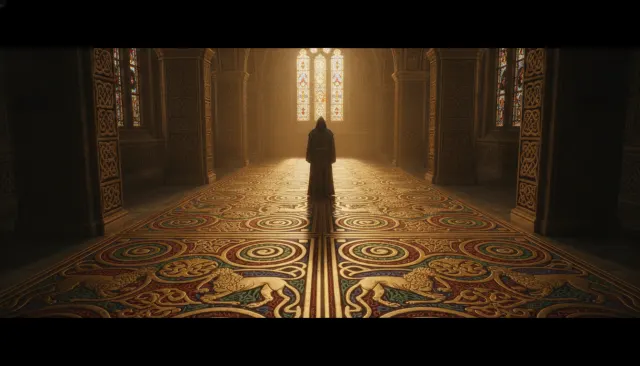 Historical Illuminated ExtendedBook of Kells Celtic Illuminated
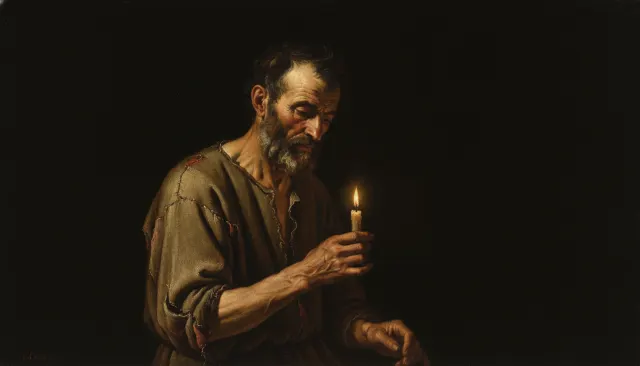 Art Movement ClassicalBaroque Painting Caravaggio
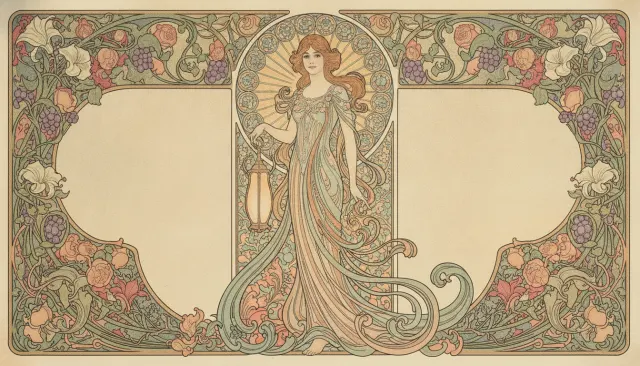 Art Movement ModernArt Nouveau Mucha
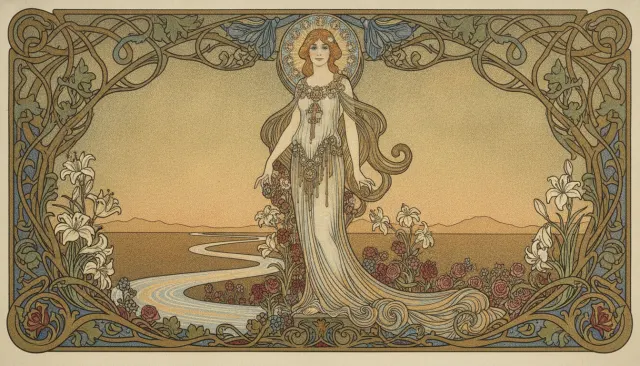 Illustrators NamedAlphonse Mucha Art Nouveau Poster
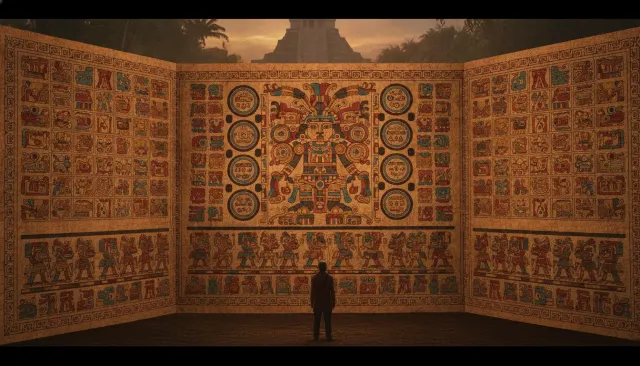 Historical Illuminated ExtendedAztec Mesoamerican Codex Symbol
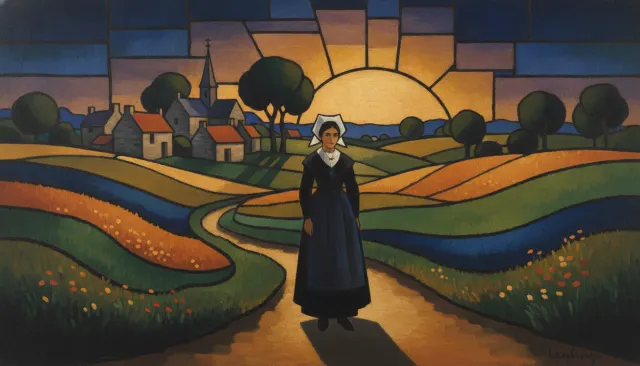 Art Movement ExtendedCloisonnism Bernard Thick Outline
Your first cut
is on us.
+ New videoFree plan · no card · 1080p export